
International Recognition for Assamese Science Fiction Anthology

A Milestone for Assamese Literature
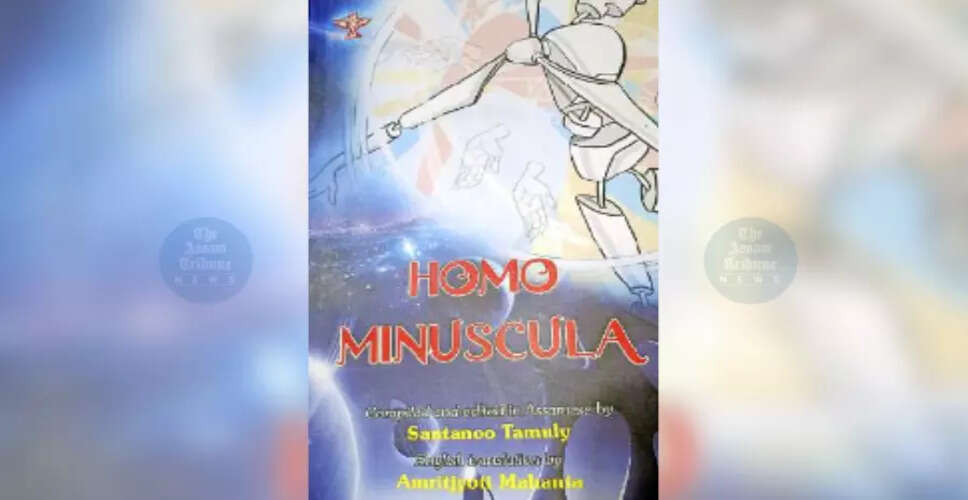
Cover image of Homo Minuscula: An Anthology of Assamese Science-Fiction Stories (Photo: AT)
Jorhat, June 27: In a remarkable achievement for the Assamese science fiction community, Homo Minuscula: An Anthology of Assamese Science-Fiction Stories, curated and edited by Dr. Santanoo Tamuly, has received international academic acclaim. The anthology has been translated into English by Amrit Jyoti Mahanta.
The original Assamese version, titled Asomiya Kalpabijnan Galpa-Sankalan, was published by Sahitya Akademi.
A research paper discussing this anthology was written by scholars Parmar Yashika Bipinkumar and Dr. Milind Solanki, and published in the peer-reviewed journal Entanglements: Journal of Posthumanities (ISSN: 3107-488X), Volume 2, Issue 1, January 2026.
The journal is edited by Sukhendu Das from Bankura University and Baloram Balo from the University of Kalyani serves as the executive editor.
The paper, titled Vernacular Futures: Reconfiguring the Posthuman in Contemporary Assamese Speculative Fiction through Homo Minuscula, delves into posthuman themes present in Tamuly’s anthology, which showcases 20th-century Assamese science fiction.
It highlights stories like Homo Minuscula by Amulya Hazarika and Livability by Harekrishna Deka, which explore dystopian concepts and human enhancement within a posthuman context.
Additionally, Rasayan by Nagendra Narayan Choudhury and The Returnee by Dr. Jayanta Kumar Goswami address the ethical dilemmas surrounding medical enhancements through technology.
Other narratives, such as The Cave by Dr. Bhabendra Nath Saikia and The Inseparable Hearts by Dinesh Chandra Goswami, challenge conventional views on speciesism and the hierarchical classification of living beings.
The research emphasizes the significant role of Assamese science fiction in contributing to posthumanist discussions, encouraging readers to engage with its insightful narratives regarding humanity's evolution.
Dr. Tamuly, a native of Jorhat and the founder of the magazines Mouchak and Notun Aabiskar, expressed that this recognition marks a pivotal moment for Assamese science fiction, gaining critical attention on a global stage.
He is a recipient of the Sahitya Akademi’s ‘Bal Sahitya Puraskar’ and the ‘National Award for Science Popularisation’ from the Central government. Furthermore, he shared that all editions of Mouchak and Notun Aabiskar have been digitally archived at the University of California, a project initiated in collaboration with Tezpur University last year.