
Intensified Crackdown on Illegal Bangladeshi Immigrants Sparks Nationwide Concern

Rising Tensions Over Illegal Immigration
From Assam to Gujarat and West Bengal to Gurugram, the intensified actions against illegal Bangladeshi immigrants, their traffickers, and the networks supporting them have stirred significant unrest across the nation. A particularly alarming incident occurred in Assam's Cachar district, where a farmer was abducted from within Indian territory and taken to Bangladesh, exposing the dangerous nexus of border security and illegal immigration.
The Abduction Incident
Sixty-year-old farmer Ranjit Das, residing in the Kinarakhal area of Cachar district in southern Assam, went to work in his fields on Tuesday morning. He was engaged in farming and cutting grass for livestock in the no man's land near the border. After the Border Security Force opened the gate at the scheduled time, he entered the area. However, upon realizing he had left some belongings behind, he returned to retrieve them. At that moment, two Bangladeshi infiltrators ambushed him, crossed the Surma River, and forcibly took him back to Bangladesh.
A Broader Challenge
This incident was not merely a case of kidnapping; it represented a blatant challenge to India's sovereignty. Ranjit Das was held captive for nearly ten hours in a house within Bangladesh, where his captors assaulted him, claiming they were settling an old score. Following several rounds of discussions between the Border Security Force and the Bangladesh Border Guard, he was returned around 9:15 PM. Local MLA Kamalakhya Dey Purkayastha stated that Chief Minister Himanta Biswa Sarma coordinated efforts to ensure the farmer's safe return.
The Underlying Networks
The question arises: how did these infiltrators gain the audacity to abduct a citizen from within Indian territory? The answer lies in the illegal networks that are now facing nationwide scrutiny. The Delta Hunt operation in Gujarat is considered one of the largest crackdowns in recent years, resulting in the arrest of over 500 suspected illegal Bangladeshi immigrants. Authorities analyzed more than 6,000 suspicious mobile contacts, conducted simultaneous raids in urban and rural areas, and identified individuals providing jobs, shelter, and fake documents to these infiltrators.
Ongoing Operations in West Bengal
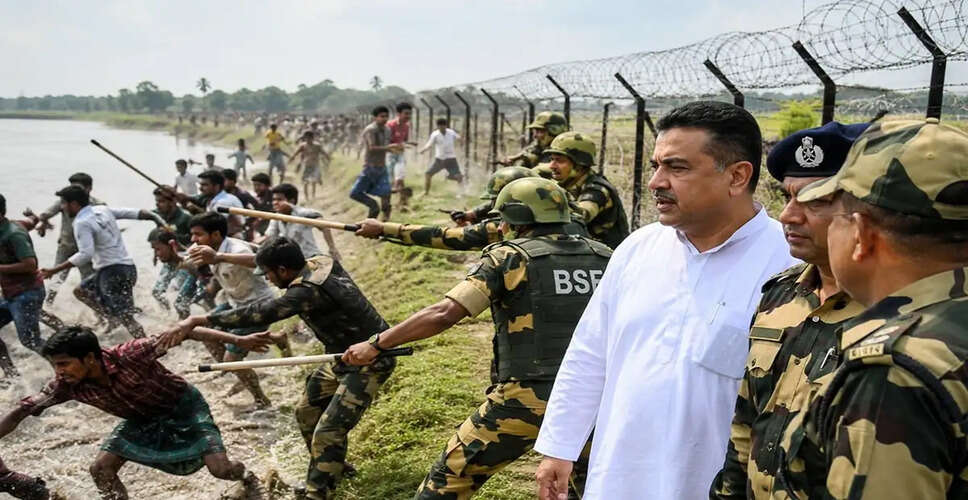
The situation remains critical in West Bengal, where several suspected Bangladeshi nationals are being held in designated centers. Areas near the border, such as Basirhat, have seen the highest number of arrests. Long queues of individuals being turned back at border checkpoints are evident, with thorough checks of documents and identities being conducted. The state government is preparing to take swift action against traffickers and smuggling rings.
Northeast India’s Sensitivity
In Northeast India, the issue has become even more sensitive. Assam has adopted a pushback policy against illegal immigration, Arunachal Pradesh has increased surveillance, and Meghalaya has urged the central government to take strict measures to preserve tribal identity and cultural balance. These states believe that the ongoing infiltration poses not only a security threat but also a significant risk to demographic stability.
Government's Firm Stance
Union Home Minister Amit Shah has made it clear that a 'Detect, Delete, and Deport' policy will now be implemented in the country. This means identifying illegal immigrants, eliminating their documents, and sending them back. In line with this, border fencing is being strengthened, and high-level talks between the Border Security Force and the Bangladesh Border Guard have intensified. The government's message is unequivocal: illegal immigration and its networks will not be tolerated under any circumstances.
Shocking Revelations in Gurugram
Meanwhile, a shocking revelation from Gurugram, Haryana, has come to light. Police apprehended thirteen illegal Bangladeshi nationals working in hazardous conditions at construction sites. Investigations revealed that contractors deliberately assigned them risky tasks, such as scaffolding on high-rise buildings, due to their willingness to work for lower wages. Authorities suspect that this entire network operates in an organized manner.
Investigations Underway
According to police, these individuals entered India with the help of agents from the Kaliaganj border area in West Bengal and subsequently reached Gurugram. Raids were conducted in sectors 69, 70, and 104, leading to their arrest. Authorities are now investigating the contractors and subcontractors who illegally employed these individuals. Document reviews are underway to determine how many such networks are active in the city.
A National Concern
Ultimately, the pressing question remains: how long will illegal immigrants continue to undermine India's security, economy, and social fabric under the guise of border crossings? Whether it’s the abduction of a farmer in Assam, the hundreds of suspects caught in Gujarat, or the illegal labor network in Gurugram, each incident serves as a stark warning that the threat extends far beyond the borders and deep into the country. This battle is not just against the infiltrators but against the entire system that jeopardizes national security for greed, politics, and profit.