
Intense Political Clash in the U.S. Sparks Debate on National Identity and Immigration
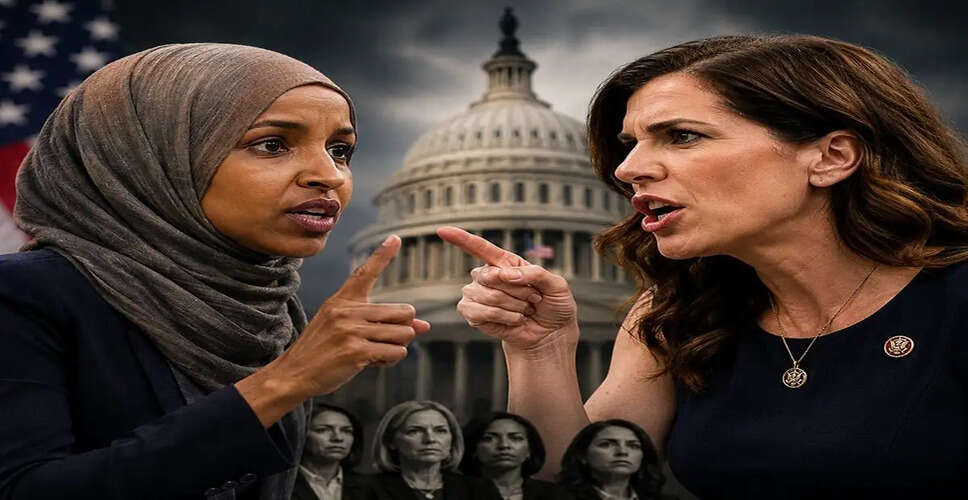

Political Tensions Erupt in the U.S.
In India, one often witnesses fierce debates and verbal skirmishes among politicians, but a recent incident from the United States has captured global attention. A significant clash between two female lawmakers has reignited discussions surrounding democracy, immigrant politics, and nationalism in the U.S. Notably, this controversy involved Ilhan Omar, a congresswoman born in Somalia, who received a sharp retort that extended beyond personal jabs to the role of foreign-born leaders in the American legislature.
Proposed Amendment Stirs Controversy
Republican Congresswoman Nancy Mace has introduced a constitutional amendment that has sent shockwaves through American politics. Mace argues that just as the U.S. President must be a natural-born citizen, so too should members of Congress, federal judiciary, and other significant positions be reserved for native-born Americans. She contends that foreign-born individuals in American politics may hold loyalties to other nations, potentially compromising U.S. interests.
Targeting Fellow Lawmakers
Mace specifically named Ilhan Omar, Shri Thanedar, and Pramila Jayapal, accusing them of showing greater allegiance to foreign countries than to the U.S. She stated that it is time to end the longstanding practice of allowing foreign-born individuals to occupy key positions of power. Mace even suggested that if her amendment were enacted, it should apply retroactively, putting the memberships of existing foreign-born lawmakers at risk.
Political Fallout and Reactions
The political uproar following Mace's statement was immediate. Initially, Ilhan Omar responded lightly, wishing her luck. However, Pramila Jayapal condemned Mace's proposal as racist and narrow-minded, arguing that it distracts from pressing issues like inflation and housing that the American public faces.
Election Setbacks and Personal Attacks
The situation escalated further when Nancy Mace faced a significant defeat in the Republican primary for the South Carolina governor's race, finishing in fifth place. Omar took the opportunity to mock her, referencing Mace's previous comment about a one-way ticket to Somalia. Mace retaliated aggressively, stating, "You can say anything about me, but I will never marry my brother," alluding to longstanding allegations against Omar regarding her marriage history.
Underlying Issues of Identity and Politics
Political analysts and social organizations have noted that Mace's remarks were not merely personal attacks but also hinted at Omar's religious and cultural background. As a member of the Muslim community, Omar's experiences are often scrutinized, and critics argue that Mace's comments reflect a broader trend of identity-based attacks that exacerbate existing social and religious divisions in the U.S.
Further Escalation and National Discourse
Another congresswoman, Sarah McBride, joined the fray, mocking Mace's electoral loss. In response, Mace issued another sharp statement, asserting her clarity regarding her gender identity and reiterating her stance against marrying her brother. Former President Donald Trump further inflamed the situation by commenting on Omar's background and her supposed hypocrisy regarding the Constitution.
Broader Implications for American Politics
This entire episode transcends personal attacks, revealing a significant struggle over rising nationalist politics, the role of immigrants, and identity politics in America. If Mace's amendment progresses, it could lead to substantial changes in the U.S. Constitution. However, implementing such a change would be challenging, requiring a two-thirds majority in both houses of Congress and approval from three-quarters of the states.
A Divided Nation
Currently, this issue has created intense political polarization in the U.S. One side frames it as a matter of national interest and patriotism, while the other condemns it as overt racism and anti-immigrant sentiment. What is clear is that the conflict between Ilhan Omar and Nancy Mace has evolved into a representation of the explosive changes in American politics.