
Innovative Hydrogel Creation from Pharmaceutical Waste: A Breakthrough by NIT-Rourkela
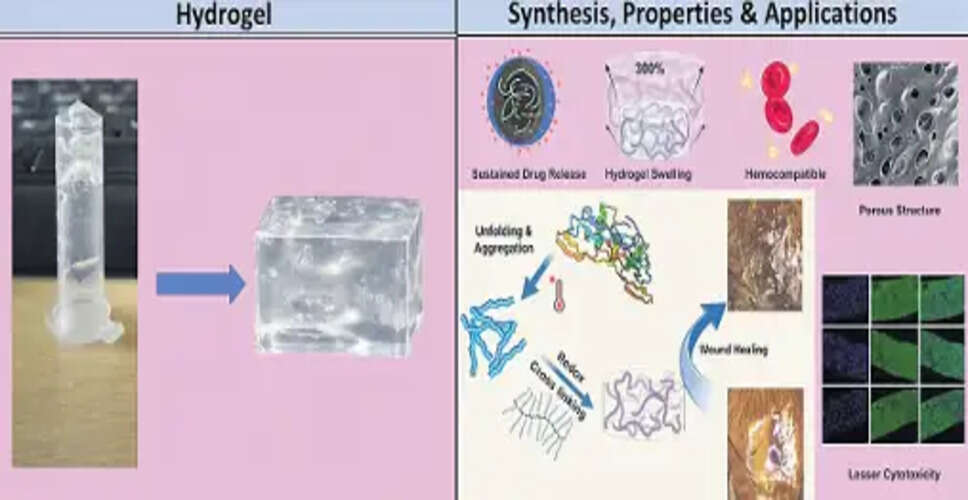

Transforming Pharmaceutical Waste into Healing Solutions
New Delhi: A team of researchers from the National Institute of Technology (NIT)-Rourkela has successfully patented a novel technique that repurposes inactive proteins, often discarded by pharmaceutical firms, into hydrogels. These hydrogels hold promise for applications in wound healing, tissue regeneration, and drug delivery, according to officials.
The research findings have been published in the Journal of Materials Chemistry by the Royal Society of Chemistry. Proteins are crucial for various bodily functions, including tissue repair and the regulation of biological processes, making them vital for modern medicine and regenerative therapies.
However, proteins are sensitive and can lose their three-dimensional structure when subjected to heat, chemicals, or harsh processing conditions, explained Harekrushna Sahoo, a professor in the Department of Chemistry at NIT Rourkela.
He noted, "When proteins unfold, they tend to aggregate into clumps, losing their biological functionality. Consequently, pharmaceutical and biotechnology companies often discard these proteins." The research team has devised a method to transform these discarded proteins into hydrogels suitable for wound healing.
In their process, the researchers heated bone morphogenetic protein-2 (BMP-2) to approximately 85 degrees Celsius for ten minutes, which caused the protein to unfold. This was followed by chemical reactions that led to the aggregation of the unfolded proteins. They then added hydrogen peroxide and hyaluronic acid to create a gel. This gel features tiny pores that enable it to absorb water, retain medications, and interact effectively with body tissues.
"The synthesis and effectiveness of the hydrogel are enhanced by the combined properties of BMP-2 and hyaluronic acid, particularly its ability to retain water, which improves the hydrogel's structure, antioxidant capabilities, and controlled drug release features," Sahoo added.