
Innovative Farming Practices Transform Lives in Patacharkuchi
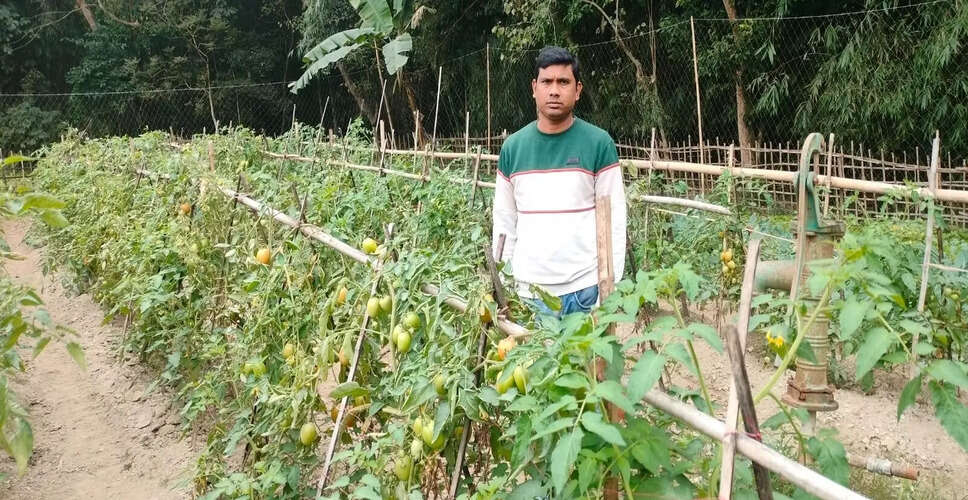
A Farmer's Journey Towards Self-Reliance
Patacharkuchi, Dec 31: For Binay Das, a resident of Daloigaon village near Patacharkuchi, agriculture transcends mere work; it embodies his lifestyle. Driven by a strong desire to sustain his family through farming, Binay, alongside his 70-year-old father Kamalakanta Das, exemplifies self-sufficiency through methodical and scientific agricultural practices.
They cultivate a diverse range of vegetables on their land, including cabbage, radish, pumpkin, okra, tomatoes, garlic, broccoli, mustard greens, potatoes, brinjal, bitter gourd, and cucumbers.
For some time now, they have been selling their harvest primarily at the Patacharkuchi market, generating an income of approximately Rs 1 to Rs 1.5 lakh this winter season. Currently, tomatoes are priced between Rs 50-80 per kg, brinjal at Rs 50-60, olkabi at Rs 40-70, and cauliflower at Rs 40-60 per kg. The freshness and quality of their vegetables ensure a steady demand from customers. Binay mentioned that he planted around 12,000 olkabi saplings this year, along with tomatoes, cauliflower, cabbage, and 250 brinjal plants.
Employing a crop rotation strategy, after selling their early cabbage harvest in November, they planted okra, bitter gourd, and other vegetables in the same area. This approach guarantees a continuous supply of produce throughout the year, optimizing the use of their limited land.
Having learned from his father since childhood, Binay has developed into a proficient farmer. He now leads a self-sufficient and dignified life, supporting a family of six, including his parents, solely through agriculture.
His farm is well-structured, primarily utilizing homemade manure and cow dung as fertilizers, and resorting to pesticides only when absolutely necessary. For irrigation, he relies on a hand-pump located on his vegetable farm, supplemented by a solar-powered water pump to draw water. With assistance from the Agriculture department, he has implemented net fencing and constructed a greenhouse.
This year, in addition to vegetables, Das has also cultivated paddy across several bighas of land, along with potatoes and mustard.
Currently, Das and his father are facing challenges from the increasing monkey population in the area, which poses a threat to their crops. The father-son duo serves as a powerful inspiration for the younger generation, demonstrating that agriculture can indeed be a sustainable and rewarding profession.