
Innovative Farmer in Himachal Pradesh Pioneers Dragon Fruit Cultivation
Transforming Farming Practices in Mandi
Munish Sood
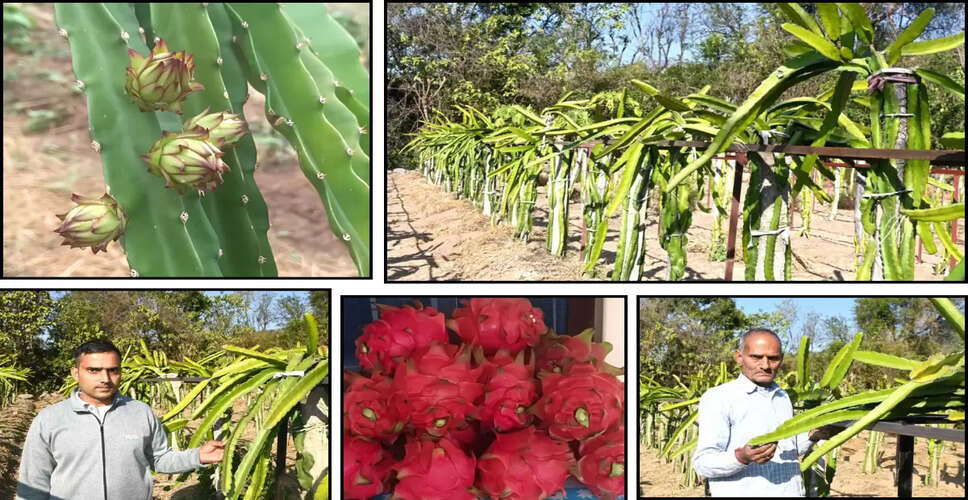
MANDI: In a significant shift from conventional agriculture, Prem Chand, a farmer from Thaur village in the Jukain gram panchayat of Mandi district, Himachal Pradesh, has set a benchmark for local farmers by successfully growing dragon fruit.
By embracing innovative techniques and sustainable farming methods, he has shown that horticulture can be a viable and lucrative career path.
Prem Chand initiated his dragon fruit farming journey in 2024, cultivating approximately 2.5 bighas of land with 800 saplings of the Jumbo Red variety. The results were promising right from the first harvest, yielding over Rs 50,000 in 2025. To date, he has sold around two quintals of dragon fruit, fetching prices between Rs 250 and Rs 300 per kilogram.
Previously involved in traditional farming, Prem Chand found the returns inadequate for the effort required. Following advice and technical support from the Horticulture Department, he transitioned to dragon fruit cultivation. He undertook essential land preparations, including leveling and creating raised beds, and sourced saplings from Maharashtra, utilizing trellis technology for plant support. He plans to expand his cultivation area in the near future.
Known as a 'super fruit', dragon fruit is packed with health benefits, although many remain unaware of its nutritional and medicinal properties. Prem Chand actively promotes its inclusion in diets, highlighting that it can be stored for up to two months without refrigeration, enhancing its marketability.
Practicing natural farming, he avoids chemical fertilizers and pesticides. His farm also features custard apple and papaya plants, with his son Arjun Sharma assisting in daily operations.
The state government has supported horticulture initiatives by granting Rs 62,000 as a subsidy under the Mission for Integrated Development of Horticulture (MIDH) for his dragon fruit project. The first installment of Rs 38,000 has already been deposited into his account. Additionally, he received drip irrigation support through the Pradhan Mantri Krishi Sinchai Yojana, with 80% of the Rs 25,000 system cost covered by subsidies.
Expressing his appreciation, Prem Chand acknowledged the invaluable support and guidance from the Horticulture Department and the State Government in his successful farming endeavor.
Subsidy Opportunities for Dragon Fruit Cultivation
According to Dr. Anil Thakur, Horticulture Subject Matter Specialist in Sarkaghat, dragon fruit farming is yielding higher returns and better market prices for farmers in a short timeframe. As a cactus species, it thrives in regions with temperatures above 35 degrees Celsius, making it ideal for the warmer areas of the district.
Farmers can receive a subsidy of up to Rs 3,37,500 per hectare under the area expansion program, distributed in two phases, with 60% available in the first installment. Additional subsidies are also provided for modern irrigation systems, including drip irrigation, sprinklers, and rain guns.
Dr. Vipin, Horticulture Development Officer, noted that dragon fruit farming is becoming a sustainable income source for farmers in the Sarkaghat area. He emphasized that progressive farmers like Prem Chand demonstrate that with the right support, technical guidance, and natural farming practices, substantial income can be achieved even on small plots of land.