
Innovative Blood Test Developed for Real-Time Lung Cancer Detection
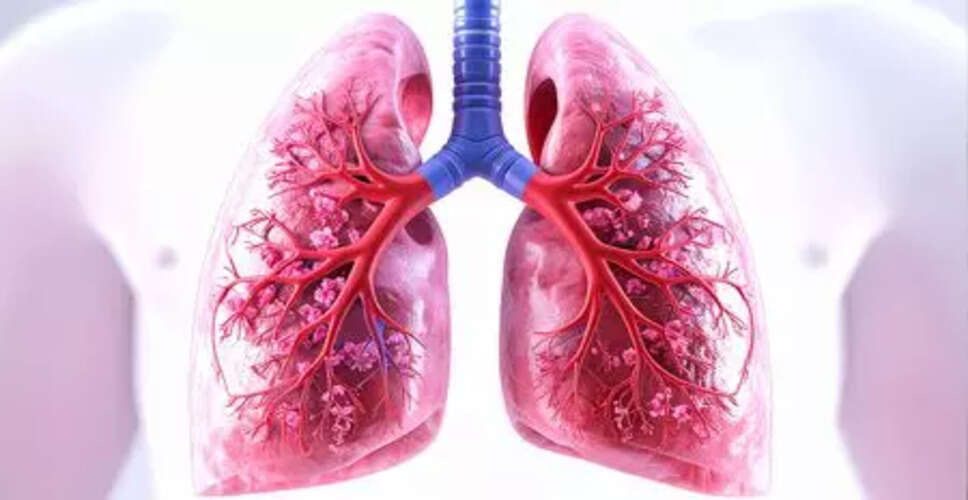
Breakthrough in Lung Cancer Diagnosis
New Delhi, Dec 17: A groundbreaking blood test has been created by a group of researchers from the UK, which could allow healthcare professionals to identify and monitor lung cancer in real-time, potentially minimizing diagnostic delays and enhancing patient outcomes.
Employing Fourier Transform Infrared (FT-IR) microspectroscopy, the researchers successfully identified a single lung cancer cell within a patient's bloodstream.
This innovative method merges sophisticated infrared scanning technology with computational analysis, concentrating on the distinctive chemical signatures of cancer cells, according to the research team from University Hospitals of North Midlands NHS Trust (UHNM), Keele University, and Loughborough University.
Lead author Professor Josep Sulé-Suso, an Associate Specialist in Oncology at UHNM, stated, "This method could facilitate earlier diagnoses, tailored treatments, and reduce the need for invasive procedures, with the potential for application to various cancer types beyond lung cancer."
Circulating tumor cells (CTCs) are cancer cells that can detach from a tumor and move through the bloodstream, offering crucial insights into disease progression and treatment efficacy. These cells are also responsible for cancer metastasis.
Current techniques for identifying CTCs are often complex, costly, and time-consuming, and they may overlook cancer cells as these cells frequently alter their characteristics while in circulation.
The research team's approach involves directing an infrared beam onto a blood sample, akin to the light emitted by a TV remote, but significantly more potent.
Different substances absorb infrared light uniquely, and CTCs exhibit a specific absorption pattern or "chemical fingerprint."
By analyzing the infrared absorption data through computer algorithms, the presence of circulating tumor cells can be swiftly determined.
This technique, detailed in the journal Applied Spectroscopy, is more straightforward and cost-effective than current methods, utilizing standard glass slides commonly available in pathology labs for preparing blood samples for infrared analysis, thus facilitating its integration into routine clinical practice.
The research team plans to evaluate this method on larger patient cohorts, with the goal of developing a rapid, automated blood test that can be seamlessly incorporated into cancer treatment protocols.