
IndiGo Faces Operational Challenges as DGCA Revises Crew Rest Rules
DGCA Withdraws Crew Rest Instructions Amid IndiGo Disruptions
On Friday, the Directorate General of Civil Aviation (DGCA) retracted its guidelines regarding weekly rest for airline crews following ongoing disruptions in IndiGo's operations for four consecutive days.
The regulatory body indicated that it was essential to reassess the rule stating that 'no leave shall be substituted for weekly rest' due to the operational interruptions and requests from airlines aimed at maintaining consistent service.
The decision to withdraw these instructions came after IndiGo experienced significant flight disruptions starting Tuesday due to a shortage of pilots and crew members. The airline had failed to adequately adjust its staffing roster in line with new government regulations.
In January 2024, the DGCA had introduced updated rostering guidelines aimed at addressing pilot fatigue, which were set to be implemented on June 1. However, airlines requested a delay in these changes due to staffing issues, leading to the new rules being enforced on November 1.
IndiGo had requested exemptions from certain provisions that restrict pilot duty hours during nighttime operations.
On the same day, the DGCA granted IndiGo a one-time exemption from the night-duty regulations for pilots.
Ram Mohan Naidu, the Minister of Civil Aviation, announced that the Union government would conduct a high-level inquiry into the operational disruptions.
Naidu stated, 'The inquiry will investigate the issues faced by IndiGo, establish accountability where necessary, and propose measures to prevent future disruptions, ensuring passengers do not encounter similar difficulties again.'
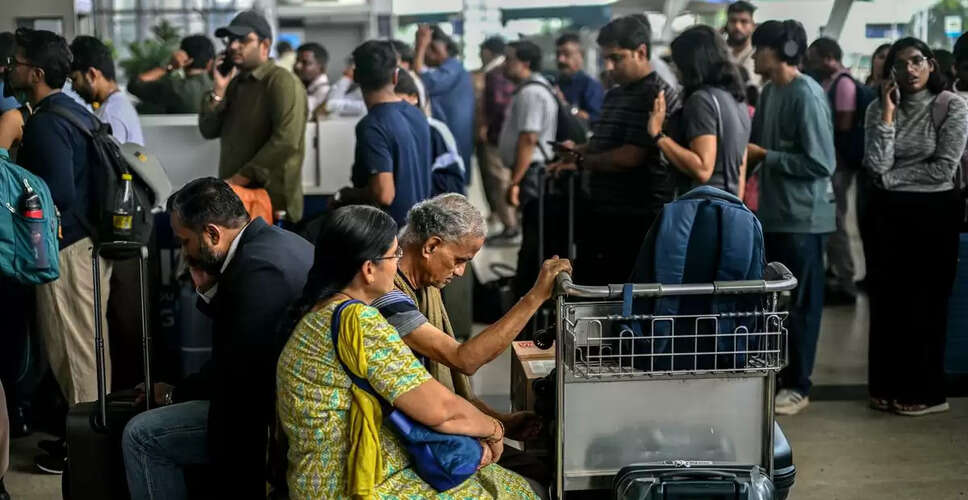
As the largest airline in India by market share, IndiGo canceled all domestic flights from Delhi until midnight on Friday, with services in other locations also impacted, leaving many passengers stranded.
This is Kochi airport between 2 am to 5 am. People sleeping on floor, fighting, crying. Aircrafts available but no pilots. Worst, while crew gets mandatory rest time, ground staff is working double shifts, sleepless in total chaos #Indigo @DGCAIndia @IndiGo6E #FlightCancellations pic.twitter.com/hoRubnaOUM
— Tabassum Barnagarwala (@tabassum_b) December 5, 2025
A senior manager from IndiGo in Kochi reported that the flight systems had malfunctioned, leaving ground staff without information on scheduled flights or crew assignments.
They stated, 'We have been consistently advising senior management to announce cancellations, but the airline is reluctant to do so, resulting in overcrowding at airports.'
While pilots and crew adhered to their mandated working hours, ground staff mentioned they were managing multiple shifts and working overnight to assist the influx of passengers.
One ground staff member, who wished to remain anonymous, expressed, 'We cannot leave the counter; at times, we have at least a dozen passengers asking questions.'
IndiGo canceled over 550 flights on Thursday and around 400 on Friday, with reports indicating that operations would be fully restored by February 10.
On Friday, IndiGo issued an apology to its customers, acknowledging that the situation would not be resolved immediately but assuring efforts to normalize operations.
The airline noted, 'Today should see the highest number of cancellations as we work to reboot our systems and schedules for progressive improvement starting tomorrow.'
IndiGo also announced it would automatically process refunds for cancellations and provide a full waiver on cancellation and rescheduling fees for flights booked between December 5 and December 15.
Opposition leader Rahul Gandhi criticized the disruptions, attributing them to the government's 'monopoly model.' He stated, 'Once again, it’s ordinary Indians who pay the price - in delays, cancellations, and helplessness. India deserves fair competition in every sector, not match-fixing monopolies.'