
India's Strong Ties with Russia Amid Global Tensions
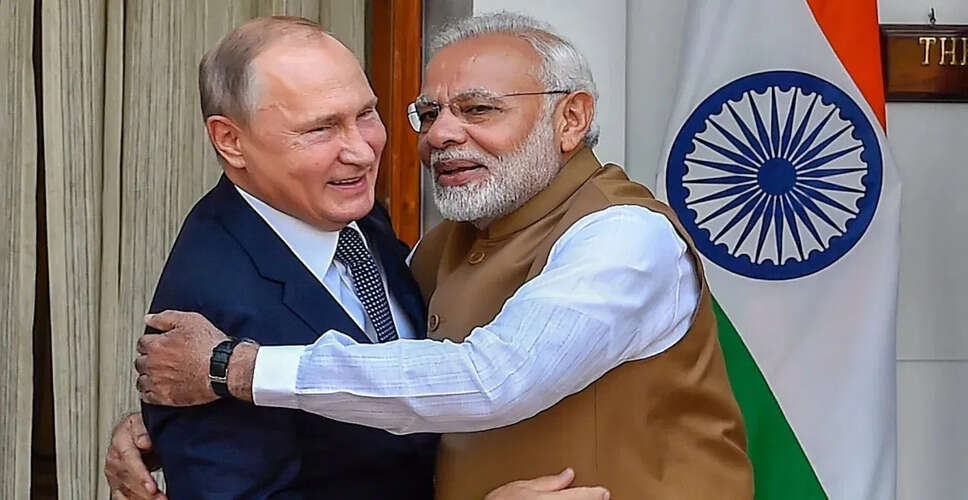
India's Enduring Relationship with Russia
India has once again demonstrated its close relationship with Russia, emphasizing that Russia will remain a steadfast ally regardless of external pressures. This assertion comes at a time when the United States is closely monitoring Russia's actions. The U.S. has threatened to impose a 500% tariff on countries engaging in trade with Russia, particularly those purchasing crude oil. According to Hardeep Puri, the Minister of Petroleum and Natural Gas, India's ongoing import of crude oil from Russia has significantly contributed to stabilizing global energy prices.
Impact of Russian Oil Imports
Puri noted that halting Russian oil trade could push crude oil prices above $120-130 per barrel. Following the Russia-Ukraine conflict, when the U.S. and Western nations imposed sanctions on Moscow, India continued its oil purchases from Russia, even increasing its imports. This has led to refined Russian oil being exported from India to countries that have imposed bans on Russian crude.
Potential Price Surge
Oil Prices Could Exceed $130 per Barrel
- As reported by a news agency, Puri highlighted Russia's crucial role as a major crude oil producer, with an output exceeding 9 million barrels per day.
- He explained that a sudden drop of 9 million barrels from the global supply of approximately 97 million barrels would lead to an impractical reduction of over 10% in worldwide consumption.
- Puri claimed that such disruptions could cause oil prices to rise above $120-130 per barrel, as consumers compete for limited supplies.
- He elaborated in Vienna, asking what would happen if this oil, which constitutes about 10% of the global supply, were to vanish from the market.
- He further explained that this would force the world to reduce consumption, leading to prices exceeding $120-130 as consumers scramble for limited supply.
Global Response to Russian Oil
Was There a Ban on Russian Oil?
The international community opted for price limits on Russian oil rather than imposing broad sanctions. Puri praised India's role in addressing the energy crisis, stating that there has never been a global ban on Russian oil. Decision-makers worldwide are aware of the realities of the global oil supply chain and recognize that India has been purchasing oil at discounted rates under the price limit, aiding the global market. Addressing critics of India's Russian oil imports, Puri remarked that some commentators unfairly criticize Indian policies without fully understanding the workings of the energy market.
India's Oil Consumption Needs
Daily Crude Oil Requirements
Currently, India relies on imports for 80% of its oil needs and 50% of its natural gas consumption. To meet its energy requirements, India has diversified its sources by purchasing oil and gas from various international suppliers. As the world's third-largest energy consumer, India requires approximately 5.4 million barrels of oil daily. Presently, India has over 50 international suppliers, with Russian oil accounting for 44% of its crude oil basket.