
India's Strategic Diplomacy Amidst Middle East Tensions
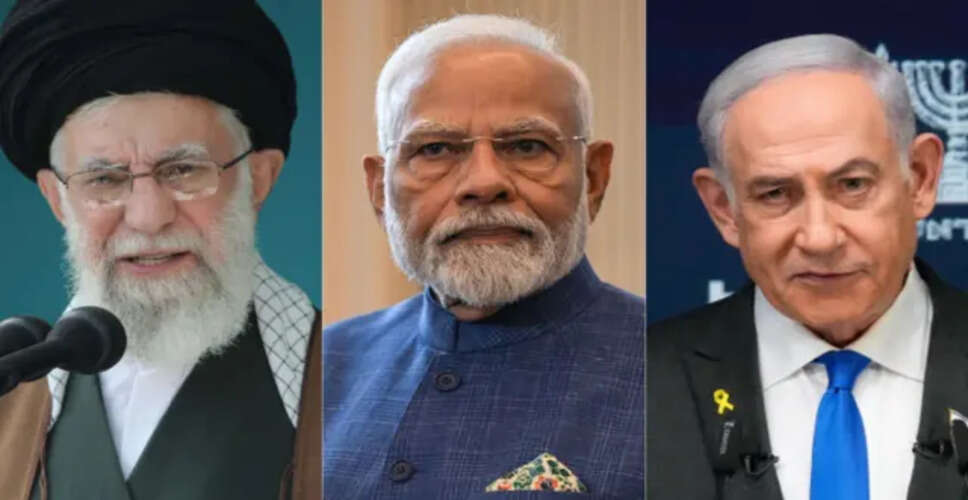
Middle East Crisis and India's Diplomatic Maneuvering
New Delhi, March 17, 2026: The situation in the Middle East is escalating. Following attacks from the United States and Israel, Iran has nearly closed the Strait of Hormuz, a crucial corridor for oil and gas through which millions of barrels pass daily. As a result, global oil prices have surged past $200, leading to a shortage of gas cylinders and stranding numerous vessels from various nations. However, amidst this turmoil, India has made a remarkable diplomatic move, establishing what is being termed the 'Magical Path of Friendship.'
Iran has explicitly stated that the Strait of Hormuz is off-limits to vessels associated with the U.S. and Israel, yet it has granted safe passage to ships from other countries, particularly India. Iranian Foreign Minister Abbas Araghchi and the Indian Ambassador to Iran, Mohammad Fatehali, have repeatedly emphasized, "India is our friend, and we share mutual interests. We do not wish for countries like India to suffer." Thanks to this 'friendship,' several Indian-flagged vessels, including the Shivalik and Nanda Devi, along with other LPG carriers, have successfully navigated through Hormuz without any interruptions. These ships are now en route to Indian ports such as Mundra and Kandla, carrying millions of metric tons of LPG and oil.
Foreign Minister S. Jaishankar hailed this as a significant diplomatic victory for India. He remarked, "We engaged in direct talks with Iran, explained our position, and coordinated effectively. Diplomacy works even in times of war – what could be a better approach?" Jaishankar clarified that there is no 'secret deal'; rather, this arrangement stems from the long-standing relationship and shared interests between the two nations. Iran has allowed some vessels to pass, and discussions are ongoing for an additional 20-22 Indian ships.
This route has become a 'lifeline' for India. While the global oil and gas crisis deepens, India has managed to secure its energy needs. Iran has also set some conditions, such as the release of three seized oil tankers, but India continues to maintain a balancing act. It has not fully aligned with the U.S. and Israel, nor has it distanced itself from Iran. India has also upheld balance during its presidency of BRICS.
Experts suggest that this is a testament to India's 'multi-alignment' strategy. While Trump calls for naval deployments and the world gasps for air, India has found a way through dialogue. Ships are safely passing through Hormuz, Indian sailors are secure, and the domestic market is experiencing relief from gas and petrol shortages.
In summary, regardless of the turmoil between Iran, Israel, and the U.S., India has successfully carved out a 'Magical Path of Friendship.' This exemplifies the true strength of diplomacy. Long live diplomacy!