
India's S. Jaishankar Advocates for a Holistic Approach to Human Rights at UN
India's Call for Comprehensive Human Rights
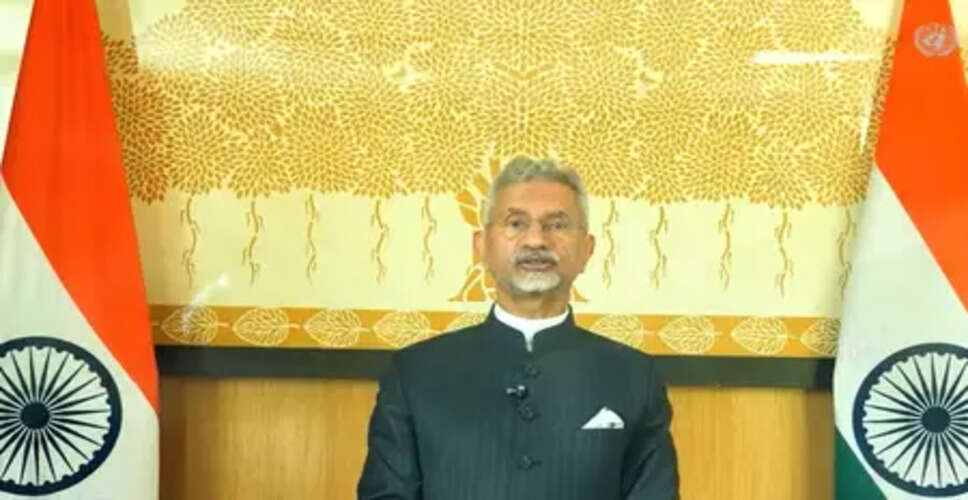
United Nations: S. Jaishankar, India's External Affairs Minister, has emphasized the need for a comprehensive approach to human rights that integrates development and capacity-building, aiming for 'real improvements in the lives of the most vulnerable' while addressing terrorism instead of engaging in politicized debates.
During a virtual address to the Human Rights Council in Geneva on Wednesday, he stated, 'In a world plagued by conflict, division, and uncertainty, India aims to discover and broaden common ground.'
'We have consistently advocated for dialogue over conflict, consensus over division, and human-centric development over narrow interests,' he added.
Jaishankar asserted that for the UN and the Human Rights Council to fulfill their human rights commitments, they must 'promote zero tolerance for acts of terrorism.'
'Terrorism represents one of the most severe violations of human rights, and there is no justification for it, particularly when innocent lives are at stake,' he remarked.
India was elected to the Human Rights Council for the seventh time in October, pledging to act as a 'bridge-builder.'
The country received a significant mandate, securing 177 out of 188 votes in the General Assembly.
'Our mandate signifies the trust and expectations of the international community, particularly from partners in the Global South,' Jaishankar noted.
'India approaches this Council with the belief that human rights are best promoted through dialogue, capacity-building, and authentic partnerships, rather than through politicization, selectivity, or double standards,' he stated.
He emphasized that as the world's largest democracy, India is dedicated to collaborating with all members and observers to promote and safeguard human rights for everyone, based on equality, openness, and respect.
Jaishankar articulated that India's perspective on human rights is grounded in the understanding that the insecurity of any region or the marginalization of any group ultimately undermines the rights and welfare of all.
His address subtly criticized the narrow focus on human rights often seen in some Western nations and institutions.
Describing India's broad view of human rights, he said, 'We speak from our experience as a developing nation that has faced poverty and external challenges, yet has chosen the path of democracy, pluralism, and social justice.'
In light of ongoing discussions about technology and human rights, and the potential for exacerbating global divides, Jaishankar asserted, 'Technology should and must serve as a force for enhancing human rights, not as a new division.'
Citing India's Digital Public Infrastructure (DPI) as an example, he explained that the country has been making unprecedented investments in developing human capacities.
This initiative has allowed hundreds of millions to access welfare benefits, financial services, and public schemes with transparency and minimal leakage, and India is sharing its expertise for the global public good.
Highlighting the significance of development in enabling people to genuinely enjoy human rights, he remarked, 'The devastating effects of the pandemic, climate change, geopolitical tensions, and economic stress have intensified existing inequalities.'