
India's Press Freedom Ranking Sees Improvement: What Does It Mean?
India's Progress in Press Freedom
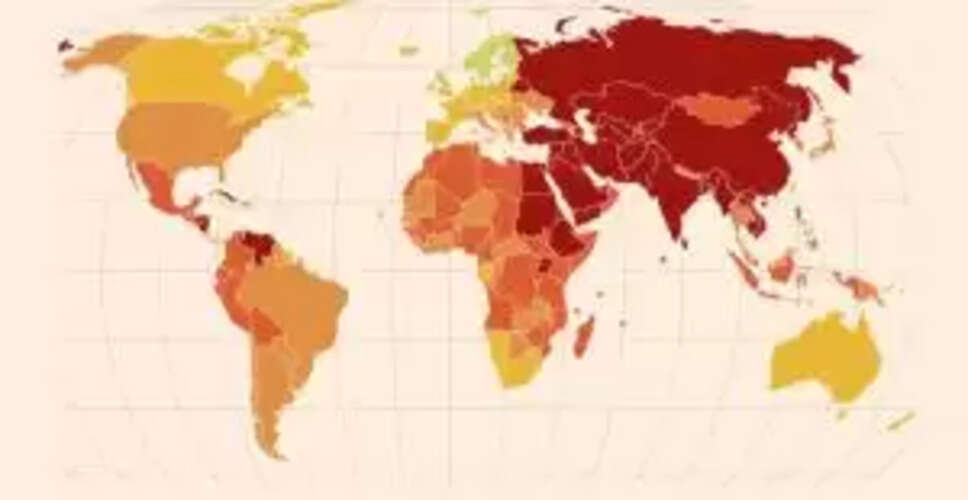
New Delhi: This year, India's position in the World Press Freedom Index has improved to 151 out of 180 nations, up from 159 last year, according to Reporters Without Borders.
The top three spots in the index are held by Finland, Estonia, and the Netherlands, following a survey that gathered insights from over 5,000 individuals globally to determine the rankings.
"Our survey included a wide range of participants, including policymakers, journalists, and various stakeholders," stated Thibaut Bruttin, the assistant director general of Reporters Without Borders, during a press briefing in Delhi.
He emphasized that the identities of the respondents are kept confidential, ensuring a diverse representation of different ideologies.
In India, there are approximately 900 privately-owned television channels, with around half focused on news content.
Additionally, the country boasts around 140,000 publications in over 20 languages, including about 20,000 daily newspapers that collectively circulate more than 390 million copies, as reported by Reporters Without Borders.
The United States ranks 57th on the index, having dropped two places from the previous year.
Concerns regarding media concentration persist even in countries with high rankings, such as Australia (29th), Canada (21st), and Czechia (10th), according to the organization.