
India's Path to a Naxal-Free Future: Challenges Ahead

A New Era in India's Fight Against Naxalism
Dr. Amrik Singh Thakur
India's ambition to declare itself free from Naxalism by March 31, 2026, signifies a pivotal moment, yet the underlying ideological frameworks that have supported Left-Wing Extremism for years require a comprehensive policy approach.
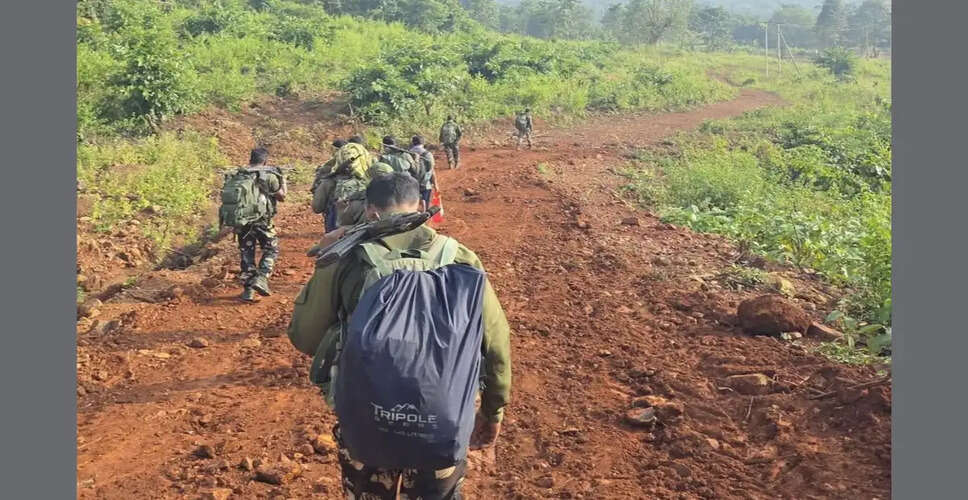
On March 31, 2026, India achieved a milestone that many security experts deemed unlikely within a single generation's political landscape. Home Minister Amit Shah's ambitious timeline for eradicating Naxalism was not merely a statement but reflected a significant transformation in the situation on the ground, particularly in Chhattisgarh's Bastar region. The number of districts affected by Naxalism has decreased from 12 to just 6, a result of a decade-long, coordinated effort by the state.
The removal of Nambala Keswara Rao, known as Basavraj, the CPI (Maoist) Secretary General, stands out as a key operational victory in this initiative. An engineering graduate who joined the movement in the 1970s, Basavraj was a pivotal figure, trained in guerrilla tactics and responsible for numerous high-casualty attacks. His elimination, following a 70-hour operation involving multiple security forces, created a leadership void in the organization that it has struggled to fill.
Understanding the Roots of Naxalism
A persistent misconception surrounds Left-Wing Extremism in India, suggesting it arises solely from poverty and state neglect. This narrative, while politically advantageous, misrepresents the actual dynamics. In Bastar, Naxal groups systematically destroyed schools and healthcare facilities, creating a development void that they then used to portray the state as indifferent. The insurgency's roots lie not in pre-existing grievances but in the grievances they manufactured themselves.
The shift in the situation can be attributed to four main factors: ongoing security operations supported by detailed intelligence, the dismantling of the Maoist funding networks involving various stakeholders, a rehabilitation framework for surrendering cadres, and unwavering political commitment across electoral cycles. When former Naxals advocate for demobilization, the ideological grip of the movement weakens.
Addressing Urban Naxalism and Its Support Networks
However, declaring victory over armed Maoism in Chhattisgarh does not equate to defeating the ideological framework that supports it. Analysts emphasize that the armed factions are merely one aspect of a more complex urban support system. The Elgar Parishad case highlighted a network of academics, activists, and NGOs that provided essential support to the armed movement, utilizing institutional platforms to gain legitimacy.
The challenge now is more intricate than merely deploying security forces. The constitutional protections for free speech and academic freedom also allow for ideological subversion. A heavy-handed approach would only validate the Maoist narrative of state oppression. Instead, a nuanced strategy is needed: targeted legal actions against those materially supporting violence, safeguards against foreign-funded advocacy that undermines national security, and a robust intellectual counter-narrative that challenges Maoist perspectives in public discourse.
Future Policy Directions
The announcement of a Naxal-free India must be followed by a well-planned consolidation phase. Bastar requires educational institutions, healthcare, and economic development—not as acts of charity, but to fill the political void that Maoism has exploited. The heartfelt letters from surrendered cadres urging their peers to return are more effective demobilization tools than any official statement; these community voices need institutional backing.
At the same time, the state must avoid complacency. Ideological movements do not simply vanish with the defeat of their armed factions; they adapt and find new avenues for support. The intellectual environment that once celebrated Maoist violence will not dissolve just because of Basavraj's death and the reduction of the Red Corridor. India's security strategy must be sophisticated enough to differentiate between legitimate dissent, which is essential for democracy, and organized support for violent insurrection, which must be addressed.
March 31, 2026, is a date that Bastar has earned through years of hardship and the sacrifices of countless security personnel and civilians. It should be commemorated not just as a political achievement but as a renewed commitment to ensure that the silence replacing the sounds of conflict in these forests signifies peace, not the calm before another storm.“Gareebi ke kaaran naksalwad nahin faila, naksalwad