
India's Manufacturing Sector Hits 16-Month High: What This Means for the Economy
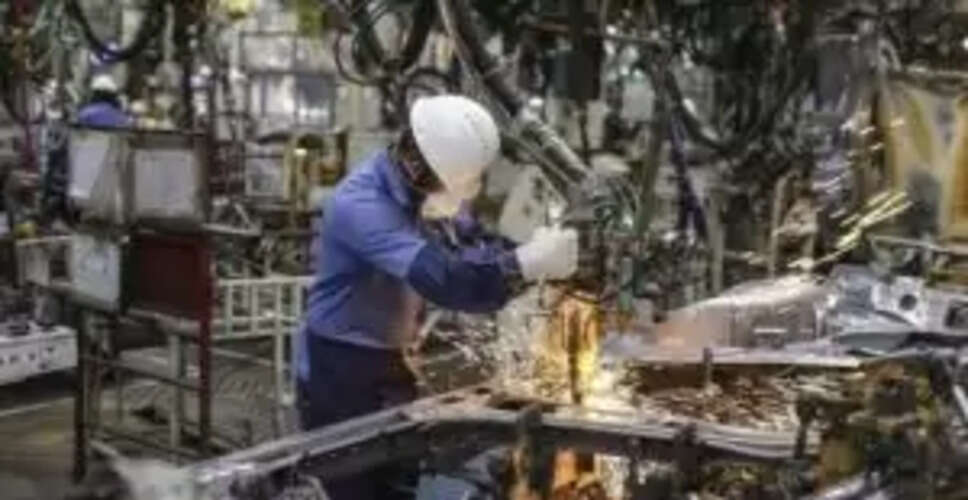
Manufacturing Growth Surges in July
Mumbai: The growth of India's manufacturing sector reached a remarkable 16-month peak of 59.1 in July, driven by a notable rise in new orders and production, according to a recent monthly survey.
The seasonally adjusted HSBC India Manufacturing Purchasing Managers' Index (PMI) increased from 58.4 in June to 59.1 in July, indicating the most significant improvement in the sector's health since March 2024.
In PMI terminology, a score above 50 signifies expansion, while a score below indicates contraction.
Pranjul Bhandari, Chief India Economist at HSBC, noted, "India's manufacturing PMI rose to 59.1 in July from 58.4 the previous month, marking a 16-month high, fueled by robust growth in new orders and production."
The survey revealed that overall sales experienced their fastest growth in nearly five years, with production growth also reaching a 15-month high in July, surpassing the series trend.
Despite this positive outlook, Indian manufacturers expressed confidence in increased output over the next year, although overall sentiment dipped to its lowest level in three years.
"Business confidence has fallen to its lowest point in three years due to worries about competition and inflation. Input and output prices in the manufacturing sector remained high in July," Bhandari added.
While companies continued to hire additional staff at the beginning of the second fiscal quarter, the rate of hiring was the slowest in eight months.
Notably, 93% of survey participants indicated that their current employment levels were adequate for their needs, with outstanding business volumes only slightly increasing in July.
"In light of declining business confidence, Indian manufacturers hired additional staff at the slowest pace since November 2024," Bhandari stated.
Survey respondents identified competition and inflation as significant challenges to growth.
On the pricing front, the survey indicated that cost pressures intensified in July, with reports of rising prices for aluminum, leather, rubber, and steel, leading to an increase in average input costs compared to June.
Panel members noted that favorable demand conditions allowed for upward adjustments in their pricing, as indicated by the survey.
The HSBC India Manufacturing PMI is compiled by S&P Global based on responses from approximately 400 manufacturers.