
India's Humanitarian Efforts Amidst Middle East Conflict
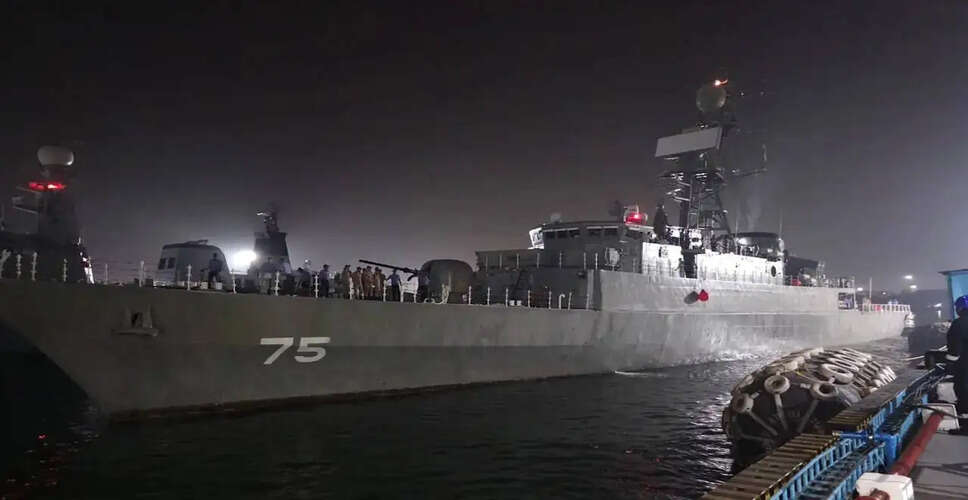

Repatriation of Iranian Sailors
On March 13, a chartered flight departed from Kochi International Airport, transporting over 130 Iranian sailors, the remains of 84 others, and around 30 Iranian nationals who were stranded in India due to the ongoing conflict. This flight also included the non-essential crew members of the IRIS Lavan, an Iranian naval ship that docked in Kochi on March 4 after experiencing urgent technical difficulties. The spokesperson for India’s External Affairs Ministry, Randhir Jaiswal, confirmed the flight's departure during a media briefing, mentioning that the aircraft first collected the bodies from Colombo, Sri Lanka, before heading to Kerala. This operation was conducted discreetly, avoiding media coverage due to the sensitive nature of the ongoing Middle Eastern conflict. There were no press conferences or formal announcements, just two decisions that were both humanitarian and strategic in nature.
Strategic analyst Brahma Chellaney noted that while India facilitated the return of Iranian sailors, Iran allowed two LPG tankers destined for India—Shivalik and Nanda Devi—to pass through the Strait of Hormuz. He suggested that a quiet agreement had been reached between New Delhi and Tehran.
Background of the Situation
How India Got Here
The events leading to this situation began on February 28, 2026, when Operation Epic Fury was initiated. On that day, Iran sought permission to dock three vessels: IRIS Lavan, IRIS Bushehr, and IRIS Dena. India granted these requests on March 1. Of the three, only IRIS Lavan successfully reached an Indian port, arriving in Kochi on March 4. IRIS Bushehr docked in Sri Lanka, while IRIS Dena was torpedoed and sunk by the USS Charlotte, a US Navy submarine, approximately 19 nautical miles off the coast of Galle, Sri Lanka, on the same day.
External Affairs Minister S. Jaishankar informed parliament on March 9 that IRIS Lavan had docked in Kochi due to a technical issue, and its crew, primarily young cadets, were accommodated at Indian naval facilities. He stated that the government believed it was the right course of action. Over 50 crew members remained with the ship for operational needs, while the non-essential sailors departed on a Turkish airline flight that had previously collected the bodies of over 80 Iranian sailors from Colombo. India's decision to repatriate was not spontaneous; it was a result of quiet diplomacy amidst criticism from various quarters.
The sinking of IRIS Dena, which had participated in an Indian-hosted exercise just weeks earlier, drew sharp criticism from India's strategic community. Chellaney remarked that the US's attack on the Iranian frigate in India's maritime vicinity was not merely a battlefield incident but a strategic embarrassment for New Delhi. He argued that the US had effectively transformed India's maritime neighborhood into a conflict zone. Former Indian Navy chief Admiral Arun Prakash suggested that New Delhi should express its deep concern regarding the situation, while former diplomat Kanwal Sibal criticized the US for disregarding India's sensitivities.
Despite the pressure, Prime Minister Narendra Modi and his administration remained silent on the sinking, opting instead to continue with their plans to house the crew, return the sailors, and maintain diplomatic relations with Tehran.
Humanitarian Gesture and Diplomatic Relations
India's repatriation of the IRIS Lavan crew was not merely a humanitarian gesture; it also served as a diplomatic signal that Iran understood. The Iranian ambassador confirmed that Iran would refrain from attacking Indian vessels, stating, "Because we believe that Iran and India are friends." Iran has expressed gratitude to India for its support during the ongoing conflict, which began on February 28. The Iranian embassy in India acknowledged India's kindness and humanity on social media.
India has consistently played a supportive role during crises, providing medical and essential goods to various nations, including Ukraine, in line with its philosophy of Vasudhaiva Kutumbakam, which translates to 'the world is one family.' India first extended aid to Iran on March 18, sending essential medical supplies, and on March 22, local residents in Jammu and Kashmir's Budgam contributed gold, silver, and cash to support Iran amid the Gulf War crisis.
Sri Lanka's Position
Sri Lanka's Different Calculation
Chellaney also highlighted a contradiction in Sri Lanka's stance, noting its apparent neutrality amidst the conflict between Iran and the US-Israeli coalition. He pointed out that Sri Lanka, possibly under US influence, declined to repatriate the 208 crew members of IRIS Bushehr and 32 survivors of IRIS Dena, even while allowing the same aircraft to transport the deceased.
Neutrality in Form, Alignment in Effect: Ignoring Tehran’s pleas for repatriation, Sri Lanka continues to hold more than 250 Iranian sailors in protective custody, including survivors of a frigate sunk by the United States. India, in contrast, allowed about 180 Iranian sailors to…
— Dr. Brahma Chellaney (@Chellaney) March 24, 2026
An internal US State Department cable from March 6 indicated that Jayne Howell, the charge d'affaires at the US embassy in Colombo, had urged Sri Lanka's government not to repatriate the Bushehr crew or the Dena survivors, advising them to minimize Iranian attempts to use the detainees for propaganda. Sri Lanka has consistently cited the 1907 Hague Convention V as its legal justification for its actions, which, while technically defensible, raises questions about its strategic neutrality.
The differing responses from India and Sri Lanka reflect broader geopolitical dynamics, showcasing the contrast between a major power acting independently and a smaller, economically challenged state potentially yielding to US pressure.
Current Situation in Iran
The conflict in Iran has now entered its fourth week, with the IEA declaring the energy disruption as the worst in recorded history, surpassing the oil shocks of 1973 and 1979 combined. Iran's new Supreme Leader, Mojtaba Khamenei, has adopted a hardline position, indicating that Tehran will not agree to a ceasefire unless US and Israeli attacks cease entirely. Iranian officials have insisted that the war must conclude permanently, rather than through a temporary truce. While there has been no confirmed direct communication from Khamenei to Donald Trump, Iran's leadership has broadly dismissed claims of ongoing negotiations as false, refusing to engage under current military pressure. On the US side, Trump has claimed that talks are "productive" and that a deal could be imminent, even pausing some planned strikes to facilitate diplomacy, yet Washington has not consented to an immediate ceasefire and continues military operations alongside Israel.