
India's Growing Concerns Over Tensions in West Asia: Government Calls All-Party Meeting
India's Response to West Asia Tensions
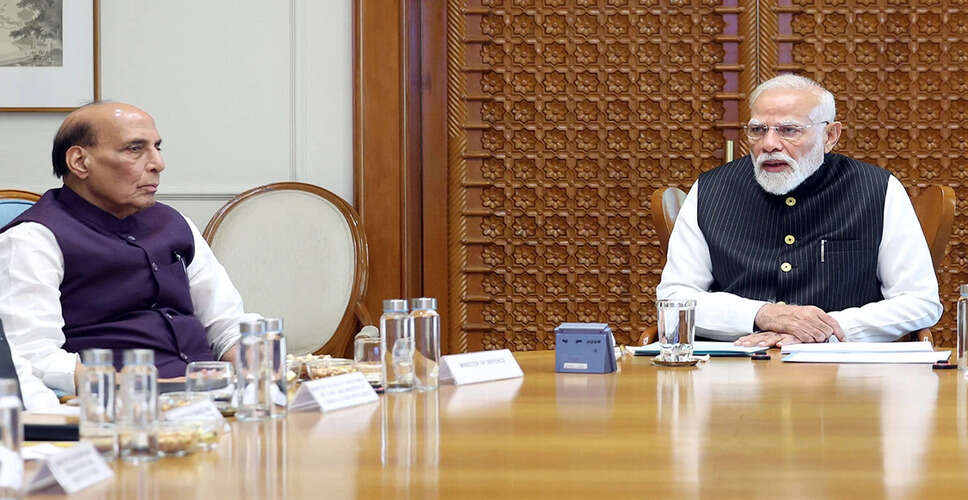
India's apprehensions regarding the ongoing tensions and war-like conditions in West Asia are escalating. In Parliament, a heated exchange occurred between the government and the opposition on this issue, prompting the central government to convene an all-party meeting to discuss the situation. Prime Minister Narendra Modi emphasized in the Rajya Sabha that India's primary objective is to restore peace in the region through dialogue and diplomacy, while the opposition raised serious questions about the government's foreign policy.
Diplomatic Engagements and Concerns
Prime Minister Modi stated that he has engaged in discussions with the heads of state of most West Asian countries twice and that India maintains ongoing communication with Gulf nations, Iran, Israel, and the United States. He stressed that India seeks resolution through dialogue and diplomacy rather than conflict. Furthermore, he condemned the attacks on commercial vessels in the Strait of Hormuz and any disruptions to maritime routes as unacceptable.
Impact of Conflict on Energy Supply
The Prime Minister informed Parliament that the ongoing conflict in West Asia is exacerbating the global energy crisis, which directly affects India. The supply of essential commodities such as petrol, diesel, gas, and fertilizers is being disrupted, leading to potential market instability and inflation. He highlighted that nearly one million Indians work in Gulf countries, and their safety and livelihoods are a top priority for the government. Many vessels, including those with a significant number of Indian crew members, are stranded in the Strait of Hormuz, posing a challenge for the government to ensure their safe return and restore normalcy.
Opposition Criticism of Foreign Policy
While the government emphasizes its efforts to manage the situation, the opposition continues to criticize its approach. Rahul Gandhi, the leader of the opposition in the Lok Sabha, described the government's foreign policy as personal and weak, claiming it adversely affects the country's standing. He also accused the government of causing inflation that burdens the common people, particularly with rising prices of cooking gas and petrol.
Call for Strong Policy on West Asia Crisis
Congress leader Jairam Ramesh also criticized the government's stance, asserting that a clear and robust policy is essential for addressing serious issues like the West Asia crisis. Another member in the Rajya Sabha referenced a resolution passed during the 2003 Iraq war, urging the government to adopt a similar clear position.
Domestic Effects of the Crisis
The repercussions of this crisis are becoming evident within the country. A suspension motion was introduced in Parliament regarding the potential shortage and price volatility of cooking gas. The opposition argues that the government must take immediate and concrete steps to alleviate the burden on the public. Experts believe that if the situation in the Strait of Hormuz remains disrupted for an extended period, it could have even more severe implications for India's trade and energy supply.
Review of National Security Preparedness
In light of the escalating global tensions, Defense Minister Rajnath Singh convened a meeting with top military officials to review the country's security preparedness. Key military and research leaders participated in this meeting to assess the current situation, indicating that India is vigilant on both diplomatic and security fronts.
Upcoming All-Party Meeting
The Modi government has scheduled an all-party meeting for Wednesday at 5 PM to discuss the West Asia crisis comprehensively. It is anticipated that all parties will collaborate to formulate a unified strategy to safeguard national interests and strengthen India's role on the international stage. The Prime Minister has also stated in Parliament that during these challenging times, the country should present a united front advocating for peace and dialogue. It will be crucial to observe how effectively India can play a role in mitigating this crisis through its diplomatic efforts in the coming days.