
India's Foreign Minister Highlights Strategic Ties with the US in Washington Press Briefing
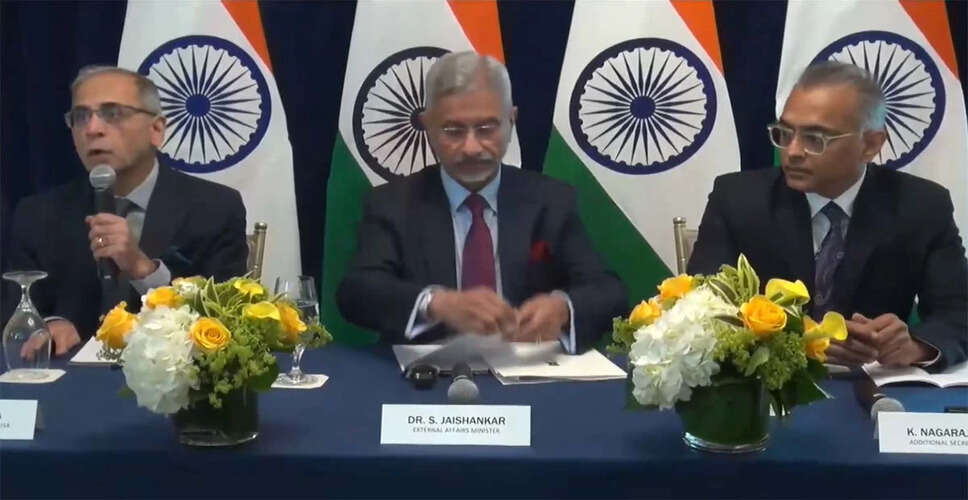
Overview of the Press Briefing
During a press conference in Washington, India's External Affairs Minister Dr. S. Jaishankar articulated the maturity of India-US relations, India's role on global platforms, and its stance on contemporary international issues. He emphasized India's foreign policy priorities, strategic balance, trade relations, and commitment to the Global South, while also addressing the potential heavy taxes the US plans to impose on countries purchasing oil from Russia.
Expanding India-US Relations
Jaishankar noted that the relationship between India and the US extends beyond mere strategic partnership, encompassing areas such as technological collaboration, defense manufacturing, education, clean energy, and improvements in global governance structures. He highlighted that shared values and mutual respect form the foundation of this relationship between the two democracies.
Advocacy for the Global South
A significant point raised during the briefing was India's effective advocacy for the interests of the Global South. Jaishankar clarified that India speaks not only for itself but also for developing nations often overlooked on international platforms. This commitment was evident during India's G20 presidency, where issues concerning the Global South were prioritized.
India's Stance on China
In response to questions regarding China, Jaishankar maintained a measured yet clear approach. He stated that India advocates for regional stability and will continue to collaborate with the US and other like-minded nations to uphold freedom and a rules-based order in the Indo-Pacific region, while also ensuring its strategic autonomy.
Position on the Russia-Ukraine Conflict
Regarding the Russia-Ukraine war, Jaishankar reiterated that India does not take sides but seeks resolution through peace and dialogue. He mentioned that India has sent several humanitarian aid packages to Ukraine and is ready to assist countries affected by the war.
India's Foreign Policy Principles
Jaishankar emphasized that India's foreign policy is grounded in the 'India First' principle. He stated that India does not align itself with any coalition but believes in issue-based partnerships, making it clear that decisions are made based on national interests rather than external pressures.
Concerns Over Energy Security
He also conveyed that India has shared its energy security concerns with US Republican Senator Lindsey Graham, who has proposed a bill imposing up to 500% tariffs on countries trading with Russia, particularly targeting India and China. Jaishankar stated, 'We have expressed our concerns and interests regarding energy security to them. If such a situation arises, we will seek solutions.' This bill, supported by the Trump administration, aims to exert pressure on Russia concerning the Ukraine war but could severely impact countries like India that rely on Russian oil for 40-45% of their energy needs.
Monitoring Developments in US Congress
Jaishankar made it clear that India is closely monitoring any developments in the US Congress that could directly or indirectly affect it. He noted that energy security is not just an economic issue for India but is also tied to strategic and social stability. Following the Ukraine war, when Western nations imposed strict sanctions on Russia, India began receiving discounted crude oil from Russia, importing 1.96 million barrels daily in May 2025, marking the highest level in ten months.
Upcoming Trade Agreement
Jaishankar hinted that a significant trade agreement between India and the US is in its final stages and could soon be implemented, potentially reducing heavy tariffs imposed by the US, thereby providing relief to Indian exporters. This agreement could also balance the 26% retaliatory tariff announced by Trump in April.
Operation Sindoor and Counter-Terrorism
Additionally, Jaishankar stated that 'Operation Sindoor' has sent a clear message that India will take action against terrorism. He emphasized the importance of holding terrorists accountable, as highlighted in statements from the Quad and the Security Council on April 25. He reiterated, 'If terrorist attacks occur, we will act against those responsible, their supporters, financiers, and collaborators.'
Engagement with Global Partners
Jaishankar also discussed the nature of the terrorism challenge India faces, which has persisted for decades, and reaffirmed India's determination to respond firmly. He mentioned productive bilateral meetings with Rubio and discussions on trade, investment, technology, defense, energy, and mobility with US officials.
Clarification on US Role in Ceasefire
When asked about President Trump's claims regarding the US role in the India-Pakistan ceasefire, Jaishankar provided a clear response, stating, 'The record of what happened at that time is very clear, and the ceasefire was established through mutual dialogue between the DGMO of both countries.'
India's Evolving Global Role
In summary, the key points from this press conference indicate that India has evolved from being merely a regional power to a responsible global partner prioritizing balance, dialogue, and development. Strengthening ties with global partners like the US, India is poised to play a decisive role in global politics. The briefing also highlighted India's clear, prudent, and diplomatic stance on sensitive issues like energy security, demonstrating its readiness to enhance trade relations with the US while firmly safeguarding its strategic interests. It will be interesting to see how India maintains its position and balance in these complex global circumstances.