
India's External Affairs Minister Questions US Tariffs on Russian Oil Purchases
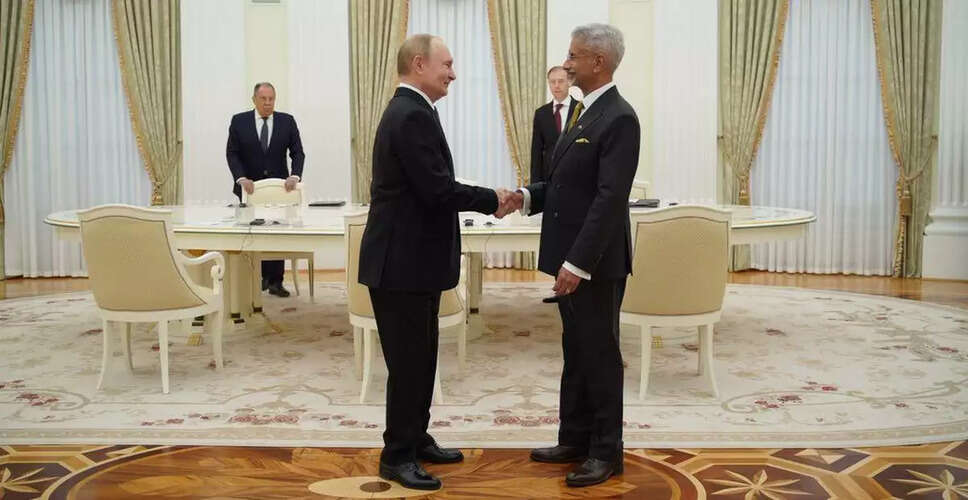
Jaishankar's Concerns Over US Tariffs
On Thursday, S. Jaishankar, India's External Affairs Minister, expressed his confusion regarding the United States' decision to impose tariffs on India for acquiring Russian oil. He noted that it was the US that had previously encouraged India to stabilize the global energy market by purchasing oil from Russia.
Jaishankar's remarks came during his three-day visit to Russia, amidst rising diplomatic tensions between India and the US. This situation escalated after the Trump administration raised tariffs on Indian imports to 50% on August 6, citing concerns over India's oil purchases from Russia amid the ongoing conflict in Ukraine.
Trump has accused India of contributing to the war effort through its oil purchases. Jaishankar clarified that India is not the largest buyer of Russian oil, stating that China holds that title, and suggested that the European Union is the primary purchaser of Russian LNG.
He further emphasized that India's oil imports from the US have been increasing, leading him to question the rationale behind the US's stance.
❗️Jaishankar: 'India Is Perplexed' By US Logic On Tariffs
— RT_India (@RT_India_news) August 21, 2025
India is not the biggest buyers of Russian oil, and Washington even encouraged New Delhi to "do everything to stabilise world markets" - including purchasing Russian energy, he explained. pic.twitter.com/1g9vRl49EM
Jaishankar made these comments during a joint press conference with Sergey Lavrov, his Russian counterpart. He also met with President Vladimir Putin in the Kremlin, marking the second high-level Indian visit to Russia this month, following National Security Adviser Ajit Doval's meeting with Putin on August 7.
Prime Minister Narendra Modi is expected to meet Putin at the upcoming Shanghai Cooperation Organisation Leaders’ Summit in Tianjin, China, scheduled for August 31 to September 1.
The US's decision to double tariffs came shortly after Trump announced a 25% levy on Indian goods as part of reciprocal tariffs affecting multiple countries without finalized trade agreements with the US.
In response, India labeled the US's actions as “extremely unfortunate,” asserting that such measures were unjustified, especially since other nations are engaging in similar actions for their national interests. A spokesperson from the Ministry of External Affairs stated that India would take necessary steps to safeguard its interests.
Negotiators from both nations had recently concluded a fifth round of trade talks in Washington, but the next scheduled meeting in New Delhi on August 25 was abruptly canceled.
Peter Navarro, a White House trade advisor, claimed in a Financial Times column that India's increased Russian oil imports were motivated by the interests of India's oil lobby rather than domestic consumption needs.
US Treasury Secretary Scott Bessent reiterated claims that some of India's wealthiest families were profiting from the resale of Russian oil. He noted that India's imports of Russian oil surged from less than 1% before the Ukraine conflict to 42% now, resulting in an estimated $16 billion in excess profits for Indian businesses.
Bessent defended the US's decision not to penalize China, arguing that China's purchases from Russia had only modestly increased from 13% to 16% since the war began, unlike India's significant rise.