
India's External Affairs Minister Discusses Middle East Tensions with US Counterpart
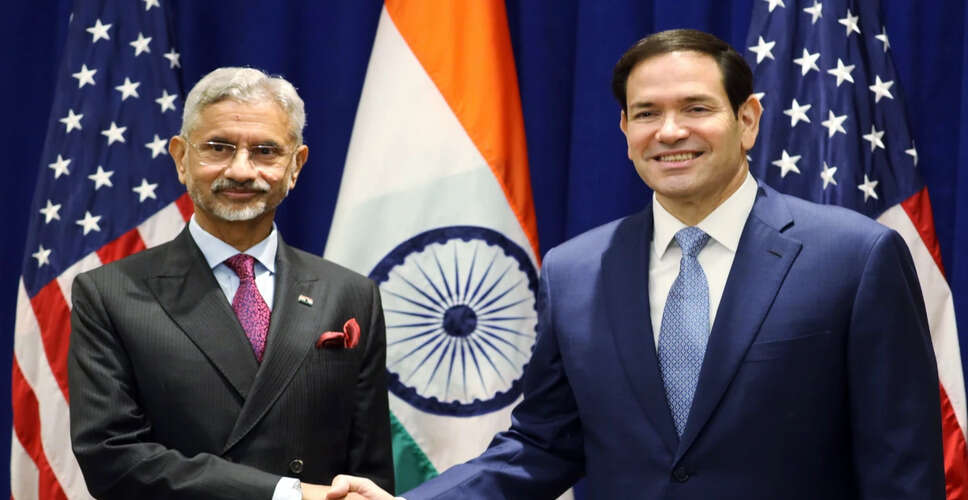
India and US Discuss Rising Tensions in the Middle East
In light of escalating tensions in the Middle East and the potential threats to the global economy, India's External Affairs Minister S. Jaishankar engaged in a detailed phone conversation with his American counterpart, Marco Rubio, on Monday. This discussion comes amid fears of a worsening energy crisis due to Iran's blockade of the Strait of Hormuz.
The conversation between Jaishankar and Rubio occurred just hours after President Donald Trump extended the deadline for Iran to reopen the Strait of Hormuz by five days. Jaishankar later shared on social media that their call primarily focused on the ongoing conflict in the Middle East.
He stated, 'Our discussion centered on the Middle East conflict and its implications for the international economy. We specifically addressed concerns regarding energy security and agreed to stay in touch.' According to a statement released by the US State Department, both ministers agreed to continue collaborating to advance mutual priorities.
Tommy Pigott, the principal deputy spokesperson for the US State Department, confirmed that Rubio spoke with Jaishankar, and they discussed the current situation in the Middle East.
Pigott noted that both ministers recognized the importance of working together to further their mutual interests. In a related development, Jaishankar met with ambassadors from the Gulf Cooperation Council (GCC) member states to discuss the situation.
Following the meeting with the ambassadors from Saudi Arabia, the UAE, Oman, Qatar, Bahrain, and Kuwait, Jaishankar remarked, 'We exchanged views on the ongoing conflict in the Middle East and thanked them for their continued support of the Indian community in the region.'
The meeting was significant, considering the ongoing conflict in the Middle East and India's concerns regarding energy security. Following Iran's near-blockade of the Strait of Hormuz, global oil and gas prices have surged dramatically.
This strait is a crucial passage for approximately 20% of the world's oil and LNG (liquefied natural gas). The Middle East has been a vital source for India's energy procurement. Jaishankar also had discussions with his Sri Lankan counterpart, Wijeyadasa Rajapakshe, emphasizing India's commitment to 'Neighborhood First' and 'Vision Ocean' initiatives.