
India's Evolving Foreign Policy: A Vision for a Multipolar World
In a recent address at Symbiosis International University, External Affairs Minister S. Jaishankar outlined India's evolving foreign policy amidst changing global dynamics. He emphasized the shift from a unipolar to a multipolar world, highlighting India's growing significance as a key player. Jaishankar discussed the importance of human capital, technological advancement, and the need for robust manufacturing capabilities. He noted that India's positive global perception has improved, with the nation now seen as an indispensable power rather than merely an emerging one. This transformation reflects a deliberate strategy and confidence in India's role on the world stage.
| Dec 20, 2025, 16:26 IST
A New Era in Global Politics
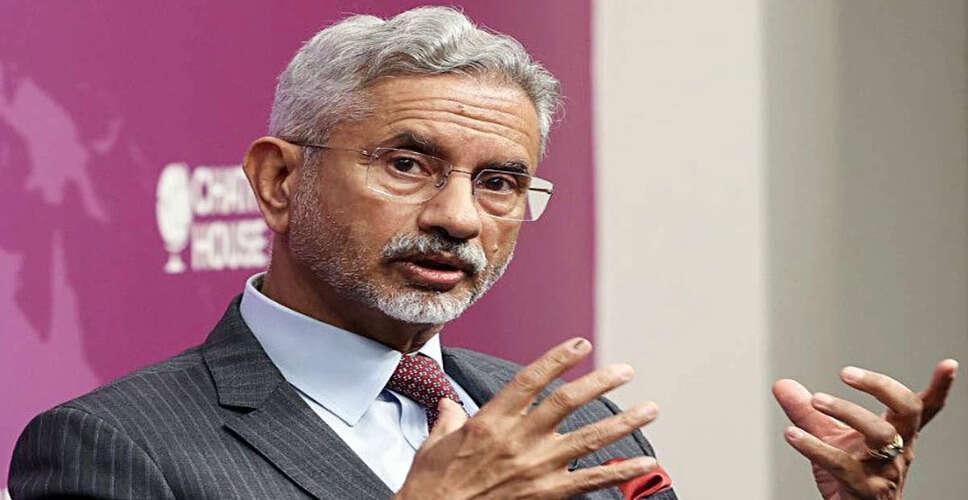
During the 22nd convocation ceremony at Symbiosis International (Deemed University) in Pune, External Affairs Minister S. Jaishankar articulated a clear and confident perspective on the shifting dynamics of global politics and economics. He emphasized that the current world is no longer unipolar, as fundamental changes in the global power balance have led to the emergence of multiple power centers. He noted that no nation, regardless of its strength, possesses the ability to impose its will on every issue.
Redefining Power
Jaishankar pointed out that the definition of power has expanded beyond mere military might. Today, elements such as trade, energy, resources, technology, capital, and, most importantly, talent are crucial determinants of power. He remarked that globalization has fundamentally altered the ways in which nations think and operate. For India, as a major economy, it is essential to develop contemporary and robust manufacturing capabilities to remain competitive in the technological race.
Positive Global Perception of India
The minister highlighted that the world views India more positively and seriously than ever before. He stated that there has been a significant improvement in India's 'national brand value' and the personal reputation of Indians. Globally, Indians are recognized as hardworking, tech-savvy individuals connected to family values. The role of the Indian diaspora and the improving business and social environment in India are helping to dispel old negative stereotypes.
Human Resource Strength
Jaishankar emphasized that India's strength lies in its human resource potential. The increasing number of global capability centers, the international demand for Indian talent, and skill-based recognition are solid evidence of this transformation. He also noted that the artificial divide between manufacturing and services is meaningless, as both sectors complement each other. The doubling of higher education institutions in the past decade signals India's preparation for the future.
India's Economic Progress
Comparing with Western nations, Jaishankar observed that while many Western economies are experiencing stagnation, India has made remarkable progress following reforms, especially in the last decade. The cumulative effect of these developments is a decisive shift in the global economic and political pecking order, with India at the center of this change.
A New Foreign Policy Narrative
Jaishankar's remarks reflect India's transformed foreign policy. This is a nation that is neither a follower of any bloc nor one that bends under pressure. In this new multipolar world structure, India is positioning itself not merely as a 'balancer' but as a 'shaper.' Over the past decade, Indian foreign policy has shifted its narrative from a defensive stance of 'non-alignment' to an assertive 'multi-alignment' approach. India engages with the United States, Russia, Europe, the Middle East, and the Indo-Pacific, prioritizing its national interests without hesitation. This is why the world listens to India and takes it seriously.
Strategic Success Through Human Capital
The cornerstone of India's strategic success is its human capital. Jaishankar rightly states that India's uniqueness lies in its talent. The acceptance of Indians in the global labor market, along with advancements in technology, digital public infrastructure, and the startup ecosystem, has transformed India's 'soft power' into 'strategic power.' This strength cannot be curtailed by sanctions or pressure. The emphasis on manufacturing and self-reliance is not merely a protectionist slogan but a geopolitical necessity. Supply chain crises have taught the world that economic dependence can lead to political vulnerability. Therefore, India's push for manufacturing, technological self-sufficiency, and skill development positions it as a decisive global player.
India's Emergence as an Indispensable Power
The contrast between the stagnation in the West and India's momentum has disrupted the global power balance. Consequently, India is now viewed not merely as an 'emerging power' but as an 'indispensable power.' This transformation is not coincidental; it is the result of deliberate policy, clear leadership, and national confidence.
A Reflection of India's Foreign Policy
Ultimately, Jaishankar's statements serve as a mirror to India's foreign policy, which is direct, candid, and incisive. Today's India defines its own interests, chooses its partners, and operates on the global stage on its own terms. In a multipolar world, India has evolved from being just one pole to becoming a directional power.