
India's Energy Minister Reviews Chenab Basin Hydropower Projects
Overview of Hydropower Initiatives
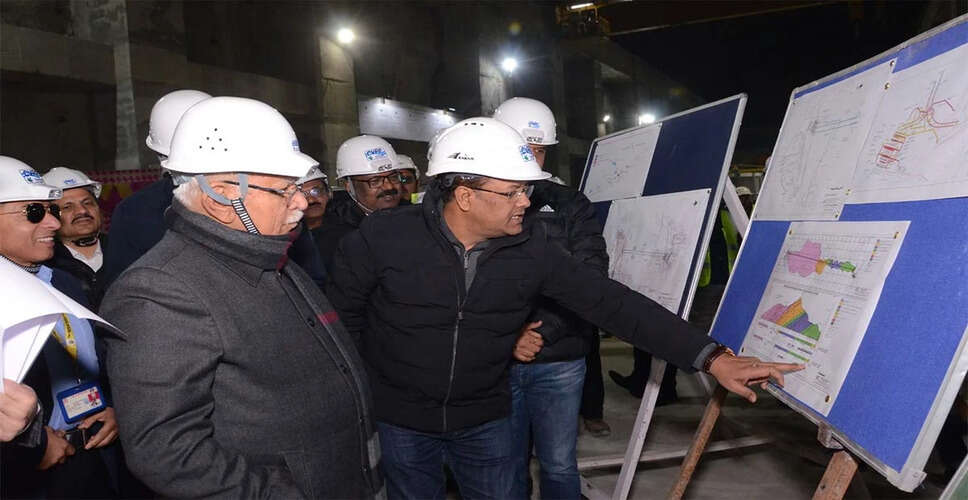
Union Energy Minister Manohar Lal Khattar has conducted a review of hydropower projects in the Chenab Basin, emphasizing the Salalkot project with a target of generating 800 megawatts of electricity. This move signals India's commitment to fully utilize its natural resources without hesitation. During his visit, Khattar provided clear directives to the National Hydroelectric Power Corporation (NHPC) to ensure the successful generation of 800 megawatts from the Salalkot project.
Situated on the Chenab River, this project is emerging as the largest hydropower initiative in Jammu and Kashmir, aimed not only at increasing electricity production but also at bolstering the region's energy self-sufficiency.
Inspection of Ongoing Projects
Khattar also reviewed other NHPC projects, including the Selal Power Project and the Ratle Hydro Electric Project. He laid the foundation stone for the dam concreting work at the Ratle project and urged engineers to complete tasks in a timely and quality-controlled manner. Additionally, he instructed officials to expedite the removal of silt from the Selal project to maximize water storage capacity and ensure optimal water usage.
India's Stance on Water Rights
Khattar made it clear that objections from Pakistan regarding these hydropower projects would not be entertained. He referenced the Indus Waters Treaty of 1960, stating that India will now utilize the waters of the western rivers for its people, industries, and geopolitical strength. He emphasized that no illegal elements or over-ground workers would be allowed to participate in these projects, ensuring that all activities align with legal governance and national interests.
Strategic Implications
Advancing major hydropower projects in Jammu and Kashmir is crucial for maintaining geographical balance with neighboring powers like China and Pakistan. It aims to establish India's water infrastructure as a robust pillar that not only ensures energy security but also enhances the capacity to face potential political adversities.
Projects like Salal, Ratle, and Selal are not merely electricity generators; they represent cutting-edge infrastructure for water storage, control, and utilization in the Chenab River. Until last year, the western rivers were reserved for Pakistan under the Indus Waters Treaty, but with the current policy shift, India has made it clear that it will now use the river waters for its national interests.
Impact on Energy Self-Sufficiency
The ability to generate energy will position Jammu and Kashmir as a vital pillar in the country's energy network. Producing 800 megawatts or more will not only provide stable electricity to the local population but also help meet the energy demands of northern India. This will strengthen India's overall energy self-sufficiency and prepare the nation to face any future crises.
For decades, India exhibited restraint, honored agreements, and adhered to international discourse, but Pakistan exploited this patience by fostering terrorism, claiming water rights, and creating instability along India's borders. Now, India asserts that objections will not be tolerated. Pakistan must recognize that times have changed, and the rights granted under the Indus Waters Treaty are now being exercised visibly on the ground.
Message to Pakistan
As India increases storage on the Chenab, enhances reservoir capacity by removing silt, and gains maximum control within the technical limits of run-of-the-river projects, it sends a strong message to Pakistan. Furthermore, this entire process has profound implications for change in Jammu and Kashmir. When electricity flows, industries emerge, and jobs are created, the politics of separation naturally weaken.