
India's DRDO and IAF Achieve Milestone with TARA Weapon Flight Trial
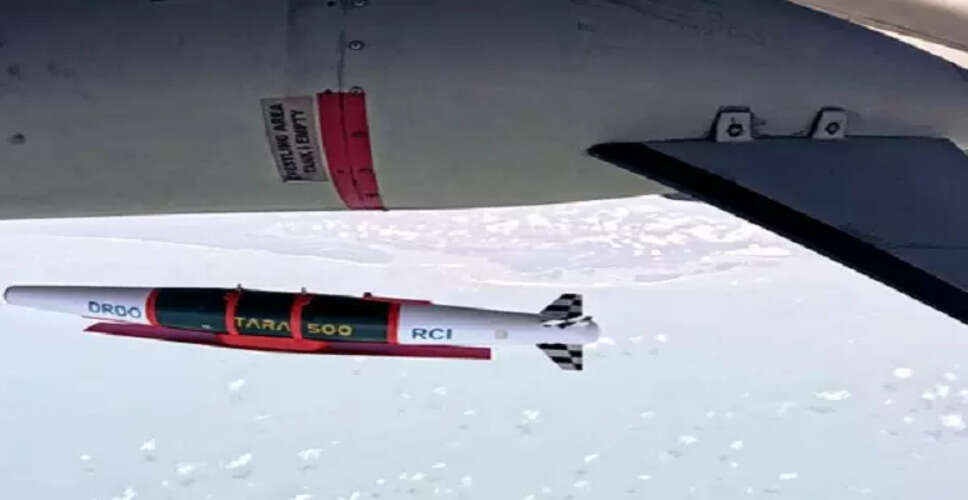

Successful Flight Trial of TARA Weapon System
Photo: @InvGurInd/X
New Delhi, May 8: The Defence Research and Development Organisation (DRDO) in collaboration with the Indian Air Force (IAF) has successfully executed the first flight trial of the Tactical Advanced Range Augmentation (TARA) weapon system off the coast of Odisha, as announced on Friday.
TARA represents India's inaugural indigenous glide weapon system, designed to transform unguided warheads into precision-guided munitions, according to a statement from the Defence Ministry.
Defence Minister Rajnath Singh praised the efforts of DRDO, IAF, Development cum Production Partners (DcPP), and the industry for this significant milestone, highlighting its importance in bolstering India's self-reliant defence capabilities.
Developed by the Research Centre Imarat (RCI) in Hyderabad alongside other DRDO facilities, TARA aims to improve the effectiveness and precision of cost-efficient weapons targeting ground-based threats.
This glide weapon is the first to incorporate advanced low-cost technologies. The kit's development has been carried out in partnership with DcPP and various Indian industries, which have commenced production activities.
Dr. Samir V Kamat, Secretary of the Department of Defence R&D and Chairman of DRDO, also extended his congratulations to the teams involved in the successful trial.
In related news, Rajnath Singh emphasized this week that the government prioritizes defence research, noting that DRDO has transferred 2,200 technologies to different industries.
During the opening session of the three-day 'North Tech Symposium', organized by the Indian Army’s Northern and Central Commands along with the Society of Indian Defence Manufacturers, the minister highlighted the necessity of continuous research and the element of surprise to remain prepared in an era marked by rapid technological advancements.
He mentioned that 25% of the defence R&D budget has been allocated to industries, academia, and start-ups, with these sectors having already utilized over Rs 4,500 crore from the budget.