
India's DRDO Advances Ballistic Missile and Hypersonic Programs
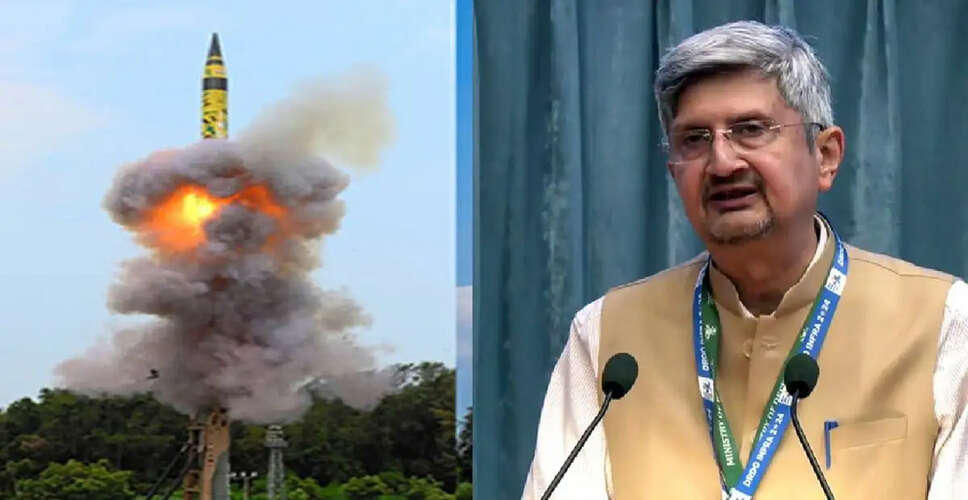

Progress on Agni VI Ballistic Missile Program
The Chairman of the Defence Research and Development Organisation (DRDO), Samir V. Kamat, announced that the highly anticipated Agni VI ballistic missile program will proceed as soon as it receives government approval. Speaking at a National Security Summit, he indicated that the agency has completed all preliminary work and is ready to commence operations upon formal authorization. The Agni VI is expected to be the most advanced missile in India's Agni series, boasting enhanced striking capabilities and performance. Although the project is still contingent on a policy decision, DRDO's readiness suggests that India is gearing up for a significant upgrade in its strategic arsenal.
Advancements in Hypersonic Glide Program
Kamat highlighted the significant advancements in India's hypersonic systems, particularly the LR AShM glide missile. He mentioned that initial trials for the glide variant are imminent. "We are working on two programs in the hypersonic domain - the hypersonic glide missile and the hypersonic cruise missile," he explained. Kamat elaborated on how the glide system relies on a booster for initial speed before continuing without propulsion, while the cruise system depends on a scramjet engine throughout its flight. He noted that the glide missile is likely to be tested first, as it is currently ahead in development compared to the cruise version.
Framework for Conventional Missile Force Under Discussion
The DRDO chief also discussed the evolving structure of the proposed conventional missile force, emphasizing the need for a comprehensive mix of capabilities ranging from short to long-range. He stated that this force would require cruise and hypersonic systems, along with various categories of ballistic missiles for both tactical and strategic missions. Kamat revealed that platforms for short-range capabilities are nearly ready, with the 'Pralay' system in its final testing phases and expected to be inducted into the armed forces soon. He also hinted that some existing strategic weapons could be repurposed for medium and long operational ranges. Earlier at the summit, Defence Secretary Rajesh Kumar Singh confirmed that India is developing a multi-tier conventional missile force framework, incorporating assets across short, medium, and long ranges.