
India's Diverse Energy Landscape: A Shift Towards Renewables
Transforming India's Energy Sector
New Delhi, Feb 28: India's energy landscape is evolving, moving beyond reliance on a single source. The nation is now harnessing the power of solar parks, rooftop solar installations, hydrogen initiatives, upgraded nuclear frameworks, smart meters, and digital technologies.
One of the notable outcomes of ongoing reforms is the enhanced availability of electricity. In rural regions, average power supply has surged from 12.5 hours in 2014 to 22.6 hours, while urban areas now benefit from up to 23.4 hours of electricity, an increase from 22.1 hours in 2014.
These advancements signify substantial progress in the reliability and accessibility of electricity services nationwide, as highlighted in an official factsheet released recently.
Currently, India ranks among the top three energy consumers globally, with electricity demand consistently rising each year. The total electricity generation is projected to grow from 1,739.09 Billion Units (BU) in 2023–24 to 1,829.69 BU in 2024–25, marking a 5.21 percent increase. For the year 2025–26, the generation target is set at 2,000.4 BU.
This transformation is driven by clear government initiatives, including the expansion of renewable energy, the launch of the National Green Hydrogen Mission, and the modernization of nuclear regulations through the Sustainable Harnessing and Advancement of Nuclear Energy for Transforming India (SHANTI) Act. Efforts to enhance energy efficiency, reform power distribution, and develop digital energy infrastructure are also underway, as stated in the official announcement.
India's energy transition does not entail an abrupt departure from traditional sources. Instead, it focuses on a gradual and strategic development of new energy solutions, aimed at fostering growth, improving livelihoods, and fulfilling the long-term commitment to achieve Net Zero emissions by 2070.
According to the International Renewable Energy Agency (IRENA)’s Renewable Energy Statistics 2025, India holds the fourth position globally in terms of total installed renewable energy capacity.
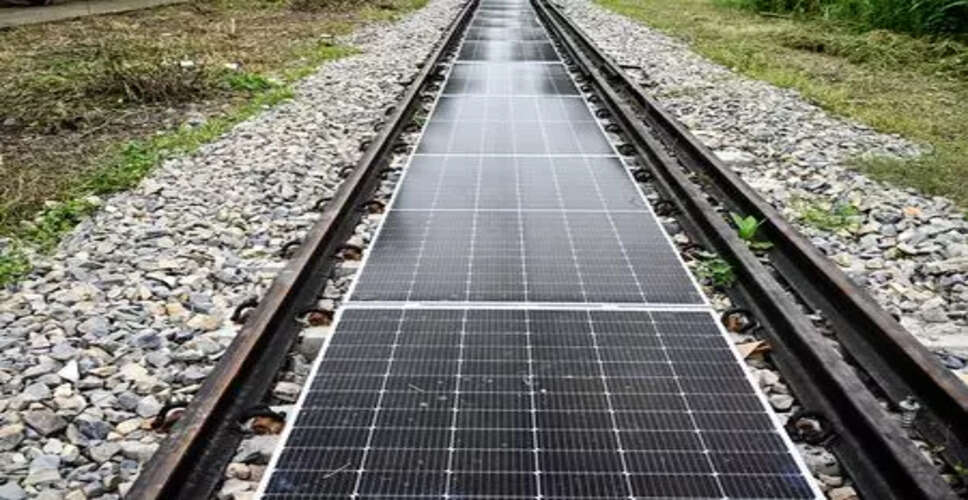
Solar energy has experienced remarkable growth, with installed capacity increasing from 3 GW in 2014 to 140 GW by January 2026. This surge has propelled non-fossil fuel capacity to exceed 50 percent of the total installed electricity capacity.
Wind energy also plays a crucial role, with India's cumulative installed wind capacity reaching approximately 54.65 GW by January 2026, significantly contributing to the renewable energy mix and enhancing grid diversification alongside solar energy. Together, solar and wind represent a substantial portion of India's clean energy capacity.
Government initiatives have facilitated this expansion across various sectors, including households, agriculture, infrastructure, and manufacturing. The PM Surya Ghar scheme has enabled 23.9 lakh households to adopt rooftop solar systems, contributing an additional 7 GW of distributed clean energy capacity.
The Pradhan Mantri Kisan Urja Suraksha Evam Utthan Mahabhiyan Scheme (PM-KUSUM) promotes solar energy use in agriculture, reducing reliance on diesel and stabilizing energy supply for farming.
This initiative aims to install 14 lakh standalone pumps by March 31, 2026, encouraging the use of clean energy in rural areas.
Additionally, 55 solar parks across 13 states have been approved, with a total sanctioned capacity of nearly 40 GW, facilitating large-scale deployment.
The Production Linked Incentive (PLI) Scheme, with an allocation of ₹24,000 crore, is bolstering domestic solar manufacturing and decreasing import reliance.
India has also set an ambitious target of producing 5 million metric tonnes (MMT) of green hydrogen annually by 2030 under the National Green Hydrogen Mission (NGHM), which was launched in 2023.
This mission is expected to attract investments exceeding ₹8 lakh crore and reduce fossil fuel imports by over ₹1 lakh crore, thereby preventing nearly 50 MMT of greenhouse gas emissions annually by 2030.
To support this growth, the government has approved an outlay of ₹19,744 crore until FY 2029–30, including ₹17,490 crore under the SIGHT programme, which incentivizes domestic electrolyser manufacturing and hydrogen production.
Implementation is already in progress with the launch of India's first port-based green hydrogen pilot project.
Currently, India's nuclear capacity stands at 8.78 GW. With new reactors in development, this capacity is projected to increase to 22.38 GW by 2031–32. The government has also announced a long-term Nuclear Energy Mission with a vision of achieving 100 GW by 2047, aligning nuclear expansion with India's clean energy and energy security objectives.