
India's Diplomatic Efforts Amidst Hormuz Strait Crisis Yield Positive Results
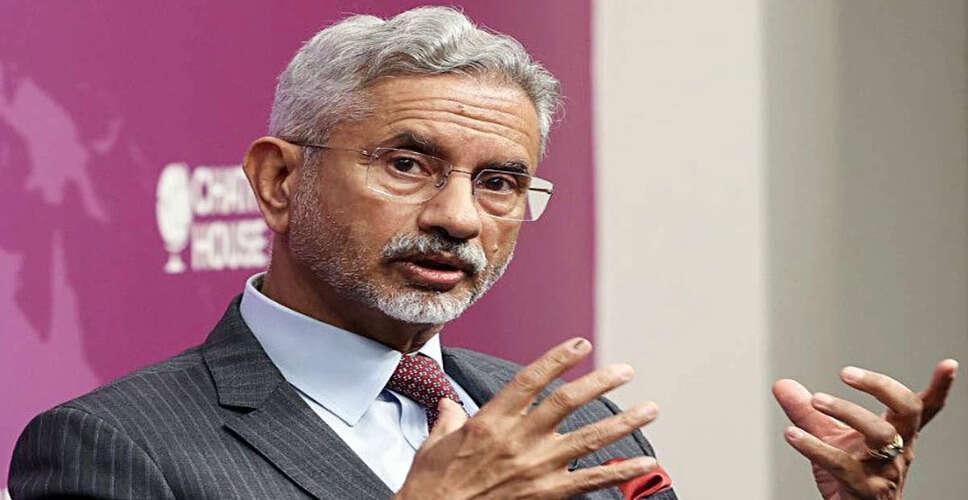
India's Diplomatic Approach in the Hormuz Strait Crisis
External Affairs Minister S. Jaishankar has articulated India's diplomatic initiatives concerning the Hormuz Strait crisis, emphasizing that discussions with Iran have led to tangible outcomes. He noted that adopting a dialogue-based approach has enabled Indian vessels to navigate this crucial maritime route. This statement comes at a time when escalating tensions in West Asia pose significant threats to global energy supplies.
Significance of the Hormuz Strait
The Hormuz Strait is recognized as one of the world's most vital maritime corridors, with nearly one-fifth of global oil and gas supplies passing through it. Recently, Iran's stringent monitoring and restrictions on this route have caused considerable turmoil in international energy markets, leading to a sharp rise in crude oil prices, surpassing $100 per barrel.
India's Diplomatic Strategy
In a sensitive context where numerous nations are contemplating military options, India has once again demonstrated that robust diplomacy can be more effective than confrontation. U.S. President Donald Trump has urged countries like China, France, and the United Kingdom to deploy warships to secure this maritime route. However, experts believe that such military actions could exacerbate the already complex conflicts in West Asia. In this environment, India's dialogue-centric policy is viewed as more practical and responsible.
Successful Passage of Indian Tankers
Jaishankar established direct communication with Iranian leadership, resulting in the safe passage of two Indian gas tankers through the Hormuz Strait. This incident signifies not just the passage of two vessels but also reflects India's growing global stature and influence. While many powerful nations appeared indecisive in resolving this crisis, India showcased its diplomatic capabilities by finding a solution through dialogue.
Focus on Solutions Rather Than Conflict
Jaishankar clarified that India's approach prioritizes finding solutions over conflict. He stated that if countries resolve issues through mutual understanding and coordination, it would benefit the entire world. His message indirectly signals to nations considering military options for resolving this crisis. He also mentioned that each country's relations are unique, and a one-size-fits-all approach may not be effective. However, if India's dialogue-based method encourages other nations to engage in discussions, it would contribute positively to global stability.
No Special Benefits for Iran
Jaishankar denied that Iran received any special benefits in return, asserting that this is not a transactional relationship but rather a result of trust and dialogue between the two nations. He expressed that India views the entire crisis as unfortunate and hopes for a swift return to normalcy. The minister noted that this process is still in its early stages, with a significant number of Indian vessels passing through the Hormuz Strait, making their safety a priority for India.
India's Energy Security Strategy
India's strength extends beyond diplomacy; the country has also developed a robust strategy for energy security in recent years. Currently, India is better prepared to tackle disruptions in the global energy market than before. Prior to the recent military tensions in West Asia, India imported about 55% of its crude oil from routes that do not pass through the Hormuz Strait. This figure has now increased to approximately 70%, indicating that alternative supply routes are available even if the Hormuz route faces disruptions.
Diversification of Energy Sources
Additionally, India has entered into agreements with several new countries for the supply of natural gas and cooking gas. As a result, energy cargoes are now arriving from non-Hormuz routes. India imports nearly half of its natural gas needs and about 60% of its cooking gas, making the diversification of supply sources crucial for the country's energy security. According to government officials, the central government has adopted policies to enhance domestic production, promote new energy sources, and diversify import sources, significantly safeguarding the country from global energy crises.
Balanced Foreign Policy
India's foreign policy plays a vital role in this context. Under this policy, India has established balanced and strong relations with various countries. A decade ago, India imported crude oil from only 27 countries; today, this number has risen to over 40. Alternative fuel programs have also significantly contributed to reducing energy dependence. The 20% ethanol blending program in the country has led to a reduction of approximately 44 million barrels of crude oil consumption annually. Furthermore, the electric vehicle industry has been rapidly promoted.
Growth in Electric Vehicle Registrations
Statistics indicate that electric vehicle registrations in 2023-24 have increased nearly tenfold compared to 2019-20. By 2025-26, electric vehicle sales are projected to reach 2.3 million units, accounting for about 8% of total vehicle registrations.
Conclusion
In summary, amidst the Hormuz crisis, India has conveyed to the world that strong diplomacy can be more effective than military pressure, and a visionary energy policy can maintain stability even during global crises. This is why India is not only safeguarding its interests but also emerging as a responsible and decisive power on the global stage.