
India's Diplomatic Challenges Amidst US-Iran Peace Talks
Diplomatic Tensions and Pakistan's Role
As Islamabad facilitates discussions between the United States and Iran, the Congress party criticized India's diplomatic efforts, labeling them as 'colossal failures' that have allowed Pakistan, a nation often seen as troubled, to assume a mediating role.
This statement followed External Affairs Minister S. Jaishankar's assertion that India does not consider itself a 'broker' like Pakistan during an all-party meeting addressing the West Asia conflict.
During this meeting, the Indian government conveyed that Prime Minister Narendra Modi had expressed to US President Donald Trump India's desire to see an end to the ongoing war, which is impacting everyone involved.
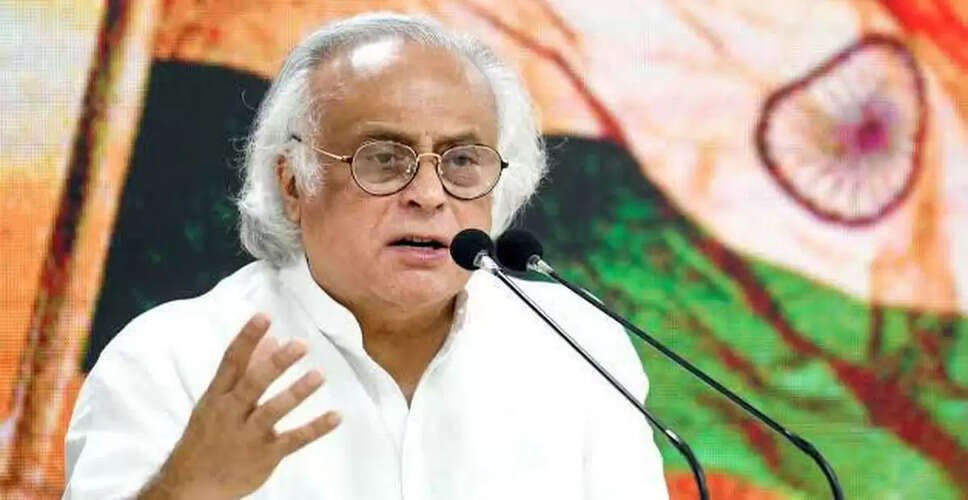
In response to Jaishankar's remarks, Congress leader Jairam Ramesh took to social media, suggesting that the minister was attempting to mask India's embarrassment and setbacks in regional diplomacy.
Ramesh criticized the notion of Pakistan being considered for a mediating role, calling it a severe indictment of Modi's diplomatic approach.
He pointed out that despite provocative statements from Pakistan Army Chief General Asim Munir, which contributed to terror incidents in Pahalgam, India has struggled to isolate Pakistan on the global stage.
Ramesh noted that after May 10, 2025, it became evident that Munir had gained favor with President Trump and his administration.
This comment referenced Trump's hosting of Munir at the White House during escalating tensions between India and Pakistan.
The situation between the two nations intensified on May 7 when the Indian military executed strikes, dubbed 'Operation Sindoor,' targeting what it claimed were terrorist camps in Pakistan and Pakistan-occupied Kashmir.
These strikes were a response to a terror attack in Pahalgam, Jammu and Kashmir, that resulted in 26 fatalities on April 22.
In retaliation, the Pakistan Army engaged in shelling Indian villages along the Line of Control, leading to the deaths of at least 22 Indian civilians and eight military personnel.
On May 10, both countries reached an agreement to cease hostilities following four days of conflict.
Increase in Domestic LPG Production
The Union government also reported during the all-party meeting that domestic liquefied petroleum gas (LPG) production has risen to 60%, a significant increase from 28% at the onset of the conflict.
Jaishankar mentioned that four ships bound for India have successfully navigated the Strait of Hormuz, with more expected to follow.
Since the outbreak of conflict in West Asia on February 28, energy supplies to India have faced significant disruptions, as Iran has effectively blocked the Strait of Hormuz for most international commercial vessels. This strategic waterway is crucial, with approximately 20% of the global petroleum supply passing through it.
This blockade has also impacted LPG supplies in India, which imports around 60% of its LPG needs, primarily from Gulf nations.