
India's Chief Minister Addresses Concerns Over Brahmaputra Water Flow
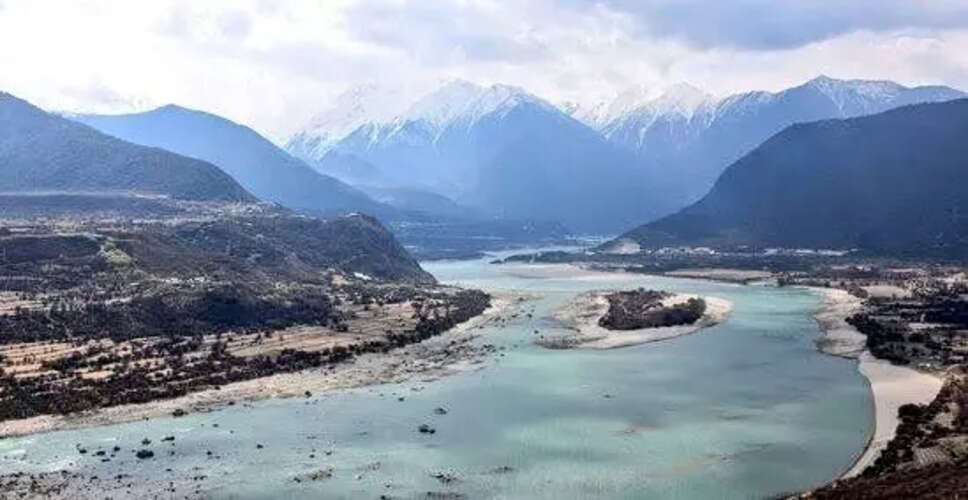
Clarifying the Brahmaputra's Water Sources
Guwahati, June 3: On Tuesday, Chief Minister Himanta Biswa Sarma responded to concerns regarding the Brahmaputra River, particularly in light of India's decision to suspend the Indus Water Treaty (IWT). He criticized Pakistan for creating a 'manufactured threat' narrative about potential impacts if China were to halt the river's flow into India.
Sarma emphasized that the Brahmaputra is primarily an Indian river, asserting that it does not diminish in size. He explained that the majority of the river's water is sourced from heavy rainfall in the Northeast, with glacial melt and limited precipitation from Tibet accounting for only 30-35% of its flow.
According to him, approximately 65-70% of the river's water is generated within India, largely due to the intense monsoon rains in states like Arunachal Pradesh, Assam, Nagaland, and Meghalaya.
He also highlighted the contributions of major tributaries such as Subansiri, Lohit, Kameng, Manas, Dhansiri, Jia-Bharali, and Kopili, along with additional inflows from the Khasi, Garo, and Jaintia Hills through rivers like Krishnai, Digaru, and Kulsi.
Sarma noted that at the India-China border (Tuting), the river's flow measures around 2,000-3,000 m³/s, while in Assam's plains, such as Guwahati, it can swell to between 15,000-20,000 m³/s during the monsoon season.
He reiterated that the Brahmaputra is not reliant on upstream sources; rather, it is a rain-fed river system that gains strength once it enters Indian territory.
Sarma further stated, 'The Brahmaputra is not governed by a single source; it is driven by our geography, monsoon patterns, and the resilience of our civilization.'
He also mentioned that even if China were to reduce the water flow—a scenario he deemed unlikely as China has never made such threats—it could potentially assist India in managing the annual floods in Assam, which displace thousands and devastate livelihoods each year.
Lastly, he remarked on Pakistan's reaction, stating that after benefiting from 74 years of preferential water access under the IWT, it is now alarmed as India asserts its rightful sovereign rights.