
India's Census Commissioner Assures Data Privacy Ahead of 16th Census
As India prepares for its 16th Census, Commissioner Mrityunjay Kumar Narayan emphasizes the importance of accurate information submission while assuring citizens of the confidentiality of their personal data. The census will take place from April 16 to May 15 in Delhi, with a new self-enumeration process allowing residents to submit their details digitally. Narayan highlights that all collected data will remain private and cannot be used for legal or governmental purposes, addressing concerns about data misuse. This article delves into the measures being taken to ensure data security and the significance of the upcoming census.
| Mar 30, 2026, 18:18 IST
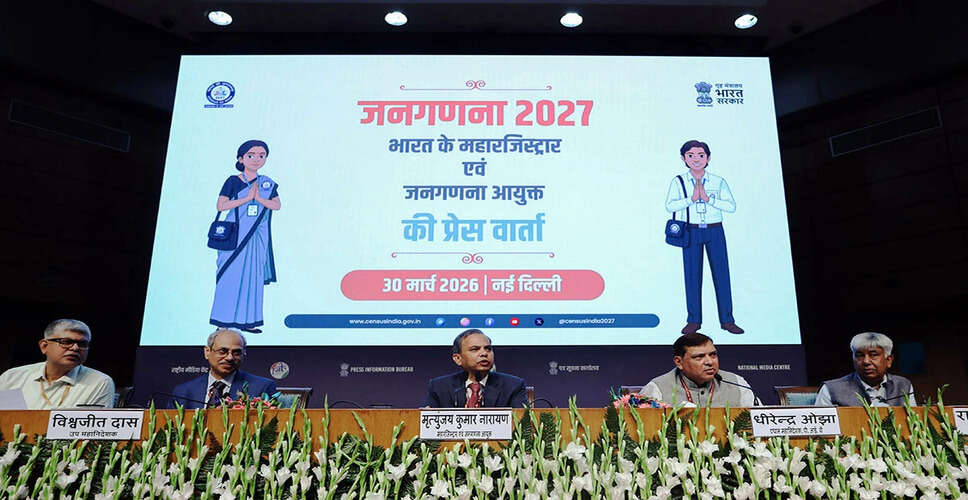
Census Commissioner Urges Accurate Information Submission
Today, the Registrar General and Census Commissioner of India, Mrityunjay Kumar Narayan, appealed to the public to provide accurate information to census enumerators, assuring them that personal data will remain confidential and cannot be used as evidence or for availing benefits from any scheme. He emphasized that under Section 15 of the Census Act, all personal information is kept private. Speaking at a press conference ahead of the commencement of the first phase of the 16th Census in April, he announced that the census in Delhi will take place from April 16 to May 15.
Confidentiality of Personal Data Guaranteed
He stated, “All personal data collected during the census remains confidential. It cannot be shared under the Right to Information (RTI) Act, nor can it be used as evidence in court or shared with any government or private entity.” He clarified that statistical data will only be utilized for compilation purposes. When asked about the inclusion of caste data in the census and concerns regarding accurate information submission, the Commissioner mentioned that caste-related data will be collected in the second phase, with questions determined after extensive discussions. He reassured that since personal data will be completely confidential and cannot be used for availing government benefits, fears of misuse are unfounded.
Introduction of Self-Enumeration Process
Mrityunjay Kumar Narayan also announced the introduction of a self-enumeration system, allowing individuals to submit their information digitally within a 15-day period before the first phase (House Listing and Housing Census). He explained, “Previously, data was collected on paper, which delayed digitization. Now, we will receive digital data from the outset, enabling us to release data much faster. Many datasets will be published by 2027.” He noted that this facility will only be available for residents within the country, not for those living abroad, and clarified that no documents will be required during the census.
Data Collection and Security Measures
The Commissioner further explained that data will be collected via a mobile app, and a web portal will manage and monitor various census and house listing activities. Emphasizing data security, he stated that data centers have been declared as ‘Critical Information Infrastructure’ to ensure the safety of the data collected during the census. He also mentioned that no decision has been made regarding the update of the National Population Register (NPR), and it is unrelated to the Special Intensive Review (SIR) being conducted by the Election Commission.