
India's Bold Stance Against Cross-Border Terrorism: A Parliamentary Delegation's Global Mission
India's New Strategy Against Terrorism
New York/Manama/Seoul: Congress MP Shashi Tharoor announced a new strategy for India to tackle cross-border terrorism from Pakistan, emphasizing that those involved in such acts will face consequences. His comments came during a community event in New York, shortly before he led a delegation of Indian Parliamentarians to Guyana.
While in New York, the delegation also honored victims at the 9/11 memorial before continuing their journey to Guyana.
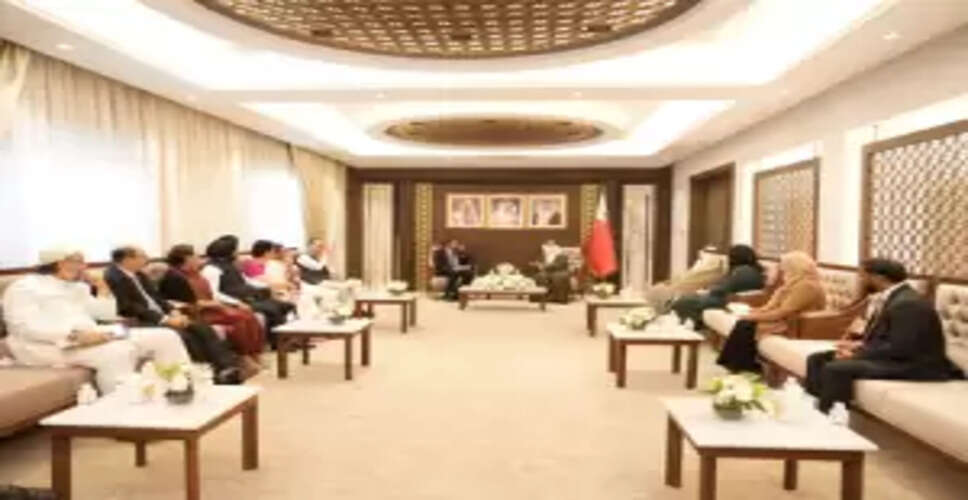
In Bahrain, the Indian parliamentary delegation met with Deputy Prime Minister Shaikh Khalid bin Abdulla Al Khalifa, discussing the ongoing threat of cross-border terrorism and India's commitment to combat it.
Additionally, separate Indian groups informed political leaders in South Korea and Slovenia about India's zero-tolerance policy following the tragic Pahalgam terror attack on April 22, which resulted in 26 fatalities.
External Affairs Minister S. Jaishankar expressed support for the all-party delegations, stating, 'India stands united in declaring zero tolerance for terrorism.'
During an interaction with prominent members of the Indian-American community in New York, Tharoor reiterated India's message to Pakistan: 'We did not seek conflict; we are merely sending a warning to terrorists.'
Tharoor emphasized that the new norm must be that no one in Pakistan should think they can cross the border and harm Indian citizens without facing repercussions. He stated, 'The cost of such actions is increasing.'
He further remarked on Pakistan's ambitions regarding Indian territory, asserting that if conventional means fail, they resort to terrorism, which is unacceptable.
The delegation's visit to the 9/11 Memorial was both a gesture of solidarity and a strong statement against terrorism, especially in light of the recent Pahalgam attack.
In Manama, the delegation, led by BJP MP Baijayant Jay Panda, met with key Bahraini officials, reinforcing India's determination to combat terrorism and enhance bilateral relations.
On their first day, the Indian MPs engaged with prominent members of the Indian community, with Panda expressing gratitude for Bahrain's consistent support during recent events.
AIMIM leader Asaduddin Owaisi, also part of the delegation, highlighted the government's efforts to inform the world about the threats India faces from terrorism.
In South Korea, the delegation, led by JD(U) MP Sanjay Jha, shared insights on Operation Sindoor, a military response to the Pahalgam attack, reiterating that dialogue with Pakistan cannot coexist with terrorism.
The team engaged in meaningful discussions with notable Korean figures, including former Foreign Minister Dr. Yoon Young-kwan and other dignitaries.
Another delegation, led by NCP MP Supriya Sule, met with Qatari officials in Doha to convey India's strong anti-terrorism message.
Meanwhile, DMK MP Kanimozhi Karunanidhi's delegation arrived in Slovenia to promote India's stance on terrorism.
All delegations recognized the Indian diaspora as a crucial ally in raising awareness about India's fight against terrorism.
These delegations are part of a broader initiative, with seven multi-party groups visiting 33 global capitals to address Pakistan's actions and India's counter-terrorism efforts.
Tensions between India and Pakistan heightened following the Pahalgam attack, leading to India's precision strikes on terror infrastructure in Pakistan and Pakistan-occupied Kashmir on May 7.
This was followed by Pakistan's attempts to target Indian military bases, to which India responded decisively.
The hostilities concluded with an agreement to cease military actions after discussions between military operations directors from both nations.