
India's Ambitious Undersea Gas Pipeline Project: A Strategic Move for Energy Security

Prime Minister Modi's Vision for Energy Security
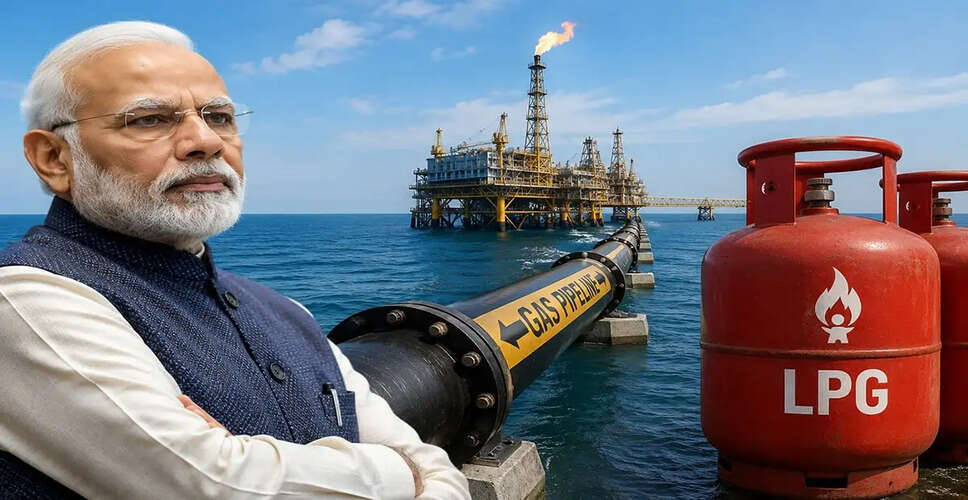
Prime Minister Narendra Modi has shown exceptional foresight in addressing crises and challenges, preparing India for the future based on past experiences. The ambitious steps taken by India to ensure energy security, particularly in light of the tensions following the Iran conflict and disruptions in the Strait of Hormuz, highlight Modi's strategic vision. The government is rapidly advancing a significant undersea gas pipeline project, estimated to cost around ₹40,000 crores, aimed at ensuring a steady gas supply for decades to come. This initiative is not just about energy security; it symbolizes India's diplomatic acumen and strategic thinking in a changing global landscape.
Dependence on Gulf Nations and Recent Tensions
Historically, India has relied heavily on Gulf countries for its oil and gas needs. The Strait of Hormuz is recognized as a crucial energy corridor, facilitating substantial oil and gas supplies to Asia and Europe. However, the recent Iran conflict and escalating tensions with the U.S. and Israel have intensified risks along this route. In February, Iran's effective blockade on this passage led to a more than 20% drop in global liquefied natural gas supplies, causing a spike in gas prices in international markets. Given that two-thirds of India's LNG supply comes from this route, the crisis served as a serious warning for New Delhi.
The Undersea Pipeline Project
In response to these challenges, the Indian government has prioritized the construction of a deep-sea pipeline from Oman to Gujarat. This proposed Middle East-India undersea pipeline will span nearly 2,000 kilometers, connecting Oman directly to the Gujarat coast beneath the Arabian Sea. It is expected to facilitate the supply of approximately 31 million standard cubic meters of natural gas daily. The pipeline's route is being designed to avoid geopolitically sensitive areas, ensuring a secure connection from Oman and the UAE to India.
Access to Vast Gas Reserves
Experts believe that once completed, this project will grant India direct access to the vast gas reserves of countries like Oman, the UAE, Saudi Arabia, Iran, Turkmenistan, and Qatar, which collectively hold around 2,500 trillion cubic feet of gas. This access could significantly secure India's energy needs for the long term.
Government's Commitment to the Project
According to senior officials from the Petroleum Ministry, the central government is prioritizing this project. It is expected that the government will soon instruct public sector companies like GAIL, Engineers India Limited, and Indian Oil Corporation to prepare detailed project reports. The foundation of this plan is based on a pre-feasibility report from the private sector group South Asia Gas Enterprise. If approved, the project could take five to seven years to complete.
Technical Challenges and Innovations
Technically, this project is considered highly challenging, as the pipeline is planned to be laid at a depth of approximately 3,450 meters, potentially making it one of the world's deepest underwater pipeline projects. However, recent technological studies suggest that modern techniques for laying and repairing pipelines in deep waters make this endeavor feasible. South Asia Gas Enterprise claims that around 3,000 meters of test pipeline have already been laid along the proposed route to study seabed conditions.
Broader Energy Diplomacy
Another significant aspect of Modi's energy diplomacy is India's focus not only on alternative energy sources but also on developing alternative supply routes. The country aims to reduce its dependence on the expensive and volatile spot LNG market. Officials believe that a direct pipeline from West Asia will provide India with stable and relatively cheaper gas, decreasing reliance on third countries or maritime routes.
Strengthening Ties with the UAE
Meanwhile, Prime Minister Modi's upcoming visit to the UAE is expected to further strengthen India's energy diplomacy. Official sources indicate that two important memorandums of understanding related to cooking gas and strategic petroleum reserves may be signed during this visit. The UAE is India's fourth-largest supplier of crude oil and the second-largest supplier of LNG and cooking gas. Modi is set to engage in extensive discussions with UAE President Mohammed bin Zayed Al Nahyan on energy cooperation, bilateral relations, and regional conditions. Amid rising tensions in West Asia, this visit signals that the Modi government is not only focusing on alternative projects but also continuously strengthening strategic partnerships with Gulf nations.
Growing Demand for Natural Gas in India
It is noteworthy that the demand for natural gas in India is steadily increasing. Currently, the country's consumption is approximately 190 to 195 million standard cubic meters per day, which is projected to rise to 290 to 300 million standard cubic meters per day by 2030. During this period, LNG imports could also reach 180 to 200 million standard cubic meters per day. Therefore, this project is deemed crucial for meeting India's future energy requirements.
Maintaining Supply Chains Amidst Tensions
Despite the tensions in West Asia, India has managed to maintain its supply chains. A Vietnamese-flagged cooking gas tanker, NV Sunshine, has safely crossed the Strait of Hormuz carrying 46,000 tons of gas and is heading towards New Mangalore. Previously, another tanker named Simi successfully navigated this route. These vessels are part of India's special supply and evacuation plan, coordinated by several agencies, including the Indian Navy.
Conclusion
In conclusion, India's rapid, balanced, and visionary approach to its energy strategy amidst the West Asia crisis exemplifies the Modi government's proactive diplomacy and robust global relationships.