
India's Ambitious Plans for Space Launch Expansion by 2029

India's Space Launch Capabilities Set for Major Growth
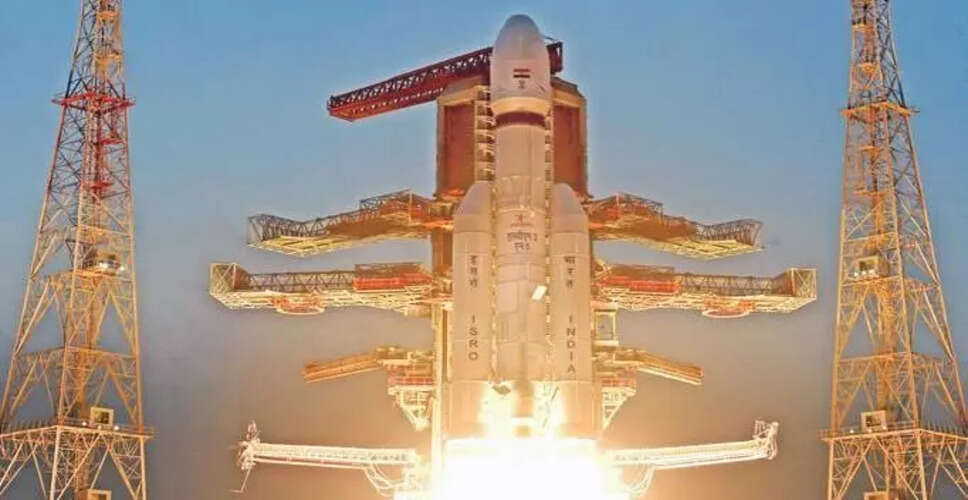
File image of communication satellite CMS-03, weighing 4,410 kg, being launched aboard the LVM3-M5 rocket. (Photo: ISRO/'X')
Chennai, Oct 25: India is poised to enhance its space-launch capabilities significantly, with plans for four operational launch pads by 2029 and an increased involvement of the private sector in commercial space activities, according to V Narayanan, Chairman of the Indian Space Research Organisation (ISRO).
During a graduation event at a private university in Chennai, Narayanan shared the agency's vision, which includes establishing a dedicated 2,000-acre Small Satellite Launch Vehicle (SSLV) complex in Kulasekarapattinam, located in Tamil Nadu's Tuticorin district.
This new facility aims to cater to the rising global demand for satellite launches.
The planned spaceport will incorporate essential infrastructure such as integration buildings, launch pads, rail-track systems, and telemetry, tracking, and command facilities.
However, Narayanan did not provide further details regarding the other three launch pads included in the expansion initiative.
Regarding India's human spaceflight program, he mentioned that ISRO is set to conduct its first uncrewed test flight as part of the Gaganyaan mission within the next two months, with two additional uncrewed tests planned before the inaugural crewed mission.
“These tests will assess environmental control, safety systems, crew escape mechanisms, and module interiors under various pressure, temperature, and humidity conditions,” he explained.
ISRO has performed around 8,000 ground-based experiments for this mission, and the four astronaut candidates selected for Gaganyaan are currently undergoing specialized training.
Looking towards lunar exploration, Narayanan discussed the upcoming Chandrayaan-5 mission, a collaborative effort with Japan's space agency, which will include a 350-kg rover designed to conduct scientific experiments on the moon's surface for 100 days.
He also emphasized that ISRO would not be privatized, highlighting the importance of partnerships with private firms to meet the increasing domestic and global demand for satellite launches.
“To manage this expanding ecosystem, ISRO will support startups and private enterprises, sharing technological expertise to promote economic growth and create thousands of high-tech jobs,” he stated.
The agency's approach, he noted, is to enhance launch infrastructure while leveraging private sector capabilities to bolster the burgeoning commercial space industry.