
India's Ambitious Goal: A Drug-Free Nation by 2047

Government's Commitment to Combat Narcotics
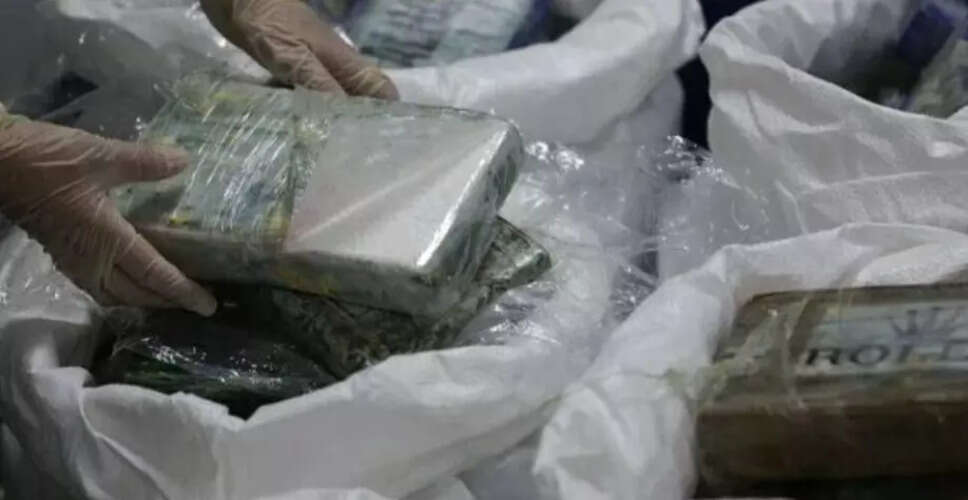
Representational Image
New Delhi, May 16: The government led by Narendra Modi has set an ambitious target to eradicate narcotics from India by the year 2047.
During the annual R N Kao Memorial Lecture hosted by the Research and Analysis Wing, Union Home Minister Amit Shah reaffirmed the administration's dedication to realizing a Drug-Free India by 2047.
According to security and anti-narcotics agencies, numerous international and domestic drug cartels are attempting to infiltrate the Indian market. In regions like Jammu and Kashmir, Punjab, and Maharashtra, enforcement agencies have ramped up their efforts to combat this escalating issue.
An official noted that the journey ahead will be challenging, as these cartels are now targeting new states to expand their drug operations. The methods employed by these cartels in Punjab and Jammu and Kashmir follow established patterns, and in many instances, enforcement agencies have successfully countered their efforts.
However, Kerala has emerged as a significant concern for these agencies. Most cartels aiming at the Indian market are increasingly focusing their efforts on this state. An official indicated that the smuggling tactics in Kerala are distinct from those in other regions, with traffickers frequently altering their strategies. Investigators have observed that nearly every significant drug seizure in Kerala unveils a new method, complicating enforcement operations and keeping investigators on high alert.
Historically, drugs would enter Kerala from Afghanistan and Pakistan via road. However, officials now report a significant shift in trafficking networks, with a majority of heroin being sourced and smuggled through Myanmar.
Heightened security measures along the India-Pakistan border in Jammu and Kashmir, Punjab, and Rajasthan have made traditional trafficking routes increasingly difficult for narcotics cartels. Consequently, smuggling operations have gradually transitioned, with a notable increase in drugs entering India through Myanmar.
Pakistani cartels are collaborating with their counterparts in Myanmar to push heroin into India through the Bangladesh border, from where it is transported to Kerala by road, as per an official's statement.
In addition to MDMA, heroin is being smuggled in large quantities into Kerala. An official explained that this is driven not only by demand but also by substantial profit margins. A kilogram of heroin can fetch between Rs 25-30 lakh, with dealers acquiring each gram for Rs 3,000 and selling it for Rs 12,000.
These lucrative profit margins make heroin the drug of choice for the Kerala market.
Moreover, smugglers have devised various methods to conceal drugs. Heroin is often hidden in soap boxes or small bottles, allowing for more frequent, albeit smaller, smuggling operations. This tactic complicates the efforts of law enforcement agencies, as the drugs are transported in minimal quantities.
Despite some successes, officials acknowledge that the challenges posed by this modus operandi are significant.
This smuggling technique was highlighted following the arrest of three individuals from Assam in Angamaly, near Kochi, who were caught with 600 grams of heroin concealed in over 40 soap boxes.
An official from the Intelligence Bureau stated that law enforcement is closely monitoring the Malabar corridor due to a sharp increase in drug-related activities. Traffickers are increasingly targeting this region of Kerala, with Kozhikode becoming a major area of concern. The official noted that large quantities of MDMA have been seized in this area, as demand for synthetic drugs has surpassed that for marijuana.
The region's proximity to the Bengaluru-Mysuru corridor, a significant transit hub, has made it an attractive destination for traffickers. Kozhikode is also connected to various interstate road networks linking Tamil Nadu, Karnataka, and Andhra Pradesh, facilitating the movement of contraband.
Investigators have also observed a shift in the profiles of carriers. Smuggling networks are increasingly utilizing influential or high-profile individuals for transporting narcotics. There is also a growing trend of employing women as carriers, as traffickers believe they face less scrutiny during checks and surveillance.
Recently, excise officials intercepted a vehicle at the Pantheerankavu toll plaza in Kerala, seizing 3.5 kilograms of MDMA valued at Rs 3 crore. Two individuals, Fathima Nasreen, a 20-year-old social media influencer, and a repeat offender, P.K. Shafeeq, were arrested. They had reportedly procured the drugs from Rajasthan and traveled to Kerala.
In another incident, authorities apprehended Sheetal Shivdas (21) and Firoz Musa, recovering 11.83 kg of MDMA and 5.44 grams of cannabis from an apartment in Ulliyeri near the Malabar Medical College in Kozhikode.
Last year, Yasar Arfath and YouTuber Rincy Mumtaz were arrested in Kochi with 22 grams of MDMA. An official remarked that the evolving tactics of smugglers are complicating the fight against drugs in Kerala. The methods employed by traffickers increasingly resemble those used by intelligence agencies to expand espionage networks in India, with a notable reliance on women and social media influencers to discreetly transport drugs.