
India's Agricultural Growth: GVA Triples in 12 Years
Significant Growth in Agriculture Sector
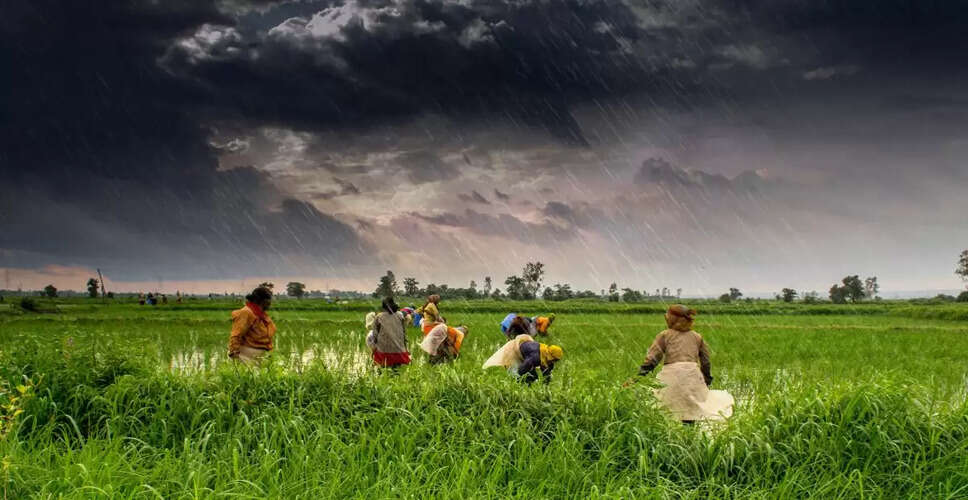
The gross value added (GVA) from India's agriculture and related sectors has seen a remarkable increase, more than tripling from the financial year 2012 to 2024. This data was highlighted in a recent report published by the Ministry of Statistics and Program Implementation. Agriculture continues to be a crucial component of the Indian economy, contributing approximately 16% to the GDP and employing over 46% of the nation's workforce.
Production Value Insights
As per the "Statistical Report on the Production Value of Agriculture and Allied Sectors," the GVA for agriculture surged from Rs 1,500 thousand crore in FY12 to Rs 4,800 thousand crore in FY24, marking a growth of around 22% in just the last financial year. Concurrently, the gross production value (GVO) of agriculture rose from Rs 1,900 thousand crore in FY12 to nearly Rs 3,000 thousand crore in FY24, reflecting a substantial increase of 55%.
Factors Behind Growth
While the report does not delve into the specific reasons for this growth, experts attribute it to favorable monsoon conditions and various initiatives from both central and state governments aimed at enhancing crop yields and boosting farmers' incomes.
Crop Production and State Contributions
Crops dominate the agricultural GVO, accounting for over 54% of the total. Cereals, along with fruits and vegetables, contribute more than 52% of this figure, with paddy and wheat alone responsible for 85% of the cereal GVO. Uttar Pradesh leads the states, contributing 17% of the national agricultural GVO, followed by Madhya Pradesh, Punjab, Telangana, and Haryana, which collectively account for 53% of total production.
Fruit and Vegetable Performance
In the fruit sector, bananas have surpassed mangoes in FY24, with a GVO of Rs 47 thousand crore compared to mangoes at Rs 46.1 thousand crore. Among vegetables, the GVO for potatoes rose from Rs 21.3 thousand crore in FY12 to Rs 37.2 thousand crore in FY24, establishing it as the leading sector.
Animal Husbandry's Contribution
The GVO of livestock has also seen growth, increasing from Rs 488 thousand crore in FY12 to Rs 919 thousand crore in FY24. Milk remains the largest contributor, although its share has slightly decreased to 66%, while meat's contribution has risen to 24%. Additionally, floriculture within horticulture has experienced notable growth, with its GVO climbing from Rs 17.4 thousand crore in FY12 to Rs 28.1 thousand crore in FY24, indicating promising business opportunities in this area.
Conclusion
These statistics illustrate that agriculture in India has evolved beyond mere food grain production, emerging as a vital avenue for economic diversification and rural development.