
India's 2027 Census: Key Details on Self-Enumeration and Data Collection

Overview of the 2027 Census in Rajasthan
Approximately 160,000 Enumerators and Supervisors to Conduct Surveys
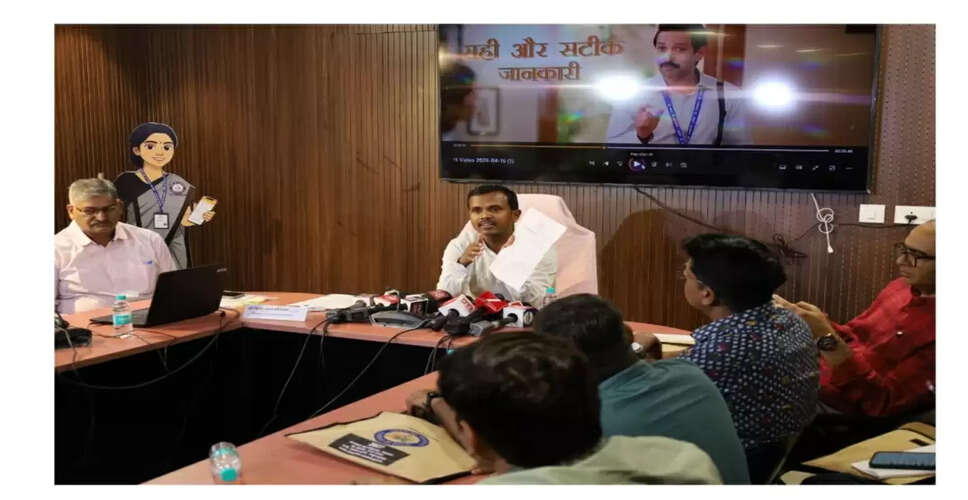
Jaipur. The first phase of India's 2027 Census, which involves housing listing, is scheduled to take place from May 16 to June 14, 2026. This announcement was made by Bishnu Charan Mallik, Director of the Census Directorate during a press conference in Jaipur. He explained that the initial phase, termed 'Housing Listing and Housing Count (HLO)', will be fully digital and participatory, introducing an innovative 'Self-Enumeration' option by the Government of India. The Self-Enumeration portal will be accessible from May 1 to May 15, 2026, via desktop or smartphone. The portal can be found at https://se.census.gov.in.
Mallik emphasized that the Self-Enumeration feature aims to provide busy families or those who prefer to submit their details digitally with the opportunity to do so. However, it is important to note that even after self-enumeration, field verification and data validation by enumerators will be mandatory.
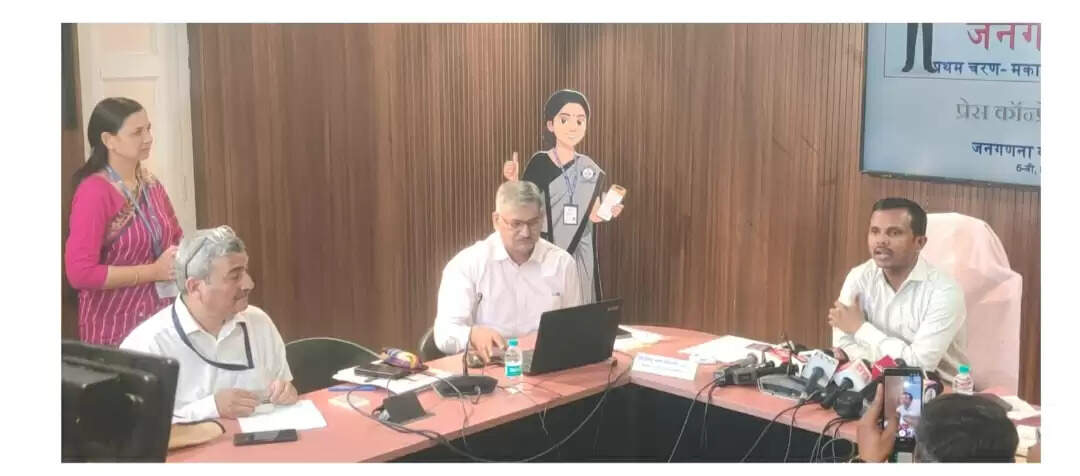
Highlighting the importance of cybersecurity, Mallik advised the public to only use the designated web address for accessing the Self-Enumeration portal and to avoid using search engines. He stressed the need to pay attention to the 'https' and '.gov.in' domains. When logging in, users will receive an OTP, which should not be shared with anyone. Enumerators or the Census Department will not request OTPs or provide links for verification.
In Rajasthan, around 160,000 enumerators and supervisors will visit households to collect data based on the 33 questions outlined in the notification issued by the state government on January 29, 2026.
As part of the housing listing process, all buildings, census houses, and families in the state will be identified and systematically listed. Enumerators will inquire about the housing conditions, available amenities, and assets held by families, as well as essential questions regarding staple food consumption.
The primary goal of the first phase, 'Housing Listing and Housing Count (HLO)', is to create a comprehensive and reliable master frame for the upcoming population census, ensuring that no individual or family is left uncounted in the second phase, the Population Enumeration (PE).
Mallik mentioned that multi-level training programs are being conducted at various levels to ensure the successful implementation of the census. From April 7 to April 10, 2026, state-level training for 103 master trainers was held, who will subsequently train 2,550 field trainers across 41 districts and 10 municipal corporations. These field trainers will then train 160,000 enumerators and supervisors at the tehsil, municipal council, and municipality levels from May 1 to May 15, 2026.
To modernize the 2027 Census, several digital tools have been developed, including the Census Management & Monitoring System (CMMS) portal, the Housing Listing Block Construction (HLBC) web portal, and the Housing Listing App (HLO app). The CMMS portal will be utilized by charge officers (Tehsildars, Municipal Council Commissioners, Executive Officers of Municipalities, and Municipal Commissioners) to plan the entire census operation, monitor fieldwork in near real-time, and maintain data quality. The HLBC web portal will facilitate geo-tagging of the smallest functional unit of census work, while the HLO mobile app will be used by enumerators and supervisors for data collection.
Emphasizing the importance of active citizen participation in making the 2027 Census a success, Mallik urged the public to provide accurate, complete, and factual information to the officials involved in the census. He also requested citizens to verify the identity of enumerators by checking their official identification cards, which include a QR code for validation. All personal information collected during the census will be kept strictly confidential and used solely for statistical purposes.