
Indian Stock Market Declines Amid West Asia Tensions
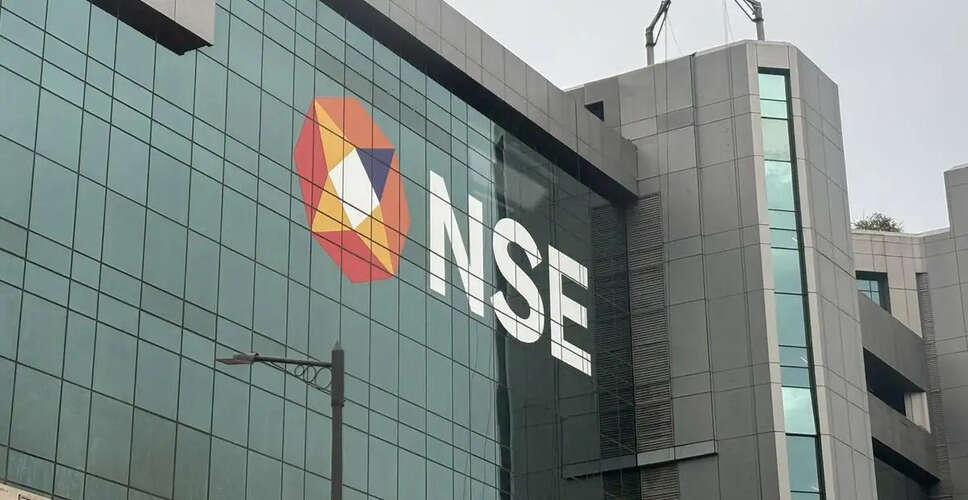

Market Overview
On Wednesday, the Indian stock market continued its downward trend due to escalating concerns surrounding the conflict in West Asia.
By 10 am, the benchmark Sensex had dropped over 1,600 points, reflecting a 2% decline. Similarly, the Nifty index fell by 2%, dipping below the 24,350 threshold.
The market experienced a significant downturn on Monday, marking its first trading day since the conflict erupted, as it was closed on Tuesday in observance of the Holi festival.
The India VIX, which gauges market volatility, surged by more than 20% by mid-morning on Wednesday.
Other major Asian stock markets also reported losses on Wednesday, with Hong Kong's Hang Seng index falling approximately 2.7% as of 10 am Indian time.
Japan's Nikkei index saw a decline of 3.3%, while South Korea's Kospi experienced a notable drop of 7.3%.
Rupee Hits Record Low
As of 10 am, the Indian rupee had plummeted to 92.1 against the US dollar, driven by fears that rising crude oil prices could trigger increased inflation, according to reports. This marked a decrease of about 0.7% from the previous closing value.
The price of Brent crude oil surged to $82 per barrel on Wednesday, up from $73 per barrel on the preceding Friday, just before the conflict began.
In a joint operation on Saturday, Israel and the US targeted Iranian capabilities amid rising tensions over Tehran's nuclear ambitions. Washington has positioned itself as a protector of Israel's security, with claims that Iran is nearing the development of a nuclear weapon, which could disrupt regional stability.
Iran has consistently asserted that its nuclear initiatives are intended for peaceful purposes.
In retaliation, Iran launched strikes against Israeli and US military installations in the region, as well as targeting significant cities in other Gulf nations and various vessels.
US President Donald Trump stated on Tuesday that it was 'too late' for Iran to pursue negotiations.
On Monday, Iran announced that it had 'closed' the Strait of Hormuz to shipping traffic, threatening to incinerate any vessels attempting to navigate through this crucial waterway.
In a bid to alleviate concerns regarding oil supply, Trump announced on Tuesday that he had instructed the International Development Finance Corporation to offer political risk insurance and financial guarantees for maritime trade in the Gulf.
Additionally, he confirmed that the US Navy would escort oil tankers through the Strait of Hormuz, a vital passage that facilitates approximately 20% of global petroleum liquids consumption.