
Indian Security Forces Neutralize Terrorists Involved in Pahalgam Attack
Operation Mahadev: A Successful Strike Against Terrorism
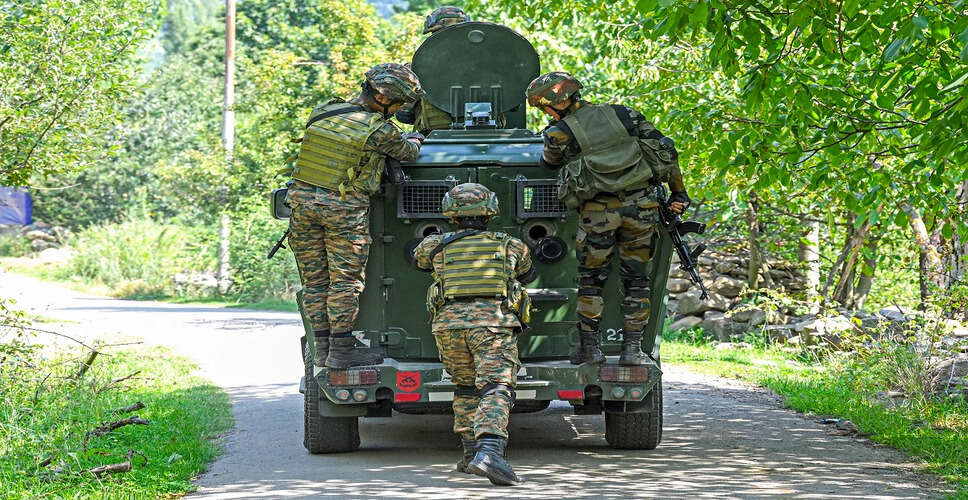
On Tuesday, Union Home Minister Amit Shah informed the Lok Sabha that three terrorists linked to the Pahalgam attack were eliminated by Indian security forces during a high-intensity operation. This joint effort, dubbed Operation Mahadev, was launched near Srinagar on Monday, involving the Indian Army, CRPF, and Jammu and Kashmir Police. The deceased terrorists have been identified as Suleiman alias Faizal, Afghani, and Jibran.
Security Forces on High Alert Post April 22 Attack
The operation marks a significant achievement for security forces following the horrific terrorist attack in Pahalgam on April 22. Ground troops have been diligently searching for leads to identify those responsible. A breakthrough occurred approximately 14 days prior when a suspicious signal was detected, indicating the use of encrypted communications—a clear sign of the terrorists' presence.
Chinese Device Linked to Pahalgam Attack
According to media reports, the intercepted signal was traced back to a Chinese ultra-radio device, commonly used by Lashkar-e-Taiba (LET) terrorists for sending encrypted messages. This device was reportedly utilized in both planning and executing the Pahalgam attack. Just two days before the assault, the terrorists reactivated the device, aiding intelligence teams in locating their hideout in the Dachigam forest area.
Local Intelligence Narrowed Down Search Area
A report from a news outlet highlighted that crucial information from local nomads enabled security forces to confine their search to a specific area within the vast Dachigam forest. Once confident of their location, teams deployed surveillance drones on Monday morning, successfully capturing images of the armed group. Commandos from the National Rifles and Para Special Forces ascended Mahadev Hill, leveraging the precise intelligence to launch a coordinated assault, resulting in the elimination of all three terrorists.
Overview of the Pahalgam Terror Attack
The Pahalgam terrorist attack on April 22 resulted in the deaths of 26 individuals, primarily tourists, with over a dozen others injured. It is considered one of the largest terrorist incidents since the abrogation of Article 370 in 2019. Following the attack, Indian armed forces initiated Operation Sindoor on May 7, targeting significant bases of Jaish-e-Mohammed and Lashkar-e-Taiba in Pakistan and PoK. Jaish-e-Mohammed leader Maulana Masood Azhar acknowledged that ten of his family members and four close associates were killed in the Indian missile strikes.