
Indian Navy's Strategic Growth and Operations in 2025
Strengthening Maritime Security
In 2025, the Indian Navy emerged not just as a guardian of the seas but as a formidable representation of India's growing global maritime influence. Through Operation Sindoor and the robust deployment of aircraft carriers, the world turned its attention to India's strategic capabilities. Behind the scenes, the Navy bolstered regional stability through maritime security, humanitarian assistance, international collaboration, and indigenous shipbuilding.
Significant Operations and Drug Seizures
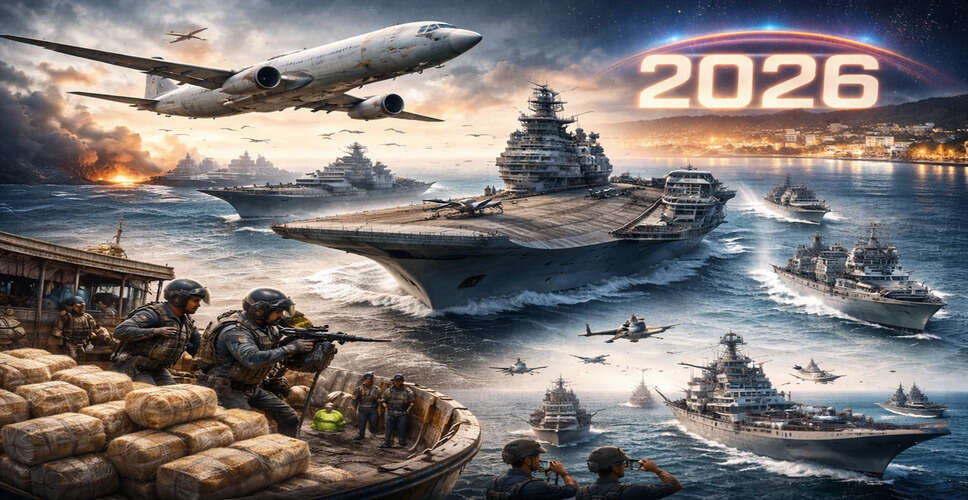
On March 31, 2025, a notable operation was conducted when the frigate INS Tarkash, aided by a P-8I maritime patrol aircraft, intercepted a suspicious vessel in the western Indian Ocean. The search team seized approximately 2,500 kilograms of narcotics, including hashish and heroin, showcasing the Navy's unwavering commitment to combat illegal trafficking and secure vital maritime routes.
Continuous Naval Operations
Throughout the year, the Navy's operations remained consistent. Under Operation Sankalp, the Navy provided security to commercial vessels, patrolled against piracy, and conducted rescue missions. While these efforts may not have garnered as much fame as attacks on aircraft carriers, they are crucial for safeguarding India's trade routes, which are essential for the country's energy imports and exports.
International Collaboration and Military Exercises
In addition to military operations, this year emphasized international cooperation. The TROPEX-25 exercise played a vital role in enhancing combat skills in the Indian Ocean. This was followed by various multilateral and bilateral exercises, including KONKAN-25, where INS Vikrant collaborated with the UK's HMS Prince of Wales carrier group. Furthermore, exercises with Norway, Japan, and Indonesia focused on anti-submarine warfare and maritime surveillance, strengthening interoperability and establishing India as a reliable partner in the Indo-Pacific region.
Acquisition of Advanced Maritime Equipment
The Indian Navy received crucial maritime support equipment, including bollard pull tugs, high-frequency software-defined radios, and high-altitude long-range remotely piloted aircraft systems (RPAS). These tugs will assist in anchoring and maneuvering ships and submarines in restricted waters, while the HF SDR is expected to enhance secure communications during boarding and landing missions.
Indigenous Achievements in Shipbuilding
Under the Atmanirbhar Bharat initiative, significant strides were made towards indigenization. The INS Tamal was the last foreign-built warship commissioned from Russia, while 2025 saw a substantial increase in domestically produced vessels. Notable additions included the destroyer INS Surat, stealth frigates of the Nilgiri class, and the submarine INS Vagsheer, among others. These advancements not only enhance combat capabilities but also strengthen India's defense industry, create jobs, and promote technological innovation for civilian applications.
Future Prospects and Strategic Importance
From mitigating threats and saving lives to forging alliances and building capacities, the Navy's multifaceted role directly supports India's economic security and regional influence. Upcoming events like the International Fleet Review in Visakhapatnam in February 2026 will showcase these strengths on a global platform, aligning with India's vision of becoming a collaborative maritime leader. The year 2025 has been marked by steadfast determination and ongoing efforts, proving that modern naval power extends beyond major operations to include continuous presence and partnerships.