
Indian Navy Welcomes New ASW Craft 'Anjadip': A Leap in Indigenous Shipbuilding
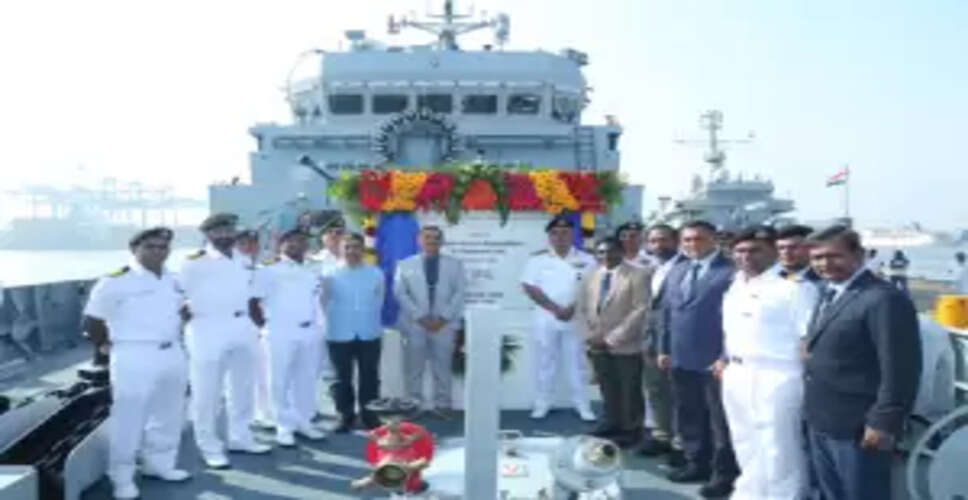
Introduction of 'Anjadip' to the Indian Navy
Chennai: On Monday, the Indian Navy officially received 'Anjadip', the third vessel in a series of eight Anti-Submarine Warfare Shallow Water Crafts (ASW SWC), which have been designed and constructed in India at Kolkata, according to an official announcement.
This new ship is named after the former INS Anjadip, a Petya class Corvette that was decommissioned in 2003, and is expected to enhance the Navy's capabilities in anti-submarine warfare, coastal surveillance, and mine-laying operations.
The name 'Anjadip' is derived from Anjadip Island, situated off the coast of Karwar in Karnataka, highlighting India's dedication to protecting its vast maritime interests, as stated by the Ministry of Defence.
The ASW SWC vessels have been developed in accordance with the Classification Rules of the Indian Register of Shipping (IRS) through a Public-Private Partnership (PPP), showcasing the effectiveness of collaborative defense manufacturing.
Measuring approximately 77 meters in length, these ships are the largest Indian naval vessels powered by waterjets and come equipped with advanced Lightweight Torpedoes, domestically designed Anti-Submarine Rockets, and shallow water SONAR systems, which facilitate the detection and neutralization of underwater threats.
The delivery of Anjadip marks another significant achievement in the Indian Navy's journey towards self-reliance in shipbuilding, aligning with the government's vision of 'Aatmanirbhar Bharat' with over 80% indigenous components.
This ship exemplifies the expanding domestic defense manufacturing landscape and aims to reduce reliance on foreign imports, according to official statements.
Recently, the Indian Navy also commissioned INS Mahe, the first of the Mahe-class ASW SWC, during a ceremony at the Naval Dockyard in Mumbai.
The event was led by Vice Admiral Krishna Swaminathan, Flag Officer Commanding-in-Chief of the Western Naval Command, and attended by Army Chief General Upendra Dwivedi, along with senior naval officials, representatives from Cochin Shipyard, and other distinguished guests.
This occasion highlighted the unprecedented collaboration, trust, and integration that characterize the current Indian Armed Forces, symbolizing a united approach towards a future-ready, fully integrated military force, as noted by the Ministry of Defence.
The ship's name pays homage to the historic coastal town of Mahe on the Malabar Coast, reflecting the town's rich maritime heritage and serene estuary, which parallel the ship's blend of grace and strength.