
Indian Citizen Injured Amid Missile Interception in Abu Dhabi
Incident Overview
An Indian national sustained minor injuries due to falling debris after an Iranian ballistic missile was intercepted in Abu Dhabi, as reported by the city's administration on Monday.
Key Updates on West Asia Conflict
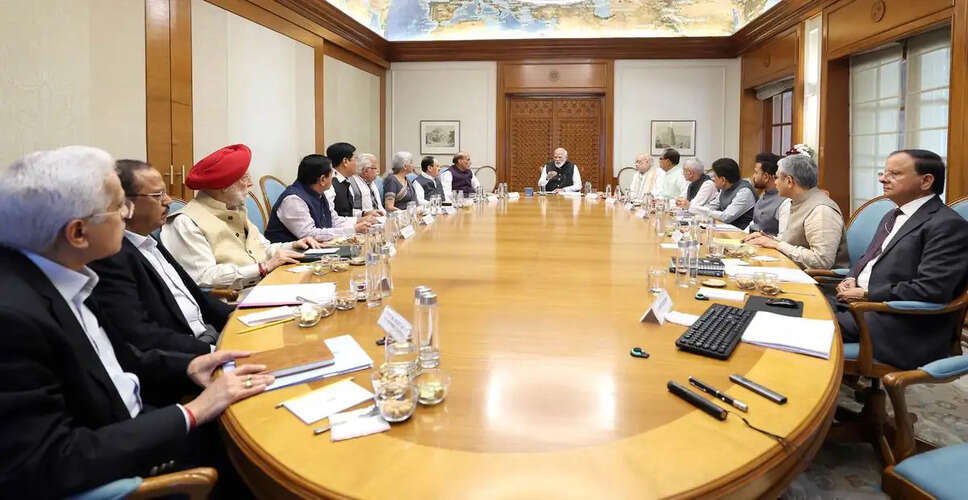
On Sunday, India's Cabinet Committee on Security convened to evaluate the situation in West Asia, focusing on strategies to alleviate its effects on the nation. The Prime Minister’s Office indicated that a thorough assessment was conducted regarding critical needs, including food, energy, and fuel security.
The government also reviewed the implications of the crisis on farmers, particularly concerning their fertilizer needs for the kharif season, and explored alternative procurement sources. Discussions included the status of coal supplies at power plants and strategies to diversify India's import sources for essential sectors such as chemicals, pharmaceuticals, and petrochemicals.
Asian stock markets experienced declines on Monday, with Hong Kong’s Hang Seng index dropping by 2.7%, South Korea’s Kospi falling by 5.10%, Japan’s Nikkei down by 4.1%, and China’s Shanghai Composite decreasing by 2%.
The South Korean Won fell to its lowest value against the US dollar in 17 years, reaching 1,510 won per dollar amid market volatility.
Global oil prices remained elevated due to supply concerns, with Brent crude trading at $111 per barrel, a significant increase from $78 per barrel on February 27, just before the conflict escalated. Iran has effectively restricted access to the Strait of Hormuz, a crucial maritime route for international shipping, since the onset of hostilities, affecting about 20% of the world's petroleum supply.
Iran reiterated its threats to target energy and water infrastructure in the Gulf if US President Donald Trump follows through on his ultimatum to attack Iranian electricity facilities. This warning has raised alarms in a region reliant on desalination for drinking water. Trump issued a 48-hour deadline for Iran to reopen the Strait of Hormuz, threatening to 'hit and obliterate' Tehran’s power plants if it does not comply, with the deadline set to expire early Tuesday morning Indian time.
The head of the International Energy Agency, Fatih Birol, cautioned on Monday that the world could face its most severe energy crisis in decades due to the ongoing conflict, stating that the global oil supply is down by 11 million barrels per day, surpassing the losses experienced during the oil shocks of the 1970s.
Mark Rutte, NATO's Secretary General, expressed confidence in the alliance's ability to address security challenges, including those related to Iran and the Strait of Hormuz, during an interview with Fox News. His comments followed Trump's criticism of NATO for not supporting the US amid the conflict with Iran. The US is part of a military alliance comprising 32 North American and European nations committed to mutual defense, although Israel is not a member.
Background of the Conflict
The conflict escalated on February 28 when the US and Israel launched an attack on Iran, citing Tehran's actions as a direct threat to Israel's existence. The US has positioned itself as a protector of Israel's security. In retaliation, Iran has targeted Israel and US military installations in the region, as well as major cities in Gulf nations and various vessels.
Israel has raised concerns that Iran is nearing the capability to develop a nuclear weapon, which could disrupt the regional security landscape. Iran, however, insists that its nuclear program is intended solely for peaceful purposes.