
Indian Cities Embrace AI and Electric Vehicles for Enhanced Sanitation Services
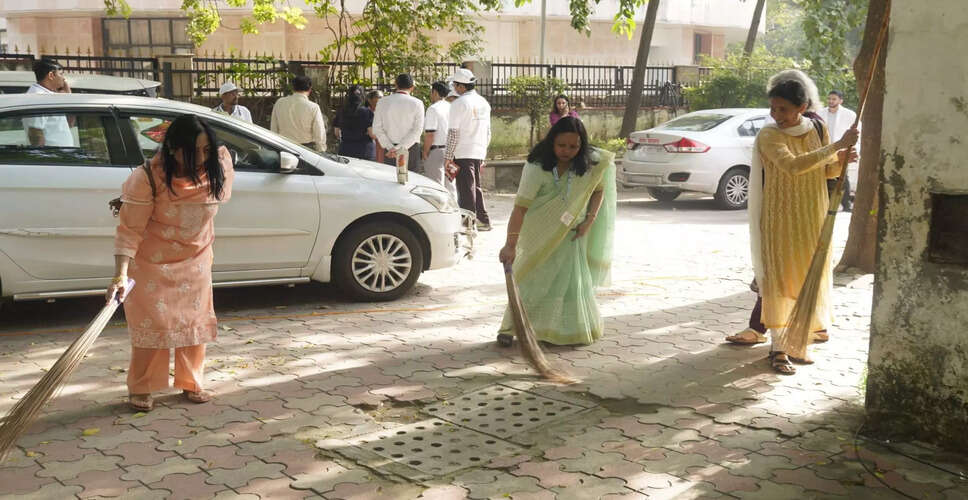

Modernizing Sanitation with Technology
Photo: @AyushmanNHA/X
New Delhi, Oct 1: In a bid to enhance sanitation services, Indian cities are increasingly utilizing artificial intelligence (AI), digital platforms, and electric vehicles, as highlighted in an official report released ahead of the 12th anniversary of the Swachh Bharat Mission.
Local authorities are exploring innovative and efficient methods to manage waste and waterways, leveraging technologies from AI to electric vehicles, according to the statement, which provided several illustrative examples.
The Raipur Municipal Corporation has launched a digital Faecal Sludge Management (FSM) dashboard prototype through the UPYOG platform, in collaboration with the Ministry of Housing and Urban Affairs, the National Institute of Urban Affairs, and the National Urban Digital Mission.
This system allows residents to book desludging services online, make digital payments, and track the process digitally, eliminating the need for in-person visits to municipal offices for septic tank cleaning.
By entering a mobile number or property ID, the system automatically identifies the address. A simplified one-page form facilitates the booking of desludging services, as noted in the report.
Drivers are required to upload photos upon completion of their tasks, and the dashboard aids the city in monitoring vehicles and optimizing resource allocation. This digital oversight is pivotal in transitioning from manual to mechanized sewer cleaning.
In Thiruvananthapuram, the Municipal Corporation has introduced G-SPIDER, an AI-driven robot designed for cleaning the Amayizhanchan Canal.
This robot employs machine vision and sensor technology to identify, evaluate, and eliminate accumulated waste. It is capable of adapting to various types of waste, flow conditions, and structural obstacles in real-time. Its biomimetic claw, which operates with five degrees of freedom, is adept at picking up mixed and irregular debris, which is then directly transferred to designated collection vehicles.
G-SPIDER significantly enhances worker safety by reducing direct exposure to toxic gases, contaminated water, and hazardous materials. It can function effectively even during high water levels and continuous flow, ensuring systematic canal cleaning.
In Guntur, over 200 electric autos have been deployed for efficient door-to-door waste collection throughout the city.
Each vehicle is equipped with GPS tracking for real-time monitoring of collection activities. This initiative is projected to save over 71,000 liters of diesel annually and is expected to cut greenhouse gas emissions by 21,000 tonnes over the next decade.
Launched on October 2, 2014, the Swachh Bharat Mission has transitioned towards a more digital, sensor-enabled, and electrified approach to urban sanitation, as noted in the report.
The Greater Chennai Corporation in Tamil Nadu has rolled out 5,478 battery-operated e-rickshaws across all 15 zones for door-to-door waste collection. These vehicles cover approximately 40 km daily, replacing diesel-powered collection units.
This fleet is responsible for reducing around 41 tonnes of carbon emissions each day, leading to an annual decrease of 15,160 tonnes.
Indore city in Madhya Pradesh has also introduced 100 electric vehicles for door-to-door collection in key areas. Real-time GPS tracking through the Integrated Command and Control Centre (ICCC) ensures effective monitoring and service transparency.