
Indian Armed Forces Propose Major Changes to Recruitment Policy for Agniveers
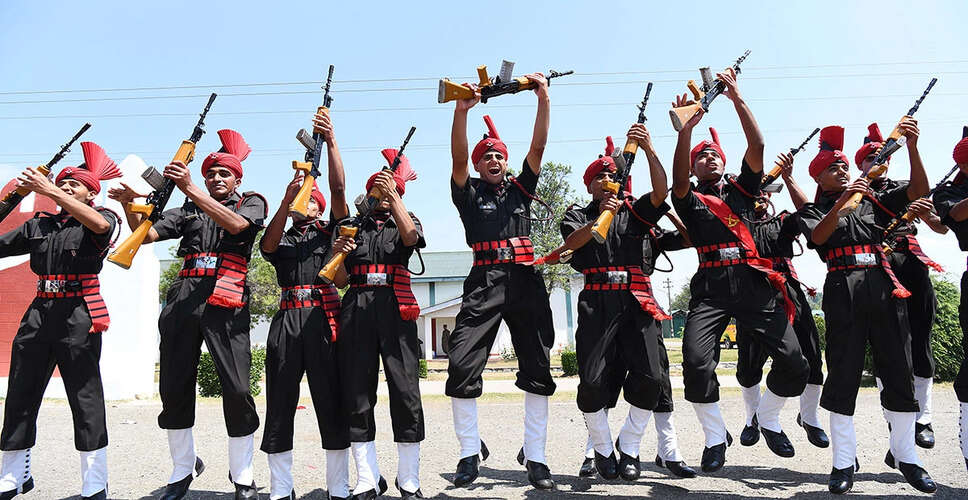

Transformative Changes in Military Recruitment
As the inaugural batch of Agniveers approaches the end of their four-year service term under the Agnipath scheme, the Indian Army, Navy, and Air Force are signaling significant changes in their recruitment policies. The three branches have proposed to increase the number of Agniveers transitioning into permanent roles, indicating that these young warriors have earned the trust of the armed forces through their discipline, valor, technical skills, and combat readiness during their service.
If approved, this initiative would enhance India's military capabilities, providing a younger, faster, and more technologically adept force. This sends a clear message to adversaries that a new generation is ready to respond decisively to any aggression at the borders.
Proposed Increase in Permanent Recruitment
Currently, the existing policy allows a maximum of 25% of each Agniveer batch to be inducted into permanent service based on performance and organizational needs. The Navy has proposed raising this limit to 75%, while the Army and Air Force are advocating for an increase to 50%. This demand reflects the confidence gained by Agniveers in their capabilities and combat skills over the four years of training and service.
Ongoing Discussions in Defense Establishment
Sources indicate that serious discussions are underway within the defense establishment regarding this proposal. The Department of Military Affairs is expected to deliberate on this matter. Although no official announcement has been made by the government or any military branch yet, there is a growing recognition of the need to retain trained and experienced personnel in the armed forces.
Plans for Increased Recruitment Numbers
Even if the percentage of permanent recruitment does not increase, the armed forces are considering accommodating more Agniveers in specialized technical units. Additionally, there are plans to raise the recruitment numbers each year. Last year, around 70,000 Agniveers were recruited, and this number could rise to approximately 90,000 in the next recruitment cycle. This aims to address an estimated shortfall of 180,000 personnel in the military and strengthen combat readiness.
Overview of the Agnipath Scheme
The Agnipath scheme was launched in June 2022 to provide young individuals aged 17.5 to 21 years with an opportunity to serve in the Army, Navy, and Air Force for four years. Due to the pandemic, the age limit for the first recruitment cycle was extended to 23 years. The recruitment process includes a written examination and medical tests, followed by a merit list prepared state-wise.
Benefits for Agniveers
During their four years of service, Agniveers receive modern military training, experience in operating advanced weaponry, and exposure to real military environments. Those not selected for permanent service upon completion will receive tax-free service funds, skill certificates, and priority in various government recruitments. Additionally, a life insurance cover of ₹4.8 million is provided during their service.
Political Controversies Surrounding the Scheme
The launch of the scheme was met with political controversies, raising concerns about job security, pensions, and the future of the youth. Protests occurred in several states, including Bihar and Uttar Pradesh, with opposition leaders criticizing the scheme and expressing worries about the future of young people. However, the situation has evolved, with all three branches of the military now advocating for more Agniveers to be retained in permanent service. This shift indicates that the very scheme that faced scrutiny is now becoming a backbone of India's military strength.
Modern Warfare and the Role of Agniveers
Modern warfare is no longer just about troop numbers; it is defined by speed, technology, precision strikes, artificial intelligence, cyber capabilities, unmanned systems, and the ability to make quick decisions. In this context, young, energetic, and technically skilled soldiers become a nation's greatest asset. The Agnipath scheme is a response to this reality, aiming to lower the average age of the armed forces, enhance combat speed, and significantly improve the capacity to adopt new technologies.
Strategic Challenges and Opportunities
From a strategic perspective, India faces dual challenges from China and Pakistan. China is continuously bolstering its military strength along the northern borders, while Pakistan persists in creating instability through terrorism and infiltration along the western front. The strategic competition in the Indian Ocean region is also intensifying. In such times, a large number of trained, disciplined, and combat-ready Agniveers could become India's greatest strength. If more Agniveers are inducted into permanent service, the armed forces will have access to trained, experienced personnel equipped with modern combat skills, significantly enhancing India's offensive and defensive capabilities.
A Shift in Military Recruitment Philosophy
This proposed change is not merely an amendment to recruitment policy; it represents a significant shift in India's military philosophy. It will provide the armed forces with a youthful, agile, and technically proficient force while also creating a large pool of disciplined and trained youth for society. This model could prove beneficial for both national security and nation-building.
Future of India's Military Structure
Today, the world is facing a changing landscape of warfare, and India is adapting its military structure accordingly. If the scope for permanent recruitment is expanded based on the experiences of the first batch of Agniveers, it will mark the greatest success of the Agnipath scheme. This decision could be a historic step in elevating the combat capabilities, preparedness, and future military strategy of the Indian armed forces.
Conclusion
One thing is now abundantly clear: the future will be more challenging for India's adversaries. This new generation of Agniveers is not just soldiers in uniform; they are trained warriors ready to respond effectively to any threat. Anyone daring to challenge India must remember that a new breed of Agniveers stands ready at the borders, equipped with courage, training, and determination to respond to any provocation in kind.