
Indian Air Force Concludes Successful Military Exercise in Rajasthan
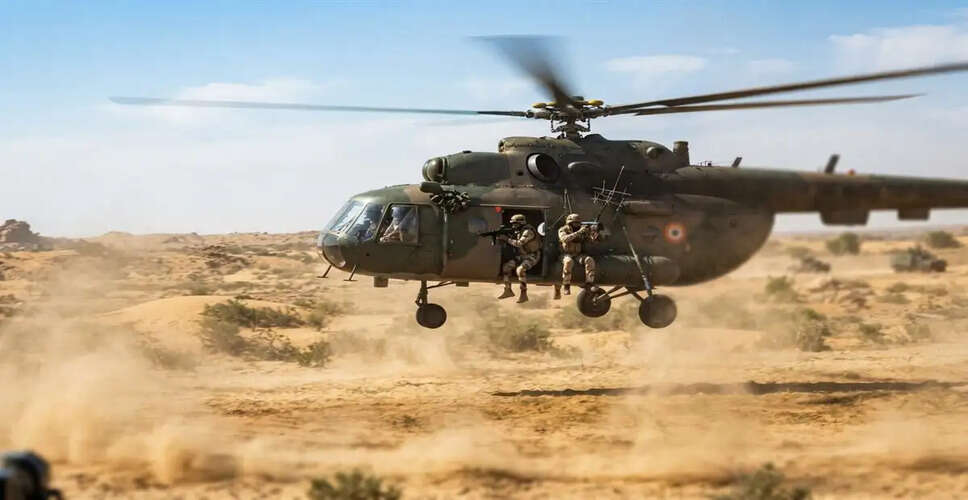

Successful Completion of 'Rotor Clap-III' Exercise
Jaipur, August 2 - The Indian Air Force has successfully wrapped up a week-long military exercise named 'Rotor Clap-III' at the Pokhran Field Firing Range in Rajasthan. This event showcased extensive testing and demonstration of the Air Force's operational readiness and anti-drone capabilities, as reported by officials on Sunday.
According to sources from the defense department in Rajasthan, the focus of this exercise was on countering unmanned aerial systems (UAS), with participation from several helicopter units of the Indian Air Force.
The primary aim of the exercise was to evaluate operational readiness against emerging aerial threats and to enhance the Air Force's combat preparedness in line with the evolving battlefield challenges. The exercise was centered on strengthening the operational capabilities of the helicopter fleet to effectively counter the increasing threats posed by UAS. Additionally, strategies, procedures, and standard protocols for integrated helicopter operations in simulated combat scenarios were also tested.
Nearly all major helicopter platforms of the Air Force participated in the exercise, demonstrating their combat capabilities through various tactical operations. According to sources, these operations included precision targeting, battlefield support, troop deployment, safe evacuation of casualties, and coordinated missions to address both aerial and ground threats. This week-long exercise provided the Air Force crews and operational units with an opportunity to plan missions, coordinate among different units, and validate their quick response and joint operational capabilities in combat-like conditions.
Defense sources highlighted the emphasis on ensuring seamless coordination among various helicopter platforms in the challenging desert terrain. They noted that the Pokhran Field Firing Range, one of the country's premier military training areas, provided an ideal environment to assess the effectiveness of helicopter operations amidst modern battlefield challenges, particularly those posed by drones and other unmanned systems.