
Indian Air Force Chief Ashutosh Dixit Outlines Vision for Future Preparedness

New Leadership in the Indian Air Force
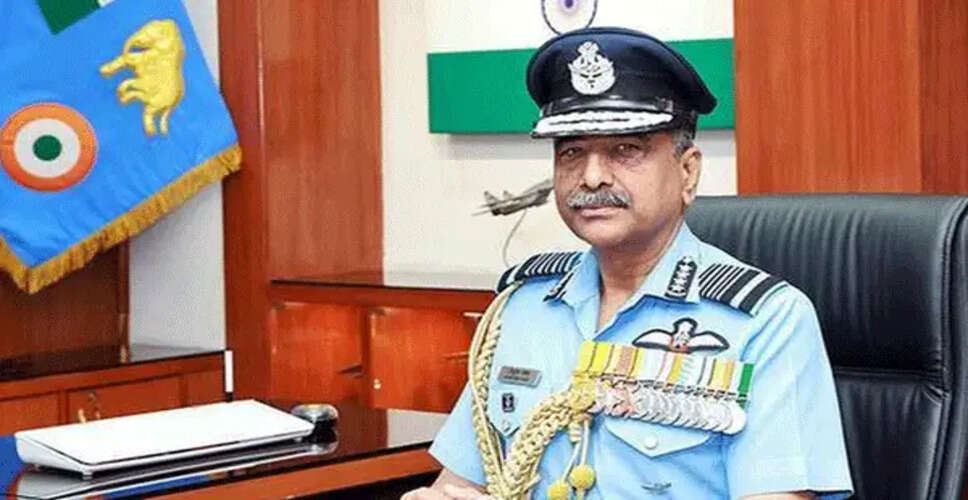
In New Delhi, Air Chief Marshal Ashutosh Dixit has articulated his vision for the Indian Air Force (IAF) following his recent appointment. He emphasized the necessity for every squadron, radar, air defense unit, and all air warriors to remain vigilant at all times to ensure national security. Dixit stressed that they must be prepared to respond to emergencies at a moment's notice. He highlighted the need for the IAF to continuously enhance its capabilities in light of evolving security dynamics and changes in warfare tactics, making modernization and combat readiness top priorities.
Strategic Framework for the Future
Assuming office on October 31, Dixit introduced a strategy named 'VAYU,' which is built on four key pillars: Vigilance and Operational Readiness, Self-Reliance, Strategic Skill and Innovation, and Unity of Effort among the three armed forces. He indicated that these priorities would prepare the IAF for future security challenges.
Adapting to Modern Warfare
Importance of Air Force Readiness Amid Changing Warfare
Dixit noted that India's security environment remains increasingly challenging. The nature of warfare has transformed significantly due to modern technology and new weaponry. Warfare is no longer confined to traditional military resources; it now encompasses drones, long-range precision weapons, space technology, cyber capabilities, artificial intelligence, and the electromagnetic spectrum.
Developing Future Capabilities
He emphasized the importance of developing current capabilities to meet the requirements of the IAF in the coming decade. However, he insisted that readiness for combat and the ability to achieve victory must never be compromised, placing operational readiness as the cornerstone of his strategy.
Restoring Fighter Squadron Numbers
Dixit also highlighted the need to restore the approved number of fighter squadrons in the IAF. This will involve increasing the availability of fighter aircraft, adopting modern technologies, and strengthening military capabilities.
Focus on Indigenous Development
Indigenous Fighter Aircraft and Weapons as Top Priority
He stressed the importance of self-reliance, stating that Indian sensors, indigenous platforms, and domestically developed weapon systems will be paramount for the IAF. He clarified that India must rely more on indigenous technology and defense production for its military needs.
Role of Air Power in Deterrence
Dixit pointed out that the IAF plays a crucial role not only in fighting and winning wars but also in deterring potential conflicts through its robust air power. To achieve this, a sufficient number of indigenous defense systems must be available to meet the demands of prolonged military operations.
Key Programs for Development
Programs such as Tejas MK-1A, Tejas MK-2, and the Advanced Medium Combat Aircraft (AMCA) are considered vital for this direction. Additionally, there will be a focus on developing and increasing the availability of Indian weapons and sensor systems.
Emphasis on Technological Innovation
Focus on Technical Innovation and AI-Based Systems
Dixit linked the third pillar of his strategy, 'Yukti,' to the IAF's technical and strategic capabilities. He stated that continuous innovation in military doctrines, processes, and technologies is essential for success in modern warfare.
Developing Command and Control Systems
He emphasized the development of network-based and AI-driven command and control systems. Additionally, creating multi-layered security arrangements to counter drone attacks, timely maintenance of aircraft and other military resources, and enhancing the security of military installations will also be priorities.
Near-Space Operations
Dixit identified near-space as a significant operational domain for the IAF in the future. He noted that with the increasing use of modern technology, continuous improvement and development in all these areas are necessary.
Enhancing Inter-Service Coordination
Special Focus on Better Coordination Among the Three Services
The fourth pillar of Dixit's strategy, 'Unity of Effort,' emphasizes the need for better coordination among the Army, Navy, and Air Force. He stated that to face future security challenges, all three services must operate under a shared strategy.
Jointness, Self-Reliance, and Innovation
He referred to the comprehensive vision of 'JAI'—Jointness, Self-Reliance, and Innovation—stressing that the Army, Navy, Air Force, and national agencies must collaborate in planning and act together when necessary. He asserted that the maximum impact of air power is realized when it is integrated into the overall strategy from the outset of any military operation.
Acknowledging Predecessor's Contributions
Appreciating the Contributions of Former Air Chief Marshal A.P. Singh
Dixit acknowledged the contributions of his predecessor, Air Chief Marshal A.P. Singh, highlighting how the IAF demonstrated the importance of precise and decisive air power during Operation Sindoor.
Commitment to Operational Readiness
He expressed gratitude for inheriting an IAF that operates at a high level of operational readiness and assured that this capability will be further strengthened.
Welfare of Air Warriors and Their Families
Welfare of Air Warriors and Their Families as a Priority
Dixit stated that alongside military preparedness and modernization, the welfare of IAF personnel and their families will also be a priority. Special attention will be given to the training, professional development, security, morale, and respect of air warriors, Agniveers, civilian employees, veterans, and their families.
Ensuring Morale and Capability
He emphasized that the effectiveness and morale of these personnel are crucial to the strength of the IAF, and he will personally focus on issues related to their welfare and security.
A Commitment to National Security
In conclusion, he reassured the citizens that the Indian Air Force is fully alert, prepared, and resolute. The IAF's commitment is to continuously develop its capabilities in line with national needs and to fulfill its responsibilities whenever the nation requires.
Vision Amid Evolving Security Challenges
Dixit's 'VAYU' vision emerges at a time when India's security challenges are rapidly evolving, and the significance of modern military technology is increasing. His priorities clearly indicate that the IAF will focus on enhancing combat capabilities, strengthening indigenous defense technology, adopting modern systems, and establishing better coordination among the three services.