
India-U.S. Trade Talks Take a Positive Turn with Tariff Reductions
The recent announcement by President Trump to reduce tariffs on India from 50% to 18% marks a pivotal moment in India-U.S. trade relations. Amid ongoing tensions over crude oil imports and market access, India has demonstrated its diplomatic strength by finalizing a free trade agreement with the EU, enhancing its bargaining power. This article explores the implications of these developments, including the potential impact on India's energy procurement strategies and its emerging role in global diplomacy. As India navigates these changes, the balance it maintains with Russia and the U.S. will be crucial for its future economic and strategic interests.
| Feb 3, 2026, 12:07 IST
Significant Developments in India-U.S. Trade Relations
After several months of stalled negotiations, the trade discussions between India and the United States have taken a significant turn. President Donald Trump announced a reduction of tariffs imposed on India from 50% to 18%. This decision comes at a time when both nations were grappling with deep-seated differences regarding crude oil imports, market access, agriculture, and industrial goods. The U.S. had been pressuring India to decrease its crude oil purchases from Russia, while New Delhi emphasized its energy interests and strategic autonomy.
India's Diplomatic Maneuvers
Recent events indicate that India has adopted an active diplomatic strategy on multiple fronts. By finalizing a free trade agreement with the European Union, India has enhanced its bargaining power. This agreement has been described as one of the largest trade deals to date, signaling that India has alternatives and is not reliant on a single axis. Concurrently, high-level communications from the U.S. intensified, leading to the announcement of significant tariff cuts.
Linking Trade Agreements to Energy Policy
When examining the trade agreement between India and the U.S., it is evident that the U.S. has linked it to its energy policy and global politics. The U.S. argues that a decrease in Russia's oil revenue would increase pressure regarding the Ukraine conflict. India welcomed the reduction in U.S. tariffs and the new export opportunities, but did not comment on halting oil purchases from Russia. In a social media post, President Trump claimed that Modi had agreed to stop buying oil from Russia, while Prime Minister Modi thanked Trump for the tariff reduction without mentioning Russian oil, supporting Trump's efforts for global peace, which could be seen as indirect backing for the declared goal of ending the Ukraine war. However, India has carefully balanced its language to maintain its multilateral relationships.
Strengthened Position of India
Regarding the U.S. tariffs, it is clear that India's position appears relatively stronger now. While high tariffs are imposed on countries like China, Vietnam, and Bangladesh, the reduced tariffs for India will provide relief to its exporters. India has shown flexibility in its customs framework for motorcycles, beverages, and various consumer goods, addressing some U.S. complaints. The investment community views this as a realignment of supply chains, with India poised to become a key partner in manufacturing and defense cooperation.
Russia's Response and Future Implications
As of now, there has been no response from Russia regarding the India-U.S. trade agreement. Nonetheless, India and Russia maintain deep cooperation in energy, defense, and technology. Experts believe that India's approach will not be a complete halt but rather a gradual adjustment. The structure of entities like Nayara and previous contracts will also influence decisions. Overall, India is attempting to balance its interests while maintaining a multipolar equilibrium.
Limited Impact on India-Russia Relations
The impact of this change on India-Russia relations is expected to be limited and balanced, as it primarily focuses on energy trade while other strategic ties remain intact. Following the onset of the Ukraine war, India became the largest buyer of crude oil from Russia via maritime routes, but recent imports have dropped to about 1.2 million barrels per day, the lowest in three years. Despite this, Russia continues to be India's largest supplier of military equipment. Both nations describe their relationship as special and privileged strategic partnership, collaborating in forums like BRICS and the Shanghai Cooperation Organization, indicating that changes in oil purchases do not signify a rift in relations. Additionally, during President Vladimir Putin's visit to India in December, both countries explored new areas of cooperation.
Future Energy Procurement Strategies
Experts suggest that Indian oil refining companies will need time to fulfill previously agreed oil shipments from Russia. The government has not issued any immediate orders to halt purchases, but there is an increased emphasis on diversifying oil imports from various countries. Notably, India has ramped up purchases from West Asia, Africa, and South America in recent months. Agreements for liquefied gas and other energy supplies from the U.S. have also been established. Legislative measures for private participation in the nuclear energy sector have opened new avenues for collaboration. Meanwhile, concerns about instability in the global oil market, particularly regarding Iran and the Gulf region, have made the diversification of supply routes even more critical.
India's Emerging Power in Global Diplomacy
Reflecting on the past year of negotiations regarding the India-U.S. trade agreement, a clear message emerges: New Delhi is no longer a nation that bends under pressure but has transformed pressure into opportunity. Prime Minister Narendra Modi's foreign policy has been characterized by firmness, multiple options, and prioritizing national interests. When the U.S. wielded the stick of high tariffs, India did not panic. Instead, it advanced parallel agreements, opened its market judiciously, and demonstrated that sidelining India is not an easy task.
The U.S. Response to India's Growing Influence
The question arises: why did the U.S. back down first? The answer is clear. India's agreement with the European Union, rapidly growing relationships with other countries, and the allure of the vast Indian market. The U.S. understands that if it delays, its share in the Indian market and supply chain could diminish. Thus, by reducing tariffs, it has chosen a path that signifies a diplomatic victory for India. The economic implications will be far-reaching. Lower tariffs mean better competitiveness for Indian goods, increased exports, and job opportunities. A stronger role for India in the supply chain will also attract more investment. Strategically, this is significant; when a country becomes a partner in manufacturing and defense cooperation, relations extend beyond trade to encompass security and technology.
Conclusion: A New Era for India
In summary, this period marks the rise of India as an emerging power. Aggressive and confident diplomacy has shown that clear leadership can shift the stance of major countries. The challenge now is to translate these concessions into tangible benefits, support exporters, and strengthen energy security. If India maintains this balance, its voice on the global stage will grow louder.
Modi's Global Standing
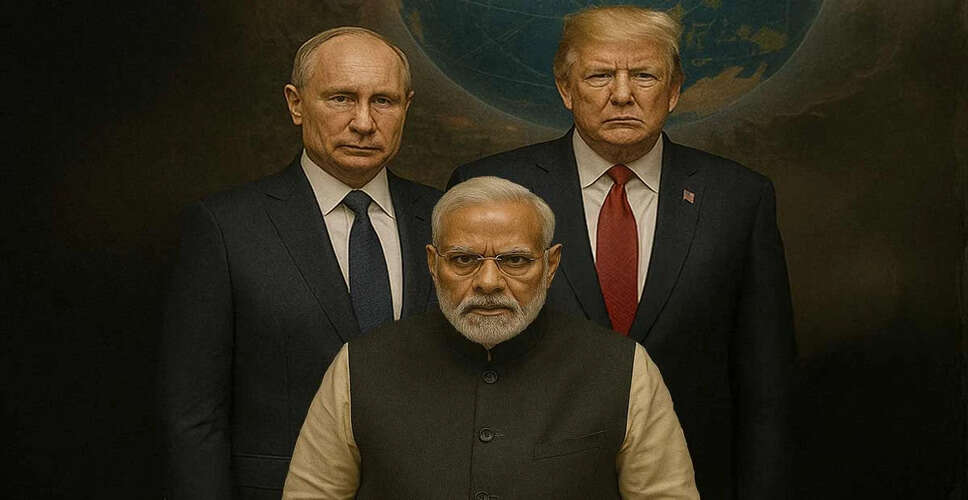
Prime Minister Narendra Modi, known for turning challenges into opportunities, has elevated India-U.S. relations to new heights while maintaining balanced ties with both President Trump and President Putin. This ability is a significant reason for his global acceptance. Modi's approval ratings often rank among the highest worldwide. The enthusiastic reception of the India-U.S. trade agreement by the industry, the positive atmosphere in the stock markets, and the appreciation from ruling NDA MPs indicate that Modi has emerged as a strong and influential leader not only domestically but also on the global stage, with decisions impacting the economy, diplomacy, and politics.