
India Takes Strong Action Against Illegal Bangladeshi Infiltrators
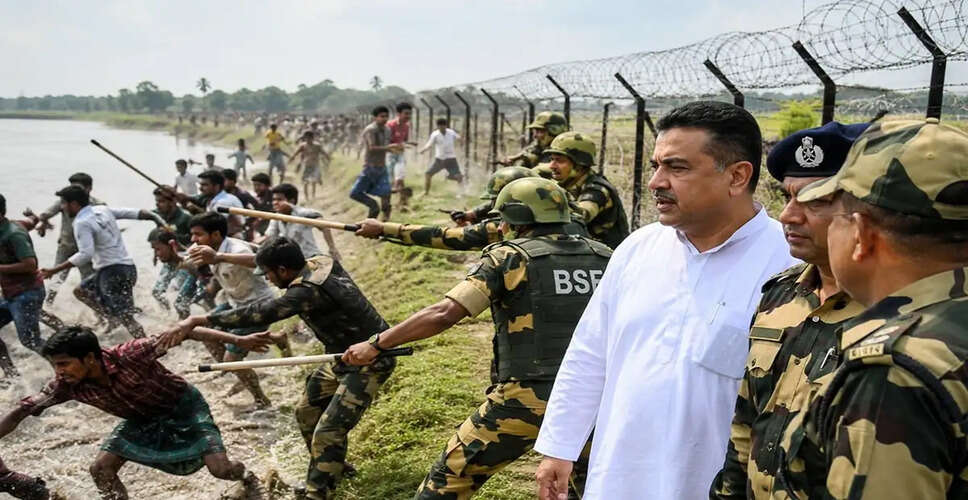

India's Firm Stance on Border Security
The patience of India regarding its borders has reached its limit. For years, the issue of illegal immigration from Bangladesh has been exacerbated by political maneuvering and lax attitudes. However, under the leadership of Chief Minister Suvendu Adhikari, a decisive campaign is underway in West Bengal, signaling that those who jeopardize national security and demographic balance will face strict consequences.
Bangladesh's Accusations and India's Response
In a recent high-level meeting between the Border Security Force and the Border Guard of Bangladesh in Delhi, Bangladesh accused India of pushing back illegal immigrants. India countered this by highlighting nearly three thousand pending cases regarding the identification and repatriation of illegal Bangladeshi nationals. The Indian government firmly stated that Dhaka cannot evade its responsibilities and must identify and repatriate its citizens immediately.
Concerns Over Refugees and Infiltration
Bangladesh's claims that some of those being sent back include Myanmar and Indian nationals have raised eyebrows. Indian agencies have clarified that Rohingya infiltrators have entered India via Bangladesh, indicating a well-organized infiltration network that poses a serious threat to the security and social fabric of border states.
West Bengal's Historic Initiative
Recognizing this threat, Suvendu Adhikari's rigorous campaign in West Bengal is not only commendable but also a historic step. On June 7, he announced that his government had already repatriated around five thousand illegal immigrants and placed eight hundred thirty-six individuals in temporary detention centers. He emphasized that the drive to remove infiltrators will continue at an accelerated pace, with land allocated for barbed wire fencing up to one hundred kilometers along the border. This determination is what the nation has long awaited.
Bangladesh's Growing Anxiety
Reports indicate that Bangladesh is becoming increasingly anxious, having deployed armed local volunteers in areas bordering West Bengal and Tripura. Villagers in regions like Chapainawabganj, Thakurgaon, and Dinajpur are being trained to monitor the border continuously. This suggests that Dhaka understands India will no longer tolerate politics that uses infiltrators as a shield.
Bangladeshi Nationals Seeking to Return
According to Border Security Force officials, many Bangladeshi nationals are attempting to return voluntarily, as living illegally in India has become increasingly difficult. This strictness has instilled fear in the long-established infiltration networks. Those who sought to seize India's land, resources, and identity are now facing the true face of the law.
Assam's Measures Against Illegal Immigration
Assam is also taking stringent measures. Chief Minister Himanta Biswa Sarma announced a halt on issuing Aadhaar cards to individuals over eighteen years old to prevent illegal Bangladeshi immigrants from obtaining Indian citizenship through fake identities. He noted that in some districts, the number of Aadhaar cards issued has exceeded one hundred percent, which is a serious concern. This decision indicates that northeastern states are also gearing up for a decisive battle against infiltration.
Ongoing Illegal Crossings in Meghalaya
In Meghalaya, police apprehended five Bangladeshi nationals in the West Garo Hills district, while three suspects managed to escape. The investigation revealed that they possessed Bangladeshi SIM cards and could not prove their citizenship. This incident underscores that illegal crossings continue and that stringent actions are more necessary than ever.
Government's Focus on Demographic Changes
Meanwhile, Union Home Minister Amit Shah has instructed a high-level committee to study demographic changes in border districts. During a committee meeting, he emphasized the need to assess changes due to illegal migration and other unnatural causes by visiting border areas, metropolitan cities, and industrial towns. The Ministry of Home Affairs has formed this committee to evaluate the impact of infiltration and other factors on population dynamics across the country.
A Clear Message to Infiltrators
Ultimately, the message to infiltrators is clear: India is not a sanctuary where anyone can enter illegally and settle. Those who have crossed the border must return. Suvendu Adhikari's courage in addressing this issue serves as an example not just for West Bengal but for the entire nation. It is time for every state to launch a campaign against illegal infiltration with the same resolve, as compromising national security is unacceptable.