
India Takes Action Against the Shadowy Oil Trade
India's Crackdown on the Dark Fleet
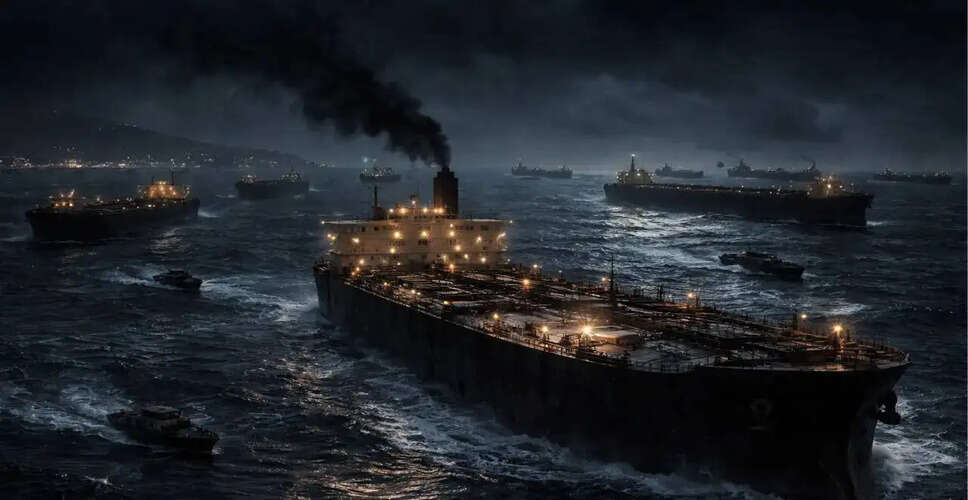
When maritime tracking systems suddenly indicate that an oil tanker has vanished from view, only to reappear days later near a refinery thousands of miles away, analysts often suspect the involvement of the so-called 'dark fleet.' These vessels, sometimes referred to as the 'ghost ships' of the oil industry, intentionally disappear from monitoring systems, alter their identities, and covertly transport billions of dollars' worth of sanctioned crude oil across the oceans.
Recent actions by the Indian Coast Guard underscore the increasing efforts by governments to dismantle this clandestine network.
India's First Major Move Against the Dark Fleet
In a significant step against this shadowy shipping network, the Indian Coast Guard has seized three oil tankers near Mumbai that are suspected of being involved in international oil smuggling. Officials indicated that these vessels were part of an illicit trading network and were notorious for frequently changing their identities, a common tactic employed by ships in the dark fleet.
The seized ships were escorted to Mumbai for further investigation. Maritime intelligence platforms later identified them as tankers associated with sanctioned oil trades, including shipments linked to Iran. This seizure marks a pivotal moment for India, which has emerged as one of the largest importers of crude oil globally and a key destination for discounted barrels sold under sanctions.
Understanding the Dark Fleet
The dark fleet, also known as the shadow fleet, comprises a global network of aging oil tankers that transport sanctioned crude from countries such as:
- Russia
- Iran
- Venezuela
Analysts estimate that this network now includes approximately 1,400 to 1,500 vessels, representing a significant portion of the global tanker fleet. These ships operate outside the conventional regulatory framework of international shipping, often exhibiting:
- Unclear or fraudulent ownership structures
- Questionable flag registrations
- Limited or nonexistent insurance
- Poor maintenance standards
Despite these risks, they continue to transport large quantities of crude oil, as sanctioned oil is often sold at substantial discounts, making it appealing to buyers.
How Ghost Tankers Evade Detection
To avoid detection and sanctions enforcement, vessels in the dark fleet employ various deceptive strategies.
1. Disabling Tracking Systems
All commercial ships are required to broadcast their location using the Automatic Identification System (AIS), a satellite-based tracking signal designed to prevent collisions and monitor shipping routes. However, dark fleet tankers frequently turn off their AIS transmitters, disappearing from satellite tracking maps for extended periods. During this 'dark period,' the ship may load or unload oil without being detected.
2. Spoofing Locations
Some vessels take it a step further by spoofing their GPS locations, transmitting false coordinates that suggest they are sailing in entirely different areas, sometimes thousands of kilometers away from their actual position. This tactic complicates tracking efforts for regulators and analysts.
3. Identity Changes
Another common tactic is identity switching. Ships in the dark fleet often change:
- Vessel names
- Ownership companies
- Flag registrations
These vessels may be registered in countries with minimal oversight, known as 'flags of convenience.' A tanker might alter its identity multiple times within a single year to evade sanctions lists.
4. Ship-to-Ship Transfers at Sea
Perhaps the most crucial tactic is the ship-to-ship transfer. Instead of delivering oil directly to a port, a sanctioned tanker meets another vessel in open waters, often at night or away from shipping lanes. The crude is transferred between ships, obscuring its origin. By the time the oil reaches a refinery, it may appear to have come from a completely different source.
A Lucrative Hidden Oil Trade
Despite sanctions imposed by Western governments, the dark fleet continues to facilitate oil flow from sanctioned producers. According to maritime analytics firms, hundreds of vessels transport sanctioned crude each year. Data from 2025 revealed:
- 251 vessels loaded Iranian crude
- 510 vessels carried Russian oil
- Many of these ships engaged in AIS shutdowns and deceptive transfers
China and India remain among the largest purchasers of discounted barrels, although shipments often pass through multiple intermediaries before reaching refineries. Analysts suggest that the economics of this trade make it challenging to eradicate, as sanctioned crude typically sells below global market prices, creating strong incentives for traders and refiners.
Concerns Over Aging Ships
Beyond sanctions violations, experts express serious environmental concerns regarding the dark fleet. Many vessels in this shadow fleet are well beyond the recommended service life of 20 years, with some exceeding 30 years. Operating outside standard insurance and regulatory frameworks, maintenance standards can be subpar. Maritime analysts warn that a significant accident involving one of these tankers could result in a disaster larger than the Exxon Valdez oil spill, which released approximately 37,000 tonnes of crude oil into the sea. More than 50 incidents involving shadow fleet vessels, including collisions and oil spills, have already been reported in recent years.
Increased Government Enforcement
Countries are beginning to take more aggressive action against the shadow fleet. Recent enforcement actions include:
- France intercepting tankers suspected of carrying Russian oil
- The United States seizing vessels linked to Venezuelan shipments
- European authorities verifying vessel flags and insurance documents
India's seizure of three tankers near Mumbai indicates that Asian maritime powers may also start targeting this illicit trade.
The Shadow Fleet's Persistence
Despite heightened enforcement efforts, analysts believe the dark fleet is unlikely to vanish anytime soon. As long as sanctions remain in place and discounted oil finds buyers, traders will continue to devise methods to transport it. However, the operational dynamics of the fleet are evolving. Instead of disappearing, the network is becoming more offshore, fragmented, and secretive, relying on increasingly complex shipping routes and deceptive techniques. In essence, the ghost ships of the global oil trade continue to sail, albeit deeper in the shadows.