
India Supports UN Resolution to End US Embargo on Cuba: A Step Towards Development
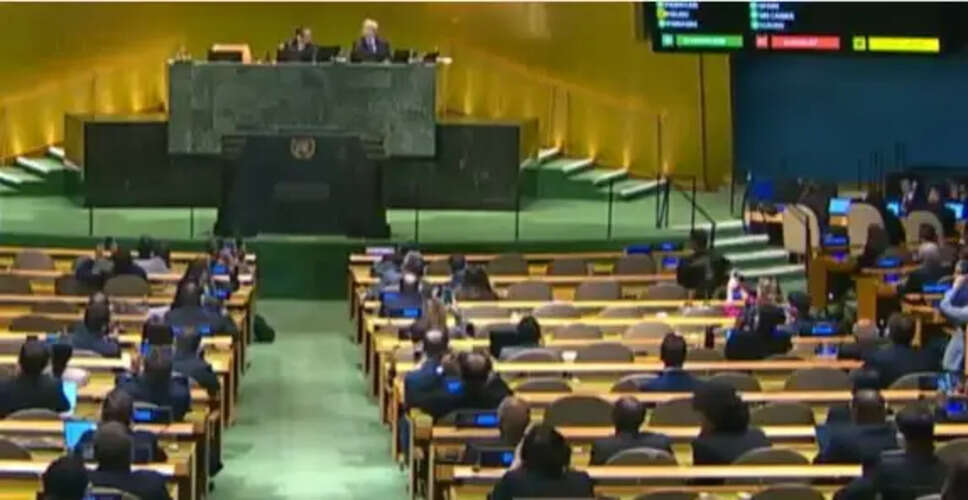

India's Vote at the UN General Assembly
United Nations: In a significant move, India cast its vote in favor of a resolution at the UN General Assembly advocating for the termination of the economic, commercial, and financial embargo imposed by the United States on Cuba. This decision underscores India's stance that lifting these restrictions is essential for Cuba's developmental goals.
The resolution was passed by the 193-member General Assembly on Wednesday, with 130 nations supporting it, 17 opposing, and 25 choosing to abstain.
During the session, India's Counsellor at the UN, Soumya Nair, emphasized that the General Assembly has consistently called for an end to the embargo and has rejected laws that have extraterritorial impacts, which undermine the sovereignty of other nations and hinder their progress.
Nair reiterated the Assembly's appeal for all countries to avoid enacting and enforcing such laws, urging them to repeal and invalidate these measures in line with their commitments under international law and the UN Charter.
She expressed India's dedication to multilateralism, asserting that global challenges are best resolved through dialogue and diplomacy, as outlined in the UN Charter.
In this context, India hopes for the swift lifting of the embargo to foster an environment where Cubans can engage more fully in international cooperation and pursue their legitimate developmental aspirations.
Nair referenced a report from the UN Secretary-General, which detailed the adverse effects of the embargo on Cuba's economy and essential services.
She pointed out that Cuba's healthcare system is facing a shortage of over 60% of necessary medications, and food production has plummeted by more than 50% in the last five years.
Additionally, restrictions on fuel exports have worsened Cuba's ongoing energy crisis, disrupting vital services such as healthcare, education, water supply, food distribution, and transportation.
The longstanding conflict between the US and Cuba dates back to 1959 when Fidel Castro overthrew a US-supported government and aligned Cuba with the Soviet Union.
For over sixty years, Washington has enforced a stringent trade embargo and sanctions against Cuba to pressure its communist government. The Cuban government attributes these restrictions to its economic struggles, which have led to severe fuel shortages, blackouts, and widespread poverty.
The resolution, titled 'Necessity of ending the economic, commercial and financial embargo imposed by the United States of America against Cuba,' reflects the General Assembly's enduring opposition to US restrictions. However, it is important to note that such resolutions are not legally binding.
Tensions escalated in the UN General Assembly hall on Tuesday when US Ambassador Mike Waltz clashed with Cuban Foreign Minister Bruno Rodriguez Parrilla.
As Waltz addressed the assembly regarding Cuba, Parrilla and other Cuban diplomats approached the podium to confront him, leading to a heated exchange.
Waltz urged Parrilla to step back, asserting that he would not be intimidated in the United States, likening the situation to the intimidation faced by political prisoners.
UNGA President Khalilur Rahman had to suspend the session due to the escalating confrontation.
Later, Waltz expressed his disbelief that Cuba's leaders would come to the UN to discuss the suffering of their people while enjoying luxurious lifestyles, including expensive watches and private islands, while their citizens face starvation and darkness.
In response, Cuban diplomats reacted by banging their desks and shouting, disregarding the decorum of the assembly, and even assaulted an American diplomat, according to Waltz.
He stated that such behavior violated the Host Country Agreement and indicated that the involved diplomat would be sent back to Havana, emphasizing that any assault on an American diplomat would have consequences.