
India Strengthens Ties with Sri Lanka Amid Geopolitical Shifts in the Indian Ocean

India's Strategic Engagement with Sri Lanka
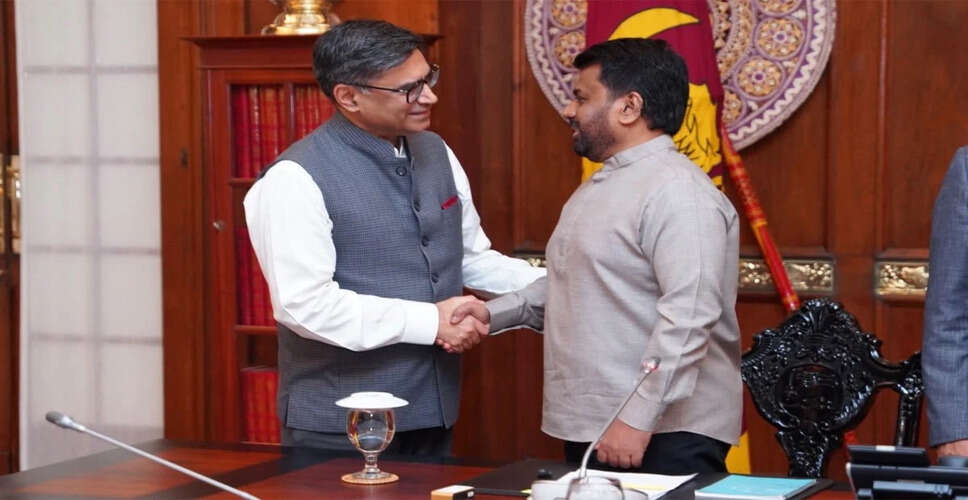
In light of evolving geopolitical dynamics in the Indian Ocean region, India has taken significant steps to enhance its relationship with Sri Lanka. The visit of Foreign Secretary Vikram Misri to Colombo is a crucial part of India's broader regional strategy aimed at simultaneously bolstering economic partnerships, security cooperation, and strategic influence. Notably, Misri's arrival in Sri Lanka follows important visits to China and Bhutan, adding a strategic dimension to this diplomatic initiative.
Key Meetings and Agreements
During his time in Colombo, Misri engaged in discussions with President Anura Kumar Dissanayake, Prime Minister Harini Amarasuriya, Foreign Minister Wijitha Herath, Foreign Secretary Aruni Ranawaka, Opposition Leader Sajith Premadasa, and representatives from the Sri Lankan Tamil and Indian Tamil communities. These meetings resulted in an agreement to expedite the implementation of the joint statement from December 2024 and the agreements made during Prime Minister Narendra Modi's visit to Sri Lanka in April 2025.
Economic Cooperation and Trade Agreements
A significant development on the economic front was the decision to accelerate the review process of the India-Sri Lanka Free Trade Agreement (FTA) and finalize a bilateral social security agreement. If enacted, this agreement would enhance investment, service sector collaboration, and the mobility of professionals between the two nations. This move is not just about expanding trade; it is seen as a vital step towards institutionalizing India's long-term presence in Sri Lanka's economy.
Financial Commitments for Reconstruction
India has also reaffirmed its financial commitment to Sri Lanka's reconstruction and development. Under the $450 million reconstruction package announced after Cyclone Dithwah, agreements were made for two new lines of credit totaling $350 million, which include $250 million for railway projects and $100 million for livestock and other primary sectors. Additionally, a $100 million grant will facilitate the construction of damaged homes and permanent bridges. India will also advance projects in health, education, and disaster management, including medical equipment, kiosks, educational resources, and a national disaster warning system. The rehabilitation of the Northern Railway Corridor has been completed, allowing train services to resume.
Energy and Digital Connectivity Initiatives
Energy and digital connectivity were also key pillars of this visit. Both nations reviewed progress on electricity grid interconnection, comprehensive solar energy projects, and the development of Trincomalee as a regional energy hub. Furthermore, they agreed to expedite the Sri Lanka Unique Digital Identity project and modernize the Kankesanthurai port with India's $61.5 million grant. This port, located in the Jaffna region, holds significant importance for India's maritime strategy in the Indian Ocean.
Addressing Tamil Community Concerns
However, the most sensitive aspect of this visit was the issue of the Tamil community and provincial council elections. Foreign Secretary Misri urged Sri Lanka to conduct long-overdue provincial council elections promptly and fulfill the political aspirations of the Tamil community as outlined in the constitution. Notably, New Delhi emphasized this issue in its official statement, while Colombo did not mention it in its press release, indicating a divergence in priorities between the two nations. India also reiterated its demand for a humane resolution regarding the arrest of Indian fishermen and their swift release.
Strategic Importance of Diplomatic Efforts
From a strategic perspective, this diplomatic endeavor is highly significant. The continuous visits to China, Bhutan, and Sri Lanka illustrate India's multi-faceted strategy to establish balance in its neighborhood. Following stability along the Line of Actual Control (LAC) with China, a ₹10,000 crore development package for Bhutan, and close monitoring of the Doklam region, India's active engagement in Sri Lanka signals that New Delhi aims to counter China's growing influence in the Indian Ocean through economic, infrastructural, and developmental partnerships, rather than solely military means.
Future Prospects and Strategic Assurance
Initiatives like the Trincomalee energy hub, Kankesanthurai port, digital identity project, and railway network are expected to enhance India's maritime security, energy supply chains, and regional connectivity in the future. Sri Lanka's assurance that its territory will not be used against India's security interests further strengthens the strategic trust between the two nations.
Conclusion: A Step Towards Long-Term Geopolitical Strategy
Ultimately, Vikram Misri's visit to Sri Lanka was not merely a review of bilateral relations but a decisive step in implementing India's 'Neighbourhood First' and 'Vision MAHASAGAR' policies. This visit underscores that New Delhi is now advancing a long-term geopolitical strategy that integrates friendship, economic integration, strategic partnerships, and security interests in its neighborhood.