
India Sets Ambitious Climate Goals for 2035 with Focus on Renewable Energy
India's Commitment to Renewable Energy
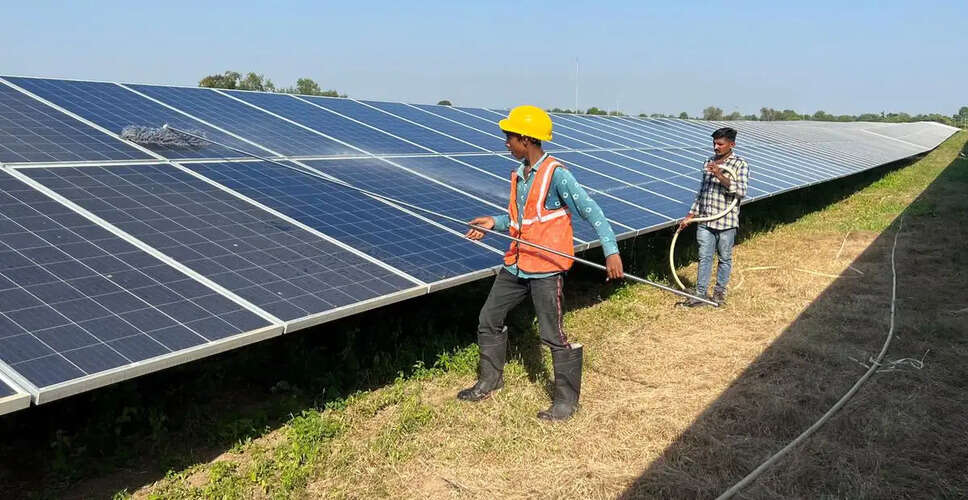
On Wednesday, the Indian government announced its commitment to ensure that by 2035, 60% of its total electricity capacity will be sourced from renewable energy. This pledge is part of the country's broader climate strategy.
Additionally, India aims to reduce the carbon emissions intensity per unit of GDP by 47% compared to 2005 levels.
Furthermore, the nation plans to enhance its carbon sink capacity to between 3.5 billion and 4 billion tonnes through increased forest and tree cover by 2035, relative to 2005 levels. Carbon sinks, which include forests, plants, and soil, play a crucial role in absorbing atmospheric carbon dioxide.
These objectives were outlined in the Nationally Determined Contributions (NDCs) for the 2031-2035 timeframe, which received approval from the Union Cabinet on Wednesday. These targets will be submitted to the United Nations Framework Convention on Climate Change as part of the commitments made under the 2015 Paris Agreement.
According to the 2015 agreement, nations committed to keeping the long-term global average temperature rise well below 2 degrees Celsius above pre-industrial levels, with efforts to limit it to 1.5 degrees Celsius by the century's end.
Exceeding a 1.5 degrees Celsius increase could result in severe climate-related consequences and extreme weather events. Pre-industrial levels refer to the global atmospheric conditions prior to the significant impacts of industrialization, which included the combustion of fossil fuels.
In August 2022, when India last updated its climate targets, it had pledged that 50% of its electricity capacity would come from renewable sources by 2030 and aimed for a 45% reduction in carbon emissions intensity per GDP unit from 2005 levels.
In October, the UN Secretary-General expressed concerns that the commitments made by various countries were insufficient, especially given the alarming rate of global temperature rise due to fossil fuel consumption.
He warned that the current lack of ambition in NDCs could lead to a temporary breach of the Paris Agreement's 1.5 degrees Celsius goal.
The Indian government reiterated that these new targets align with its goal of achieving net-zero carbon emissions by 2070, a commitment first announced in 2021.