
India Secures $2.6 Billion Uranium Deal with Canada to Boost Nuclear Capacity
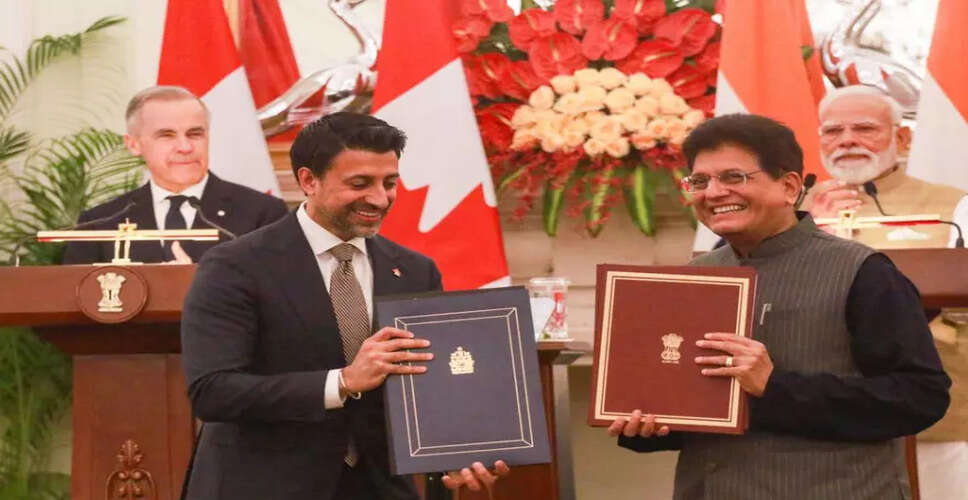
Significant Uranium Supply Agreement
New Delhi, March 6: The Indian government, led by Prime Minister Narendra Modi, has finalized a pivotal $2.6 billion agreement for the long-term procurement of uranium from Canada. This move is viewed by international analysts as a vital component of India's goal to achieve 100 gigawatts of nuclear energy capacity by the year 2047.
According to a report from a prominent news outlet, India's domestic uranium production is anticipated to fall short of future demands, necessitating long-term import strategies.
Experts highlighted that the country's uranium output is expected to remain significantly below the total demand, indicating a growing dependence on imports to support both current and upcoming nuclear reactors. In light of this, the long-term supply agreement with Canada is seen as strategically beneficial.
While Kazakhstan has been the primary supplier of uranium to India in recent years, this new deal with Canada will diversify the sources of this essential fuel for India's nuclear power plants.
The report also mentions that in December 2025, India's Parliament approved a significant reform of its civilian nuclear energy framework, allowing both domestic and international firms to construct, own, and operate nuclear facilities, effectively ending a state monopoly.
This reform alleviated longstanding concerns regarding supplier liability and established a more stable regulatory framework, paving the way for foreign technology partners and private investments necessary for India's nuclear expansion.
Canada is well-positioned to meet India's uranium needs, as several new mining projects are underway, ensuring a steady increase in uranium production in the future. Analysts express confidence that this agreement will provide a reliable fuel supply over the long term.
Prime Minister Modi described the uranium agreement with Canada as a "landmark deal," emphasizing collaboration on small modular reactors, advanced reactors, and the entire nuclear value chain. Canadian officials confirmed their capability to support India's nuclear energy requirements and announced the initiation of a strategic energy partnership.
Both leaders celebrated the completion of the CAD $2.6 billion commercial agreement between Cameco and India's Department of Atomic Energy, which will enhance India's civil nuclear energy generation, support clean energy transition goals, and ensure long-term energy security, as stated in a joint communiqué following their summit.
Recognizing their mutual strengths as energy nations, the leaders committed to advancing the India-Canada Strategic Energy Partnership, which aims to deepen cooperation across the energy value chain. They reiterated their shared dedication to enhancing collaboration in clean energy, conventional energy, civil nuclear energy, and critical minerals to foster affordability, sustainability, and economic growth, as outlined in the joint statement.